
Greetings, my pawsome human minions and cat cohorts.
Forrest Wisewhiskers here, back again with some cat knowledge for the humans.
Our topic today comes courtesy a lady I know as my Auntie. She’s mom’s sister or something and likes to come hang out sometimes.
Auntie has a cat and she often questions me about the things her Snookums does. Snookums is still a young thing and much of her zany ways could be attributed to her kittenhood, but as she’s aging, it means my advice for Auntie is taking on a new dynamic.
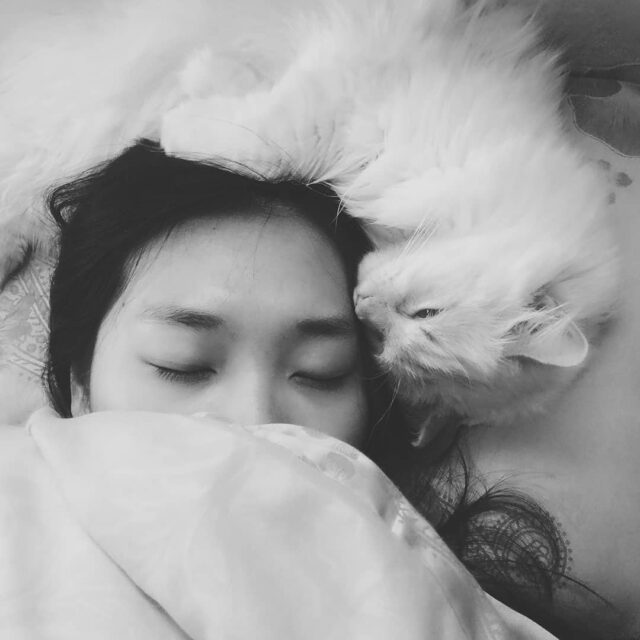
Not so much the kitten anymore, Snookums is starting into adult behaviors which means she has reasons for most of her actions now. When a kitten does something seemingly weird, its easy to shrug and say, “Kittens are crazy fluff balls.” But as a grown, more refined creature now, Snookums usually has motivation behind her actions.
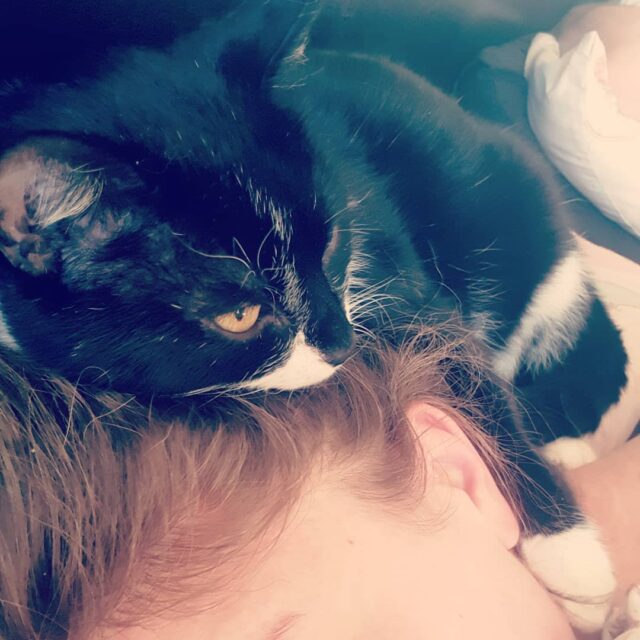
Which means Auntie’s latest inquiry can be answered with more than the ‘kittens will be kittens’ explanation. Her question? “Why does my cat sleep on my head?”
I had to snicker into my paw at this. I actually do this to my dad, but he has no idea. He sleeps so hard he’s never even noticed me on the pillow with him before. And I’ll tell you why I, and Snookums, both enjoy the pillow life.
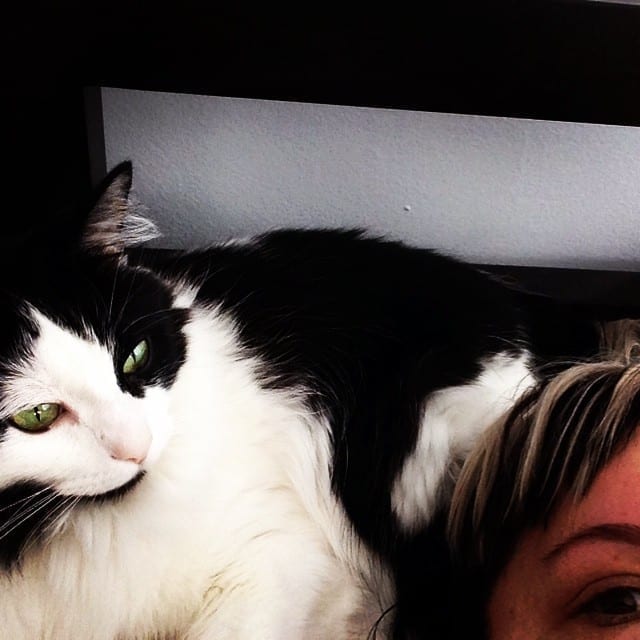
Why Cats Sleep on Your Head
Staying Warm
Felines run warmer than humans, with the average normal cat body temperature ranging from 100.5°F to 102.5°F. But when we snooze, it can be hard to maintain our warmth as our predator muscles are at rest. Plus, humans tend to make it colder in the house at bedtime, so the normal couch sleeping spot gets way too drafty for comfy rest.
So, where’s the warmest place we can find? That’s right, on the pillow next to your head, making you the ideal feline warmer.
Your Busy Legs
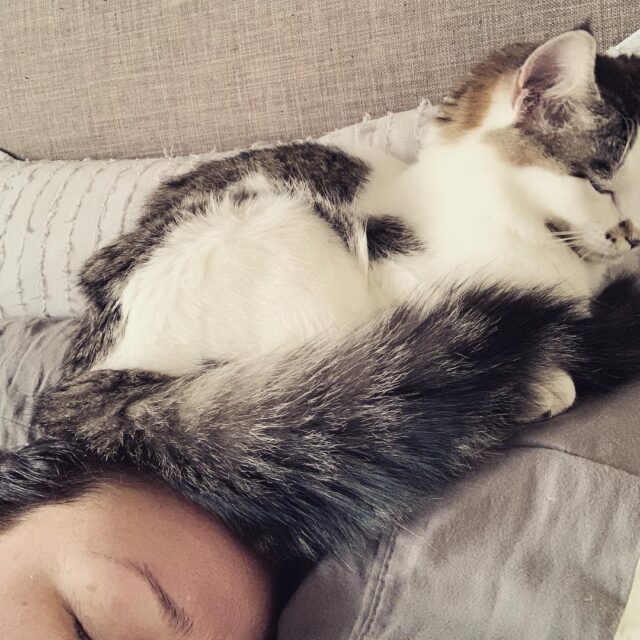
Cats tend to keep pretty still when we sleep. Humans don’t. Why must you fidget so much?!?
This question is aimed at my mom, in particular. It’s like she’s chasing mice in her sleep, her legs stay so busy. Which means I get kicked if I’ve tried to get comfy at the foot of the bed. No thanks. I’ll take your pillow instead. I know I’m not the only tabby with this issue.
We Like You
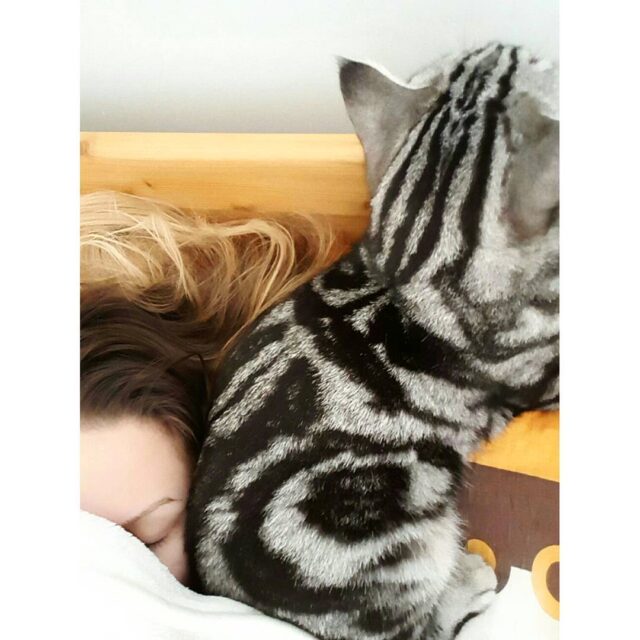
Cats also choose to share your pillow with you because we like you, okay, we love you. You’re our favorite person and we want to be near you. You make us feel safe and we also enjoy protecting you while you remain in your vulnerable state. Alright, that’s it, I’m done being gushy.
How To Relocate Your Cat From Your Pillow
Here’s a few simple tips for you if kitty’s pillow hogging is making sleep a catastrophe:
- Set a cushy, warm bed just for kitty right next to your pillow. When she climbs aboard the pillow, set her in the new bed and make a big deal over how precious she is in said bed. This will be a process. We kitties enjoy taking to things in our own time, as you well know.
- Before you go to bed, wear kitty out with a playtime session. Grab his favorite toy and keep him pouncing until he’s ready for a nap.
- Move dinnertime a little closer to bedtime or offer a filling snack not long before bed. A full tummy makes catnapping even better.
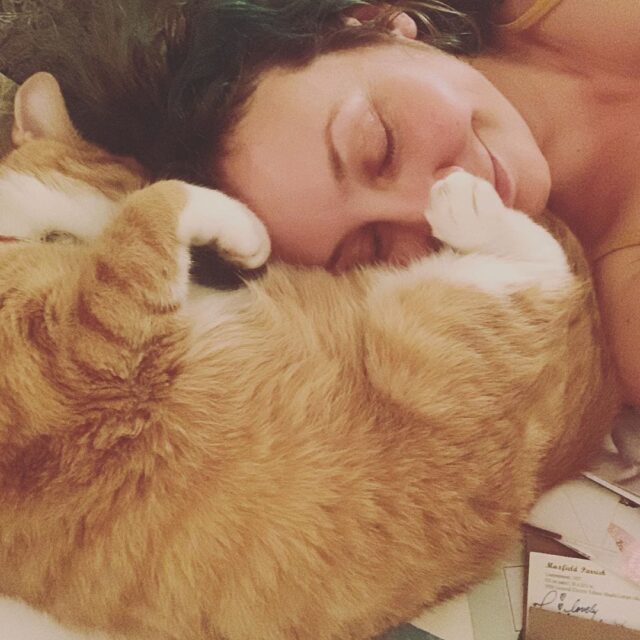
You may or may not succeed in getting your cat off your head at night, but just remember, you make kitty feel safe and that’s why your head makes a purrfect pillow.
Just make sure you’re getting enough sleep so you don’t forget to feed the cat.
Feature Image: @ruiqi.huang.5201/Instagram
Frequently Asked Questions
Why does my cat choose my head over my feet or chest?
Three reasons, mostly: your head stays relatively still compared to your legs, which shift constantly during sleep. Your head also radiates more warmth than your limbs, since significant body heat escapes through the scalp. And your hair and pillow carry strong scent, which is comforting to a cat who uses scent as a primary way of identifying safe, familiar places.
Is it safe to let my cat sleep on my pillow?
For most healthy adults with a healthy cat, it is a personal choice. Common practical concerns include disrupted sleep, cat hair on bedding, and allergies. If you have a compromised immune system, your doctor may advise against close contact during sleep. For healthy households, the main question is simply whether you and your cat both sleep well enough for it to be worth continuing.
My cat just started sleeping on my head. Why now?
A sudden change in sleeping preferences often means something changed: a seasonal drop in temperature, a shift in your schedule that altered when you come to bed, a new pet or person in the home creating a need for closer bonding, or simply a maturing cat settling into new habits. If the change coincides with other behavioral shifts, it is worth monitoring, but on its own it is rarely a concern.
My cat purrs while sleeping on my head. Is that just contentment?
Mostly yes. Purring during sleep or rest is associated with contentment and relaxation in most contexts. Cats also purr as a self-soothing mechanism, so a sleeping, purring cat is typically either very comfortable or actively settling themselves. Either way, it is a positive sign.
The Head Pillow: A Feline Declaration
So there you have it, humans. We sleep on your heads because you are warm, because you smell like home, and because your ridiculous thrashing legs make the rest of you a poor choice. It is nothing personal. Well, actually, it is entirely personal. We chose you specifically.
If our preferred sleeping arrangement is a problem, try the tips above. A cozy cat bed right next to your pillow, a play session before lights out, a full belly at bedtime. Make those options attractive enough and we may consider them. No promises.
Until next time, keep the pillow accessible.
— Forrest Wisewhiskers