
iHeartCats is reader-supported. When you buy via links on our site, we may earn an affiliate commission at no extra cost to you.
Cats may live indoors, but their desire to climb, scratch, hide, perch, and survey everything from above hasn’t disappeared. A good cat tree gives them a place to do several of those things without requiring them to turn your bookshelf, curtains, and favorite chair into their personal playground.
The best cat tree for your cat depends on much more than height. Some cats want the tallest perch in the room, while others prefer an enclosed condo, a wide lounging platform, or scratching posts they can really stretch against. Large cats need roomy platforms and sturdy construction, multi-cat households may benefit from several resting spots, and older cats may do better with levels that are easier to navigate.
We’ve rounded up cat trees and towers ranging from compact 44-inch models to an enormous 90.5-inch cat tower. There are traditional plush cat trees, modern wooden designs, corner towers, multi-level cat condos, and options made with larger cats in mind, giving you plenty of ways to find the right fit for both your cat and your home.
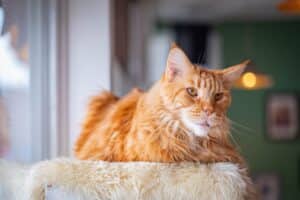
Best Cat Trees and Towers for Indoor Cats
1. Tangkula 69 Inch Wooden Tall Cat Tree
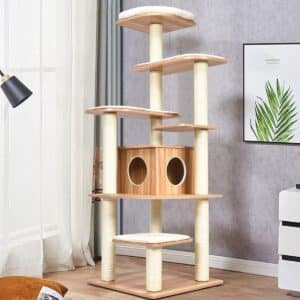
If you’d rather have cat furniture that looks like actual furniture, the Tangkula 69 Inch Wooden Tall Cat Tree is an attractive alternative to the traditional carpet-covered tower. Its 69-inch, five-tier design combines vertical climbing space with a condo, jumping platforms, top perch, scratching areas, and removable mats.
The structure is made with pine and birch wood, while the scratching areas incorporate sisal. Tangkula lists a 33-pound capacity for each level, and the top perch measures 16.5 by 15.5 inches, details that make this tall wooden cat tree especially interesting for shoppers looking beyond small kitten-sized platforms.
At nearly six feet tall, it’s also a good example of why you should measure before ordering a large cat tree. The overall footprint is approximately 23.5 by 19 inches, so check both your floor space and vertical clearance before committing to its new home.

2. FDW 54″ Cat Tree Tower
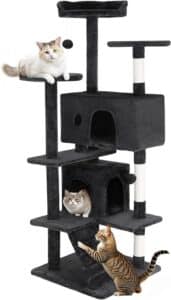
The FDW 54″ Cat Tree Tower hits a useful middle ground for cat parents who want vertical territory without installing an enormous piece of cat furniture. At 54 inches tall, there’s still room for climbing and elevated lounging while keeping the overall height more manageable.
A mid-height cat tower can be a particularly practical choice for apartments, bedrooms, offices, and other rooms where a giant floor-to-ceiling structure would be too much. Before ordering, compare the platform and condo dimensions with your cat’s size rather than choosing based on the overall height alone.
3. Yaheetech Large Multi-Level 63″ Cat Tree
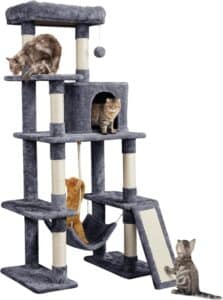
For cats who want choices, a large multi-level cat tree can create several destinations within one piece of furniture. The Yaheetech 63-inch Cat Tree gives indoor cats vertical space for climbing, lounging, scratching, and retreating to different levels throughout the day.
This is also one of the selections available from both Amazon and Chewy, giving shoppers another retailer to compare when looking at price, availability, and shipping. A 63-inch tower offers substantial height, but remember to look beyond the headline measurement and make sure individual platforms, beds, and hideaways are appropriately sized for your cat.
Multi-level designs can be especially useful in multi-cat homes when they provide more than one appealing resting spot. Cats sharing a tower still need enough room and options to avoid competing for the one premium perch everybody wants.

4. Sweetcrispy 44″ Cat Tree Tower
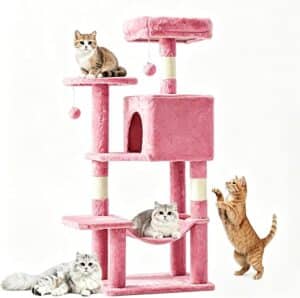
Not every cat needs a six- or seven-foot tower. The Sweetcrispy 44″ Cat Tree Tower is a more moderate option for homes where floor space, ceiling height, or simply the visual size of the cat furniture matters.
Shorter cat trees can also make sense for cats who enjoy elevated lounging but aren’t looking to scale the tallest object in the house. Consider your cat’s age, activity level, mobility, and preferred sleeping height when deciding whether a medium-height tower may be a better fit than a towering climbing structure.
5. PAWZ Road 59″ Modern Cat Tree
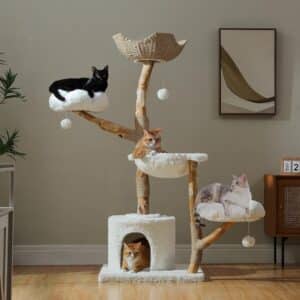
The PAWZ Road 59″ Modern Cat Tree brings another style option to a category traditionally dominated by beige carpet and sisal. At just under five feet tall, it provides substantial vertical territory without reaching the proportions of some of the tallest cat towers.
This model is also sold through Amazon and Chewy, which makes it worth comparing between retailers before buying. If your cat tree will live in a prominent spot such as the living room, a modern design may be especially appealing because you’re choosing something that effectively becomes part of the room’s furniture.
6. The Refined Feline Lotus Cat Tower
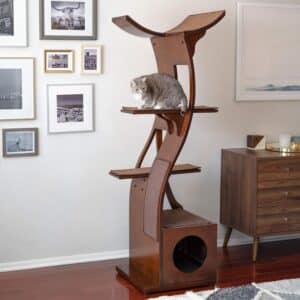
The Refined Feline Lotus is the statement piece of the group. This 69-inch modern cat tower combines curved wooden styling with multiple platforms and a cubby, making it look considerably different from a traditional plush cat tree.
Chewy lists the structure as sturdy plywood covered in wood veneer, with removable Berber carpet on the platforms and a long sisal scratching area on most finishes. The assembled tower measures 20 by 20 by 69 inches, giving it a relatively contained floor footprint for its height.
This is another model available through both Amazon and Chewy. The manufacturer information provided through Chewy says each platform should support at least 30 pounds, which may make the Lotus worth investigating for cat parents specifically searching for a modern cat tree for a large cat.
The design comes at a premium price compared with many conventional towers, so this is likely to appeal most to someone who cares almost as much about how the cat tree looks in the living room as their cat does about reaching the top perch.
7. 65in Large Cat Tree Condo
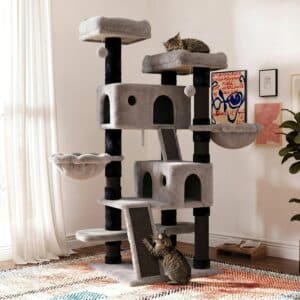
A large cat tree with a condo gives cats more than a route upward. Enclosed hideaways can create a sheltered place for resting, while the tower itself provides the elevated territory many cats seek out naturally.
This 65-inch option falls firmly into tall cat tree territory, so consider where it will go before ordering. Look closely at the dimensions of the condo and individual platforms as well, particularly if you’re shopping for a large cat rather than a kitten or smaller adult.
In a multi-cat household, count the useful resting areas rather than simply counting tiers. Several cats may be much happier with multiple desirable perches, beds, and hideouts than with one spectacular top platform everyone wants at the same time.
8. Heybly Cat Tree with Toy, 49.2 inch
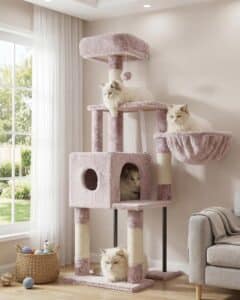
At 49.2 inches, the Heybly Cat Tree offers another middle-ground choice between a small scratching tower and a giant multi-level cat tree. The design incorporates platforms, a cat house, hammock, and sisal scratching posts, giving cats several types of spaces within one structure.
Safety matters with any vertical cat furniture. The product manual directs users to assemble the tower on a flat, stable surface, regularly inspect and tighten its hardware, and use the included anti-tipping strap to secure it to a wall, particularly with active cats or multiple cats.
That last point is worth remembering for every cat tree you consider. A tall tower isn’t useful if it wobbles enough to make your cat distrust it.
9. Globlazer Corner Cat Tree Tower with Scratching Post
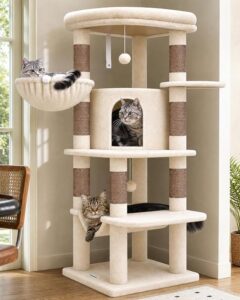
Corners are valuable real estate when you’re trying to fit cat furniture into a room without surrendering the entire floor plan. The Globlazer Corner Cat Tree Tower is designed to take advantage of that space while still providing vertical territory and scratching opportunities.
This is another selection available through Amazon and Chewy, giving you an opportunity to compare the two retailers. A corner cat tower can work particularly well in a living room, bedroom, or home office where you want a substantial cat setup without placing a tower in the middle of the room.
Wherever you put it, make sure the structure sits level and stable. Follow all assembly and anchoring instructions, and periodically check the hardware as your cat continues launching themselves onto it at speeds the manufacturer probably never imagined.
10. Feandrea 5-Tier Cat Tower with 2 Condos
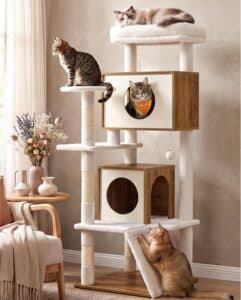
Some cats want the top perch, while others want a cave where nobody can bother them. A five-tier tower with two condos provides both types of cats with options.
The Feandrea design is especially interesting for multi-cat households because multiple tiers and two enclosed spaces can give cats different places to settle. That doesn’t automatically mean every multi-cat household will peacefully share one tower, though, so consider each cat’s relationship, preferences, and tolerance for sharing resources.
For bigger cats, pay particular attention to condo openings, interior dimensions, perch sizes, and manufacturer weight recommendations. “Large cat tree” can describe the overall furniture without necessarily meaning every individual sleeping area is large.
11. 90.5-Inch Luxury Cat Tree for Large Cats
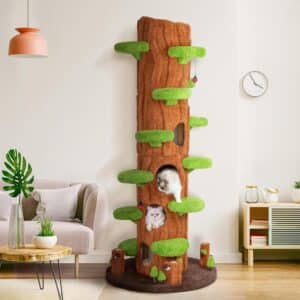
At 90.5 inches, this one is for cats who have looked at the top of the refrigerator and thought, “Higher.”
An extra-tall cat tree can provide impressive vertical territory for active indoor cats, especially those who prefer spending their time well above floor level. A structure this tall can also become a major feature in the room, so measure carefully and consider ceiling clearance, floor space, placement, and access before ordering.
This model is marketed toward large cats, but don’t rely on the product name alone. Check the manufacturer’s current weight recommendations and compare the dimensions of the perches, platforms, condos, and openings with your individual cat.
Extra-tall cat towers also make stability especially important. Assemble the tree exactly as directed and use any included anti-tip or wall-anchoring hardware according to the manufacturer’s instructions.
What Is a Cat Tree?
A cat tree is a piece of indoor cat furniture designed to provide vertical and horizontal spaces for activities such as climbing, scratching, playing, hiding, lounging, and sleeping. Designs range from a simple scratching post with a perch to elaborate multi-level cat towers with condos, hammocks, beds, ramps, toys, and multiple scratching surfaces.
For indoor cats, a cat tree can add usable territory without increasing the square footage of your home. Instead of thinking only about floor space, a tall cat tower lets cats use some of the vertical space in a room.
Cat trees also give cats designated places for normal behaviors such as scratching and climbing. That doesn’t guarantee they’ll immediately lose interest in your sofa, but placing appealing scratching and climbing options in locations your cat already likes can give them appropriate alternatives.
Cat Tree vs. Cat Tower: Is There a Difference?
The terms cat tree and cat tower are often used interchangeably by retailers and cat parents. You’ll also see products described as cat condos, cat climbing towers, cat activity centers, scratching towers, and cat furniture.
Generally, “cat tower” may be used for a taller vertical design, while “cat tree” can describe everything from modest multi-level furniture to very tall structures. There isn’t a universal industry definition that creates a clear dividing line between the two.
That means you shouldn’t get too caught up in whether a product is labeled a tree or tower. Its height, stability, platform size, scratching surfaces, resting areas, materials, and suitability for your cat matter considerably more than the name on the listing.
How to Choose the Best Cat Tree for Your Cat
The best cat tree isn’t necessarily the tallest, most expensive, or most elaborate model you can fit through the front door. It’s the one your cat will actually use comfortably and that fits safely in your home.
Consider Your Cat’s Size
Look at the dimensions of the individual platforms, beds, hammocks, and condos rather than only the overall dimensions of the tower. A 70-inch cat tree can still have a tiny top perch.
This becomes particularly important when shopping for a cat tree for a Maine Coon, Ragdoll, Norwegian Forest Cat, or another large cat. Weight limits matter, but your cat also needs enough physical room to lie down, turn around, enter a condo, and move between levels comfortably.
Think About Height
Many cats enjoy being up high, but taller isn’t automatically better for every cat. Young, athletic climbers may happily race to the top of a tall cat tower, while a senior cat or a cat with mobility limitations may find widely spaced levels difficult to navigate.
Look at how your cat currently uses vertical space. A cat who is constantly on top of bookcases may appreciate a tall tree, while a cat who rarely ventures higher than the sofa may prefer something more moderate.
Look for a Stable Base
Stability should be one of your biggest considerations when choosing a cat tree. Cats may leap onto a platform at speed, chase each other between levels, or launch themselves from the tower onto nearby furniture.
Follow the manufacturer’s assembly instructions and use anti-tip or wall-anchoring hardware when provided or recommended. Periodically inspect fasteners, posts, platforms, and scratching surfaces for looseness or wear.
Check the Scratching Surfaces
Many cat trees incorporate sisal-covered posts, scratching boards, or other scratchable areas. Pay attention to both the material and the amount of usable scratching space.
Some cats like vertical scratching while others prefer horizontal or angled surfaces. A cat tree with the wrong type of scratching area for your particular cat may still be a fantastic climbing tower, but it may not replace their favorite separate scratcher.
Count the Perches and Sleeping Areas
For one cat, a favorite top perch may be enough. For two, three, or more cats, multiple appealing resting areas can become much more important.
Look for towers with several usable platforms, condos, beds, or hammocks if your cats enjoy being near one another. Cats who prefer more personal space may need multiple pieces of cat furniture placed around the home rather than one giant tower everyone is expected to share.
Think About Your Cat’s Age and Mobility
Kittens and young adults may approach a towering cat tree like an amusement park. Senior cats and cats with mobility limitations may benefit from shorter distances between platforms or an arrangement that creates easier steps upward.
A sudden reluctance to jump, difficulty climbing, stiffness, or other changes in mobility are worth discussing with your veterinarian. A more accessible cat tree can make the environment easier to navigate, but it shouldn’t replace investigating a new physical problem.
Decide Between Plush and Wooden Cat Trees
Traditional plush cat trees can provide soft surfaces and the cozy look many cat parents expect. Modern wooden cat trees may blend more easily with home decor and can sometimes offer removable cushions or pads that simplify cleaning.
Neither style is universally better. Consider your cat’s preferred textures, how easy the surfaces are to maintain, your decorating preferences, and whether replacement scratching or lounging components are available.
Measure Your Space Before You Buy
Measure height, width, depth, and ceiling clearance before ordering, especially when shopping for an extra-large cat tree. Don’t forget to account for nearby doors, windows, vents, furniture, and walking paths.
Think about where your cat already wants to spend time, too. A beautiful tower hidden in an unused room may get considerably less attention than one positioned near a favorite window or family gathering area.
What Size Cat Tree Do I Need?
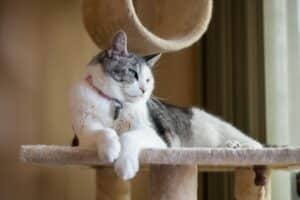
There isn’t one ideal cat-tree size because both cats and homes vary. Start by measuring your cat and the space where you plan to put the tower.
For a large cat, focus on platform dimensions, condo openings, bed sizes, stability, and manufacturer weight recommendations. For multiple cats, look at how many usable resting spots the structure provides and whether several cats can move around it without constantly competing for the same space.
Height is only one measurement. A 90-inch tower isn’t automatically roomier for a large cat than a 60-inch tree with oversized platforms and generous condos.
Where Should You Put a Cat Tree?
A spot near a secure window can be especially appealing because it combines elevation with outdoor viewing. Birds, squirrels, passing neighbors, and blowing leaves can turn a simple perch into hours of feline television.
Living rooms and other spaces where the family spends time can also work well for social cats. Cats often want an elevated place where they can observe household activity without necessarily being in the middle of it.
Avoid placing an unstable tower where a fall could create additional hazards, and follow manufacturer instructions regarding wall anchoring and placement. A level floor and proper assembly should come before the perfect Instagram-worthy location.
Are Cat Trees Good for Indoor Cats?
Cat trees can add climbing, scratching, hiding, resting, and play opportunities to an indoor environment. They can be one part of creating a home that gives cats choices about where and how they spend their time.
A cat tree shouldn’t be the only enrichment an indoor cat receives, however. Interactive play, scratching options, hiding places, comfortable resting areas, toys, and opportunities to observe their surroundings can all contribute to a more interesting indoor environment.
Frequently Asked Questions About Cat Trees and Towers
1. What Is the Best Cat Tree for Indoor Cats?
The best cat tree for an indoor cat is one that matches their size, activity level, climbing ability, scratching preferences, and preferred sleeping style. It should also be stable, appropriately sized, and suitable for the space where you plan to use it.
A young climber may enjoy a tall multi-level tower, while an older cat may prefer easier transitions between platforms. There isn’t one design that’s best for every cat.
2. How Tall Should a Cat Tree Be?
Cat trees can range from small towers under three feet to structures more than seven feet tall. The right height depends on your cat’s comfort with climbing, your available space, and the design of the individual levels.
Cats who actively seek high places may enjoy a tall cat tree. Cats with mobility limitations may be better served by a shorter or more accessible design.
3. What Is the Best Cat Tree for a Large Cat?
Look for a sturdy cat tree with manufacturer weight recommendations appropriate for your cat, along with wide platforms, roomy beds, and sufficiently large condo openings. Stability becomes particularly important when a heavier cat jumps onto elevated platforms.
Don’t rely solely on phrases such as “large cat tree” or “for large cats” in a product title. Check the actual measurements and specifications before ordering.
4. What Is the Best Cat Tree for Multiple Cats?
A multi-cat cat tree should ideally provide several desirable resting and perching areas rather than one prime location at the top. Multiple condos, platforms, hammocks, beds, and scratching areas can give cats more choices.
Your cats’ relationship matters too. Cats who don’t enjoy sharing close quarters may benefit more from several cat trees or perches distributed around the home.
5. Do Cats Prefer Tall Cat Trees?
Many cats enjoy elevated resting places, but preferences vary. Some cats immediately claim the highest perch available, while others are perfectly content several feet off the ground.
Watching where your cat already chooses to sleep and observe the household can provide clues. A habitual bookshelf climber may appreciate substantial height more than a cat who spends most of the day on the sofa.
6. Are Wooden Cat Trees Better?
Wooden cat trees can be sturdy, visually appealing, and easier to incorporate into some decorating styles. Designs with removable cushions or mats can also make certain surfaces easier to clean or replace.
Plush cat trees have their own advantages and may provide softer resting surfaces. The better option depends on construction, stability, maintenance, your budget, and what your cat prefers.
7. How Do I Get My Cat to Use a New Cat Tree?
Put the tree somewhere your cat already enjoys spending time and give them a chance to investigate without forcing them onto it. Favorite toys, treats, or familiar bedding may help make the new structure more interesting.
Interactive play around the lower levels can also encourage exploration. Some cats claim new furniture immediately, while others need days or weeks before deciding it was obviously theirs all along.
8. Should a Cat Tree Be by a Window?
A window can be an excellent location if the cat tree can be positioned there safely. The combination of an elevated perch and a view of outdoor activity can make the tower especially appealing.
Make sure windows and screens are secure and that the cat tree itself remains stable in its chosen location. Follow any manufacturer recommendations regarding wall anchoring.
9. How Many Cat Trees Do Two Cats Need?
Two cats can sometimes happily share one large cat tree with multiple perches and resting spaces, but there isn’t a fixed one-tree-per-cat rule. Their relationship, territorial preferences, home layout, and the size and design of the tree all matter.
If one cat routinely blocks the other from using the tower, adding another vertical space elsewhere in the home may give both cats more choices.
10. How Long Do Cat Trees Last?
The lifespan of a cat tree depends on its construction, materials, number of cats using it, and how enthusiastically they scratch and climb. Scratching surfaces may wear much faster than the underlying structure.
Inspect the tree regularly for loose hardware, unstable platforms, damaged posts, worn material, or other safety concerns. Replace or repair components according to the manufacturer’s guidance.
11. Are Cat Trees Worth It?
For cats who enjoy climbing, scratching, hiding, or lounging above the floor, a well-chosen cat tree can combine several useful features into one piece of furniture. It can be particularly valuable in indoor environments where adding vertical territory expands the usable space available to a cat.
The key is choosing for your actual cat rather than the imaginary cat in the product photos. Size, stability, platform layout, scratching preferences, mobility, and placement can matter far more than how elaborate the tower looks.
Give Your Cat a Room With a View
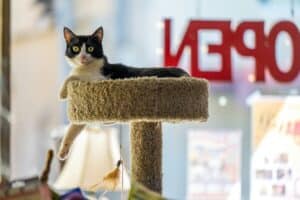
A cat tree can be a scratching post, nap spot, lookout tower, hiding place, climbing gym, and throne all rolled into one. Choosing the right one starts with thinking about how your cat already moves through your home and what they seem to want more of.
For some cats, the winner will be a towering 90-inch climbing structure. For others, a sturdy mid-height cat tower beside a favorite window will become the most valuable piece of real estate in the house.
Measure your cat, measure your room, check the individual platform sizes, and put stability ahead of flashy extras. Once the new cat tree is assembled, all that’s left is waiting to see whether your cat climbs straight to the top or spends the first three days sleeping in the box it arrived in.
This content was created with AI assistance and edited by the iHeartCats team.