
Cats attack feet moving under blankets or covers because the motion and muffled sound trigger a hardwired predatory response, the same stalk, crouch, and pounce sequence cats use on real prey. It isn’t aggression toward you. It’s reflexive play aggression, and it’s most common in kittens and young cats. It usually stops once you quit reacting like fleeing prey (freeze instead of yanking your foot away) and give your cat a scheduled outlet for that hunting drive, such as 10 to 15 minutes of wand toy play before bed.
How To Stop Your Cat From Attacking Your Feet
| Strategy | What it looks like | Why it works |
|---|---|---|
| Scheduled play before bed | 10 to 15 minutes of wand toy or laser play about 30 minutes before lights out | Burns off predatory drive before your feet become the target |
| Freeze, don’t flee | Stop moving your foot instead of yanking it away when the ambush starts | Fast movement reads as fleeing prey; veterinary behavior guidance is to redirect onto a toy rather than pull away or punish |
| Decoy toy under the blanket | Tuck a small kicker toy near your feet for your cat to grab instead | Gives the hunting drive a legal target that isn’t attached to you |
| Physical barrier | Closed bedroom door, a footboard, or a heavier blanket over your feet | Removes access to the trigger while you sleep |
| When to call the vet | Attacks draw blood, escalate, start suddenly, or come with skin rippling, back sensitivity, hiding, or other behavior changes | Pain such as osteoarthritis, and feline hyperesthesia syndrome, can look like play attacks and need an exam |
Evidence-reviewed, not hands-on tested.
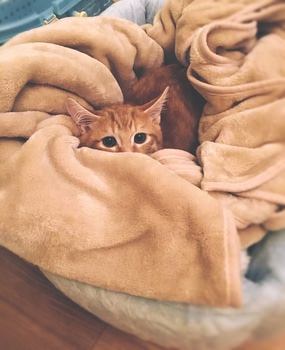
We all know it. I think all cats have done it. You are lazily waking under your covers when your cat launches herself at your feet. Sometimes we anticpate and egg it on, but sometimes, it is a bit of a shock if you are comfortably snoozing when the attack occurs. You can make it a game or you can just bump her off the bed. Given the unpredictability of your reaction, why does your cat seem to find the lure of your hidden feet so irresistible?
That’s just it… it’s irresistible. Cats are hunters and their prey drive is hard wired into their very being. The presence of prey, its movement and sound, triggers a response inside your cat’s brain that is reflexive. He probably knows it’s your feet (or at least knows that what it is an awfully large prey item for him), but the signals prompt him to act, regardless. As the game moves forward, of course, his cognitive brain starts to catch up and he relishes the capture and loss and recapture of your elusive feet just for the fun.
Think about sport fishing. I used to wonder why in the world a fish would try to eat or attack a plastic lure. Sport fishing is successful based on the very same concept. It is not really about the lure or the material (because let’s face it, artificial lure is like your foot, never edible), but instead it is whether the lure can trigger the fish to instinctively attack. Here is where the skill and art of fishing come in. The fisherman wants to use and move the lure in a way that will cause the fish to react without thinking.
Your feet may do the same thing for your cat, but there is probably more to it than that, given that your cat likes you and wants your attention. She gets the fun of the chase and catching of your feet and sometimes, you respond with a game. She never actually ingests your toes, so she knows in her thinking brain that this is not a hunt. If she is truly hungry, she will abandon the game in search of real food.
Hunting and prey apprehension are so important to cats that those deprived of it are at a greater risk of medical and behavioral disorders, so indulge your cat’s desire to stalk your feet, even find other things that she can sneak up on and pounce on. If she’s interrupting your needed sleep time, make sure you indulge her hunter instincts in deliberate games before you retire for the night. Appreciate that she needs these types of activities for her overall mental and physical health. If it turns into a fun game ritual, it is even better!
Final Pounce of Perspective
At the end of the day (or night, when your feet are under siege), remember that your cat’s antics come from a deep, instinctual place. It’s not mischief-it’s meaningful. Every pounce, every wiggle of the haunches before the strike, is your cat’s way of staying sharp, staying engaged, and maybe even bonding with you in their quirky, clawed-up way. So whether you choose to retreat under thicker blankets or join in the fun, know that these playful attacks are part of what makes sharing your life with a cat so endlessly entertaining-and a little unpredictable. And let’s be honest: that’s half the charm.
Sweet dreams…and maybe wear socks tonight.
Do you love cats? Find me on Facebook at Kathryn Primm, DVM. We talk about all sorts of fun animal things!
Cat Attacking Feet: Common Questions
Why does my cat attack my feet?
Because feet move like prey. Veterinary behavior sources describe play aggression as normal predatory behavior that gets triggered by quick, low, unpredictable movement, and hands and feet are the usual targets. It happens under the covers, around corners, and on the stairs for the same reason.
Does my cat know it’s my feet under the blanket?
Probably, at least once the game is underway. The pounce itself is reflexive and triggered by movement rather than by confusion about who you are. Dr. Primm’s read, based on years of watching this in practice, is that your cat knows and pounces anyway because the signal is simply too good to ignore.
How do I get my cat to stop attacking my feet at night?
Give the drive somewhere else to go before bedtime. Schedule 10 to 15 minutes of interactive wand toy play in the evening, redirect onto a toy instead of pulling your foot away, and close the bedroom door if you need uninterrupted sleep. Never use your hands or feet as the toy, because that teaches your cat exactly what you’re trying to stop.
Why does my kitten attack my feet more than my adult cat does?
Play aggression shows up most often in kittens and young, active cats, especially ones who were orphaned or raised without littermates to practice rough play on. Most cats tone it down as they mature, but only if they get an acceptable outlet in the meantime.
Is my cat being aggressive or just playing?
Play aggression usually comes with a wiggle before the pounce, a soft or inhibited bite, and a cat who lets go and resets for another round. Real aggression tends to include hissing, growling, flattened ears, a puffed tail, and a bite that doesn’t release. Your cat abandoning the game the second real food appears is another clue that it’s play.
When should foot attacks be checked by a vet?
Book an exam if the attacks draw blood, escalate in intensity, start suddenly in a cat who never did it before, or come with other changes like hiding, litter box trouble, or sensitivity along the back. Pain, including osteoarthritis, often shows up as a behavior change in cats, and feline hyperesthesia syndrome can cause sudden biting episodes that look like play.