
The “M” on a tabby cat’s forehead is a genetic marking produced by the tabby gene (part of the Agouti signaling pathway), which controls how pigment is distributed along each hair shaft to create the classic swirled or striped tabby coat pattern. All four tabby patterns, mackerel, classic (blotched), spotted, and ticked, carry this same M-shaped marking above the eyes, though how bold or faint it looks depends on the cat’s other coat genes. Even solid-colored or non-tabby cats often show a faint “ghost tabby” M as kittens or in certain lighting, because the tabby gene is present in nearly all domestic cats’ genetic background. It’s just masked by other color genes.
Evidence-reviewed, not hands-on tested.
Just like people come in different skin and hair tones, so do cats, except they are even more interesting. They have patterns, stripes or spots sometimes, but their actual pattern is fairly consistent, especially on the face. Even cats that are not tabby will often have a shadow of an “M” above their eyes, since the underlying tabby pattern genes are still present but incompletely masked by other color genes, a phenomenon described in kittens and solid-colored cats by Kaelin & Barsh, 2013, Seminars in Cell & Developmental Biology.
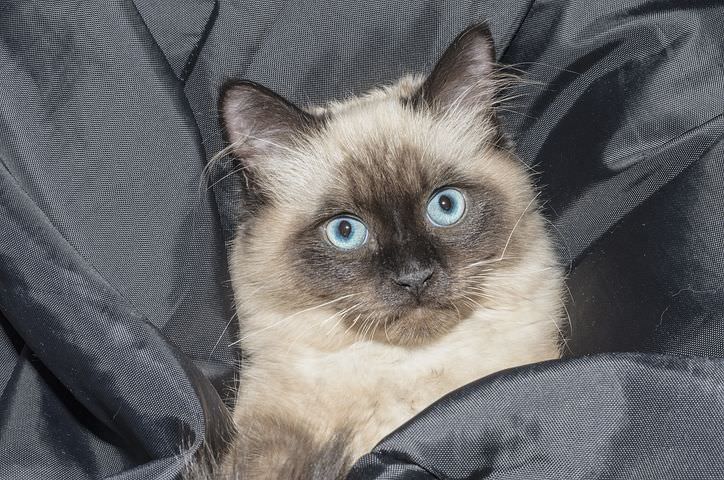
People have long postulated the reasons for coat patterning among the different species, but no one really knows for sure.
Coat patterning shows up across many species, and researchers don’t always agree on why. Zebra stripes, for instance, are thought by some scientists to help deter biting flies, but that research is about zebras specifically and isn’t evidence for why cats are patterned. Cats are small predators rather than grazing prey, so their tabby pattern likely serves a different purpose, like camouflage while stalking or resting. Your cat’s feline ancestors have carried the tabby pattern for nearly 10,000 years. So why the M specifically?
The striped pattern of the tabby cat is a dominant gene for cats, but there are a few different expressions of the pattern: mackerel and blotched tabby. Both of these can include the M above the eyes.
The pattern of your cat’s stripes is defined on his genes and begins to express long before the actual hair develops. Much like leopards, jaguars, and tigers have defined stripe or spot patterns, your cat appears the way he appears because it is written on his DNA and his M is a standard part of his tabby pattern, a mechanism traced to the tabby gene network described in Kaelin et al., 2012, Science. But depending on his other genes, it may be dark and obvious or subtle and blended into his face. Either way, it is a special feature of tabby cats and it is one of the things that makes them unique and beautiful.