
iHeartCats is reader-supported. When you buy via links on our site, we may earn an affiliate commission at no extra cost to you.
Walking a cat on a leash may sound unusual, but it’s becoming a popular way for pet parents to give their cats safe, stimulating outdoor time. With the right training and gear, leash walks can help keep cats active, curious, and mentally enriched. Whether it’s basking in the sun, sniffing the grass, or chasing a butterfly, outdoor strolls can bring joy to cats who are suited for the adventure. These tips will help you prepare, train, and choose the best products to make the experience safe and enjoyable.
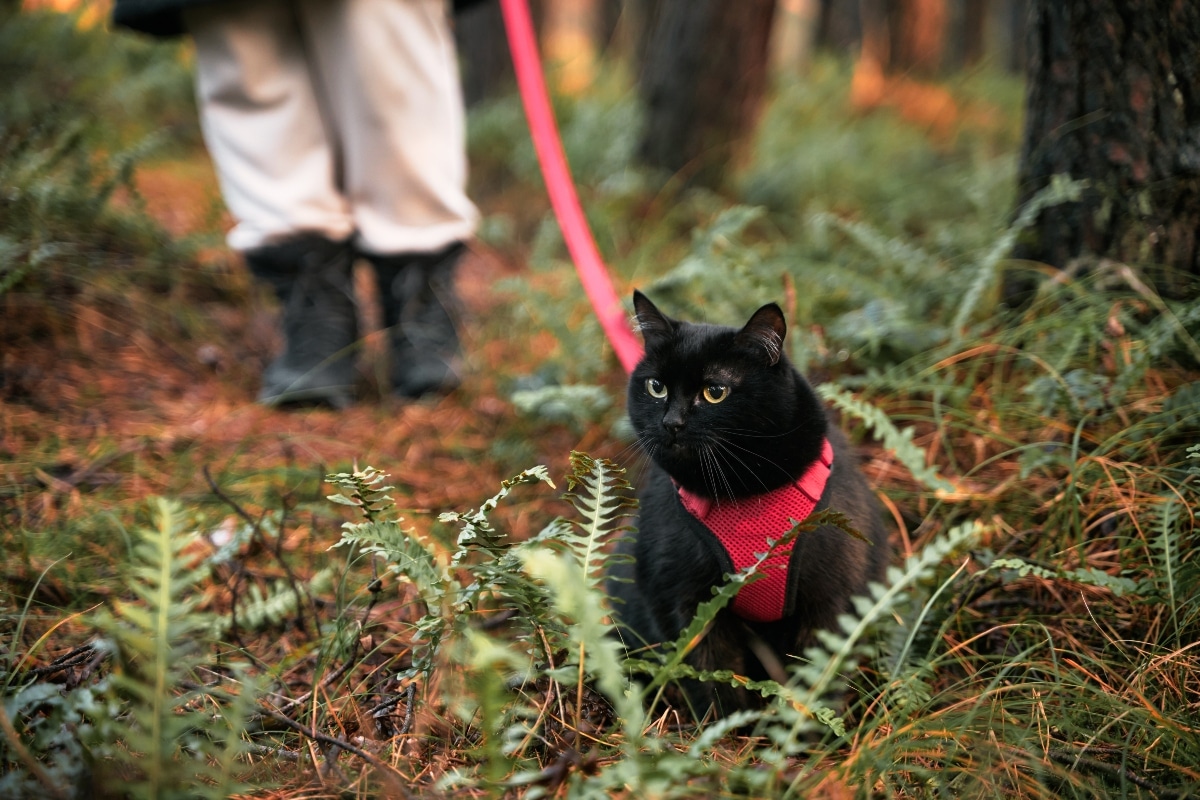
12 Tips For Walking Your Cat On A Leash
#1 – Know your cat.
Not all cats will enjoy walking outdoors on a leash. Consider your cat’s personality before trying it. Outgoing and confident cats are usually the best candidates. If a cat prefers hiding from noise or visitors, leash walks may cause more stress than joy. The goal is enrichment—never force it if they aren’t interested.
#2 – Use the right kind of harness.
Cats are escape artists, so a dog harness won’t keep them secure. Always choose a harness designed specifically for cats. Look for comfort, adjustability, and a snug fit. Here are two style options so you can choose the right option for your cat:
rabbitgoo Cat Harness and Leash: This harness is made with breathable air mesh, reflective strips, and four adjustable straps for a snug yet comfortable fit. It’s lightweight, durable, and designed to prevent escapes. The secure design ensures cats can’t wriggle out, while the reflective details make evening walks safer. Its balance of comfort and security is ideal for new leash walkers who need both confidence and restraint.


Kitty Holster Cat Harness: A vest-style harness made from soft, durable cotton that wraps around the body for even pressure distribution. It closes with wide Velcro strips, making it easy to put on and take off. The gentle vest design is less intimidating than buckles and clips, which makes it a perfect option for sensitive cats. It’s breathable and flexible, giving cats freedom of movement while still keeping them secure.

#3 – Make sure the harness fits correctly.
A well-fitting harness is critical. It should be snug but not tight—you should be able to fit one or two fingers between the harness and your cat. This balance prevents escapes while ensuring comfort. Take time to adjust the straps before heading outside.
#4 – Train indoors first.
Acclimate your cat slowly by letting them get used to the harness indoors. Allow them to sniff and rub against it before putting it on. Once they’re comfortable, attach the leash so they can adjust to the feeling of gentle resistance.
The AMAGOOD 6 FT Cat Leash is a sturdy nylon leash that’s lightweight and flexible, with a strong clip that attaches securely to any harness. Its 6-foot length offers cats freedom while keeping them safe within reach. The length is perfect for both training sessions indoors and outdoor walks. It’s long enough to let cats explore comfortably, but not so long that they can get tangled or wander too far.

#5 – Use rewards.
Positive reinforcement is the best way to teach a cat to enjoy harness training. Reward them with affection, play, and tasty treats whenever they tolerate the harness or walk a few steps. This builds a positive connection with the activity.
Blue Buffalo Wilderness Crunchy Cat Treats are a great choice as they are grain-free, protein-packed treats made with real chicken or salmon. Each piece is small, crunchy, and perfect for training rewards. These treats are healthy but also irresistible, making them an effective motivator. They’re easy to carry in a pocket or treat pouch so you can instantly reward good behavior during walks.

#6 – Let them lead the way.
Walking a cat is very different from walking a dog. Instead of guiding them along, follow their lead. They may choose to wander, pause, or simply lounge in a sunny patch. Patience is key—the adventure is theirs to enjoy.
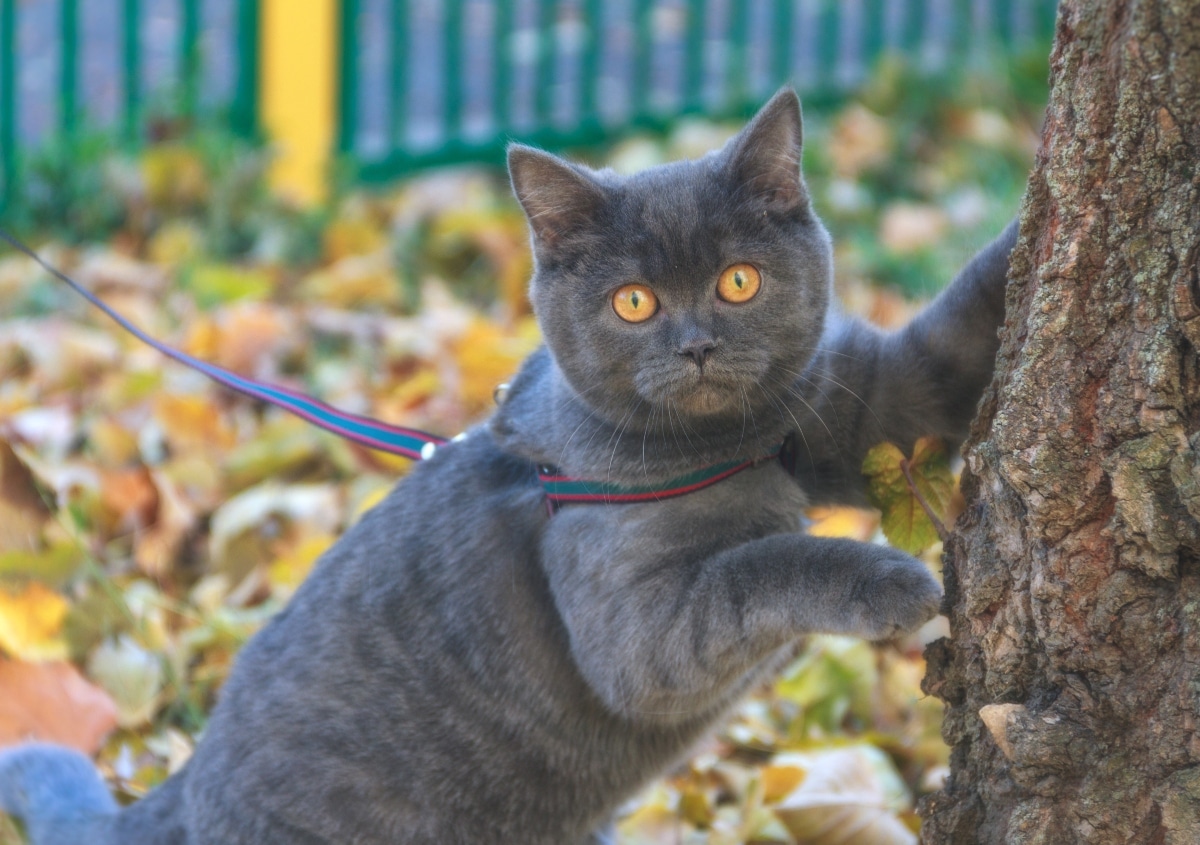
#7 – Find a quiet, safe place.
Start in a calm, low-stimulation environment. A quiet backyard, suburban sidewalk, or a peaceful park is ideal. If you live in a busy area, consider driving to a quieter spot. Too much noise or activity can make a cat nervous and discourage future walks.
#8 – Set clear boundaries.
Once cats experience the outdoors, they may want more. Establish boundaries—outdoor time should only happen with a harness and leash. Be cautious when opening doors to prevent escape attempts. Consistency helps reinforce safe habits.
RELATED: Amazon Products to Help Train (and Entertain) Your Cat
#9 – Use a collar and ID tag.
Even with a harness, accidents can happen. An ID tag or tracking collar provides peace of mind in case your cat slips free. Check out these options:
Airtag Cat Collar: This breakaway collar comes with a built-in AirTag holder, giving you a tech-savvy way to track your cat through Apple’s Find My app. It’s lightweight, adjustable, and safe for everyday wear. Breakaway safety prevents accidents if the collar gets caught, while the AirTag capability adds an extra layer of security during outdoor walks. Perfect for pet parents who want peace of mind.

GoTags Stainless Steel Pet ID Tags: Durable stainless steel tags that can be custom engraved with your cat’s name and your contact details. The deep engraving resists wear for long-term use. In the event your cat slips away, a visible ID tag is still one of the fastest ways to ensure a safe return. These tags are built to last and stay legible, even with everyday wear.

#10 – Keep your cat healthy.
Outdoor walks can expose cats to parasites, fleas, ticks, and even other animals. Before venturing out, make sure vaccinations are current and that your cat has flea and tick protection. Consult your vet for a preventive care plan.
#11 – Be aware of the environment.
Stay alert to what’s happening around you. Watch for dogs, other cats, traffic, or environmental hazards such as broken glass or toxic plants. By scanning ahead, you keep your cat safe so they can focus on exploring.
#12 – Be aware of your cat’s body language.
Cats communicate stress through subtle cues. Watch for pinned ears, wide eyes, crouching, or a tucked tail. If they appear frightened, cut the walk short. Always prioritize their comfort and sense of security.
How to Speak Cat: A Guide to Decoding Cat Language is a practical guide by Dr. Gary Weitzman that explains feline body language, vocalizations, and behavior patterns. Understanding cat communication is key to safe walks. This book helps you spot early signs of stress, so you’ll know exactly when to reassure your cat or end the session.

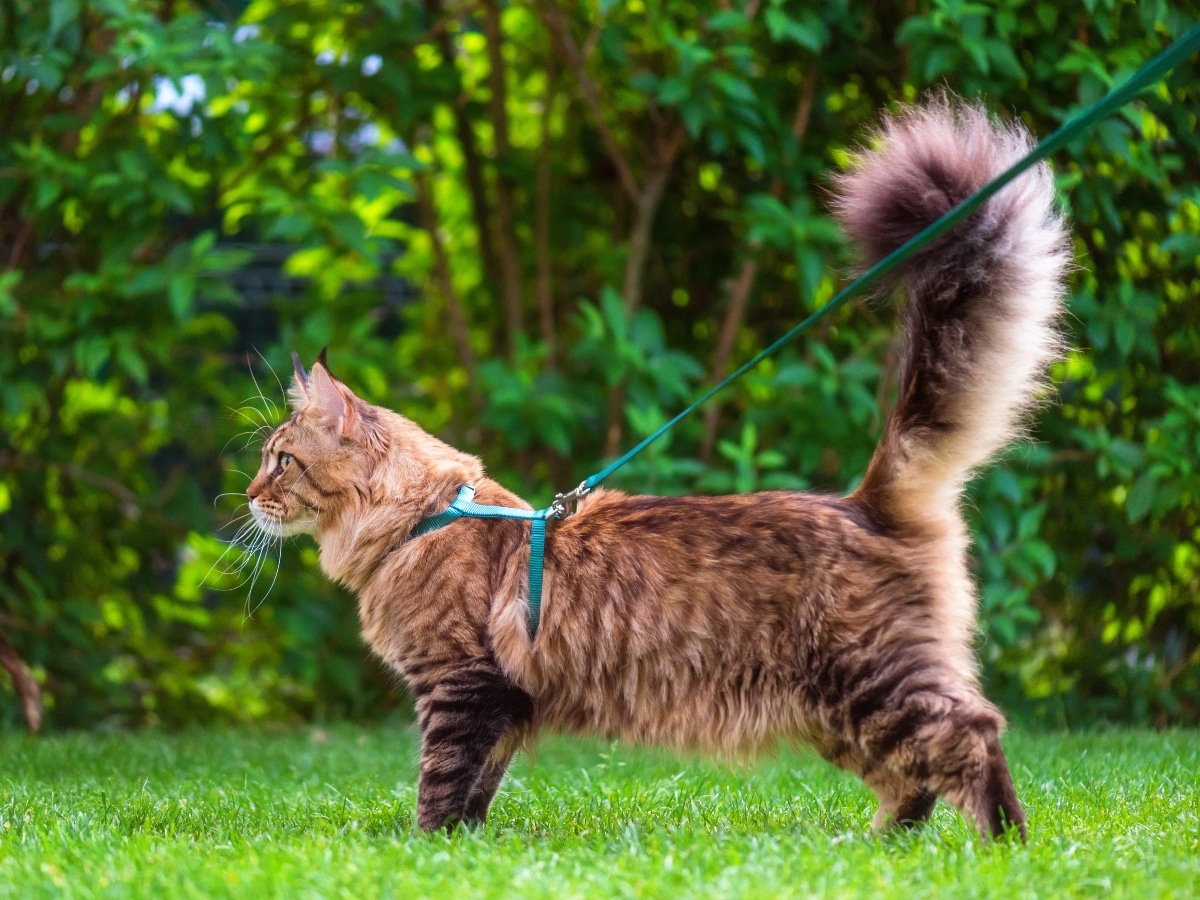
The Joy of Outdoor Bonding
With patience, the right gear, and positive reinforcement, many cats can learn to enjoy leashed walks. Whether your cat wants a full adventure or just a sunny patch of grass, the goal is enrichment, bonding, and fun.