
Cats sleep on clothes mainly because of scent and warmth. Worn clothing carries a person’s individual scent along with the cat’s own scent deposited through cheek rubbing (a behavior called bunting), so resting on it lets the cat mix its scent with a trusted person’s, a normal feline bonding and territory-marking behavior. Clothing is also often warmer and softer than a cat bed: fresh laundry retains dryer heat, and folded piles form soft contours a flat bed can’t. Evidence-reviewed, not hands-on tested.
- Scent: mixes your cat’s smell with yours
- Warmth: laundry holds leftover dryer heat
- Softness: fabric beats a flat bed surface
- Shape: piles form a cozy, supportive nest
- Routine: a reliable, familiar resting spot
- Safety: often a quiet, low-traffic location
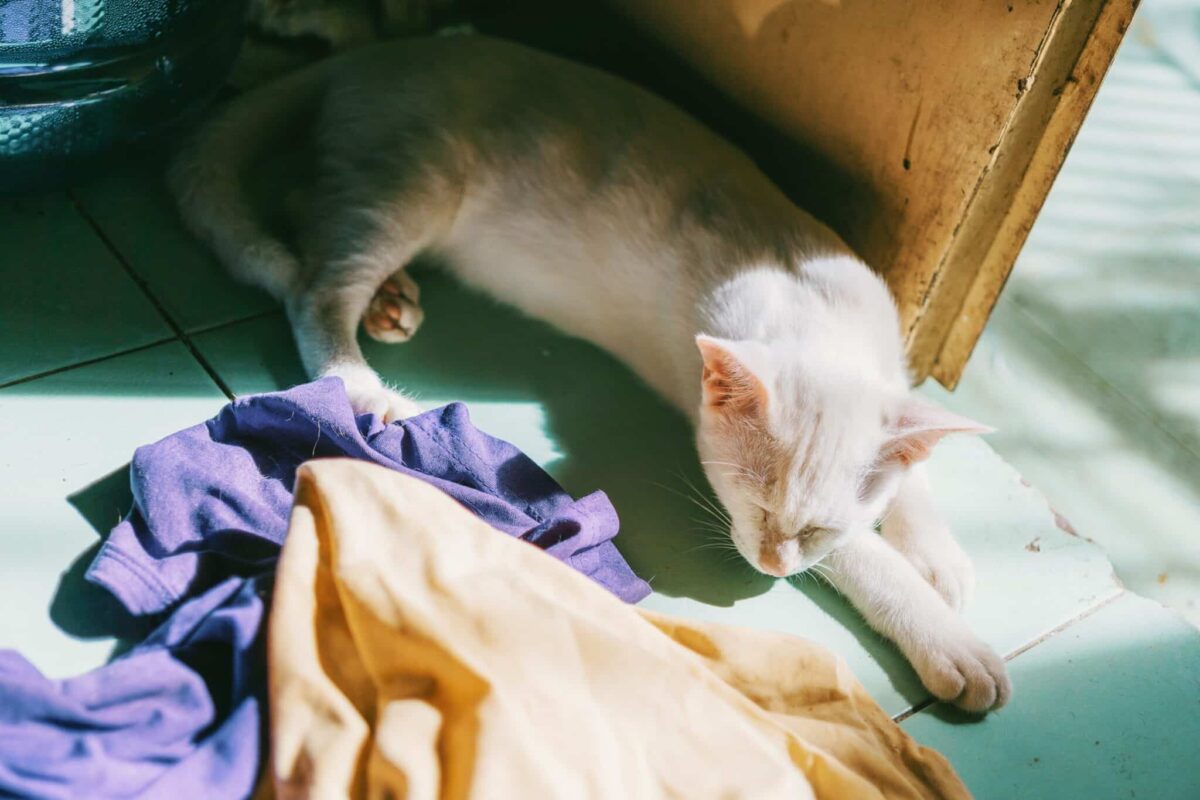
Why Does My Cat’s Clothing Smell Familiar?
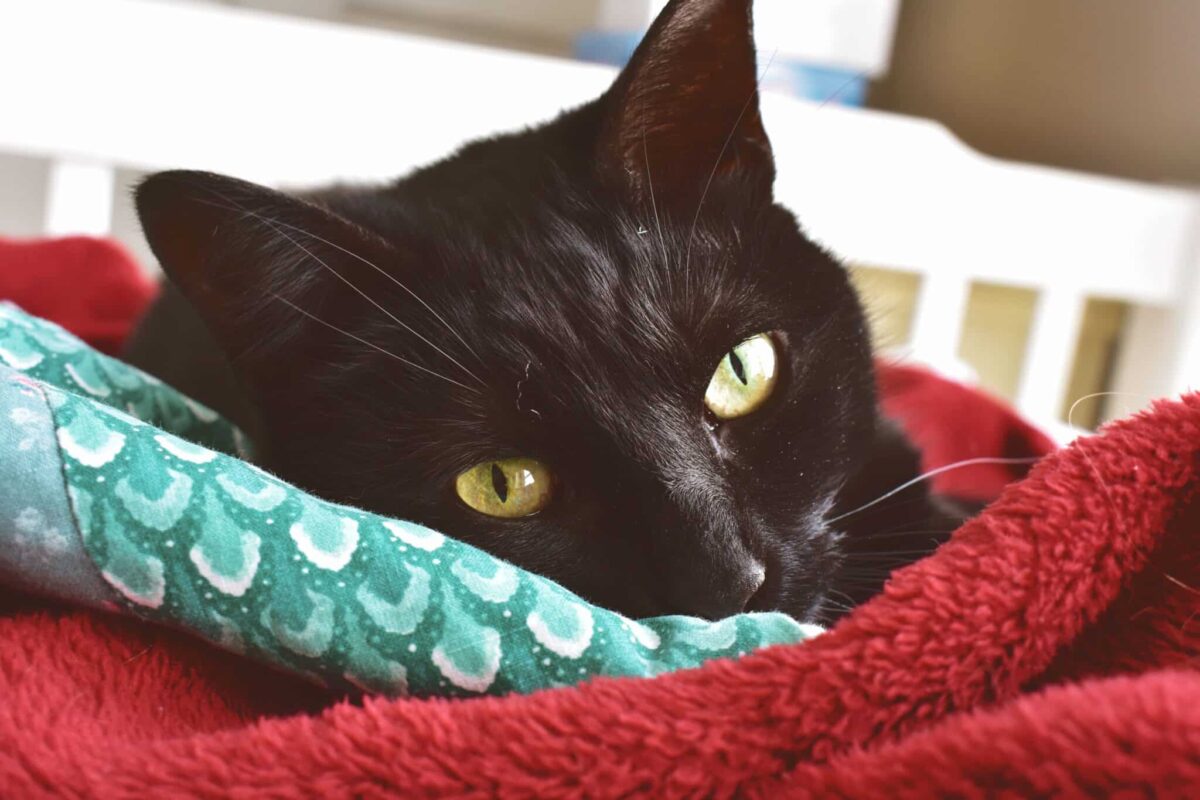
Scent plays an enormous role in how cats experience their surroundings. Clothing that has been worn carries a person’s individual scent, making it noticeably different from freshly cleaned bedding or an unfamiliar surface. Familiar smells can contribute to an environment that feels predictable and comfortable, particularly when the clothing belongs to someone the cat regularly interacts with positively. This does not mean every nap on a sweater is automatically a declaration of affection.
The garment may also be soft, warm, or conveniently located. Still, scent is one of the primary channels cats use to communicate and read their environment, according to the Cornell Feline Health Center, so a familiar-smelling shirt can offer more than physical comfort. That’s the same scent-first system at work when a cat chooses to touch noses with you instead of a stranger. To a cat’s sensitive nose, that seemingly ordinary piece of clothing contains plenty of recognizable information about their surroundings.
Does My Cat Sleep on Clothes Because They’re Comfortable?
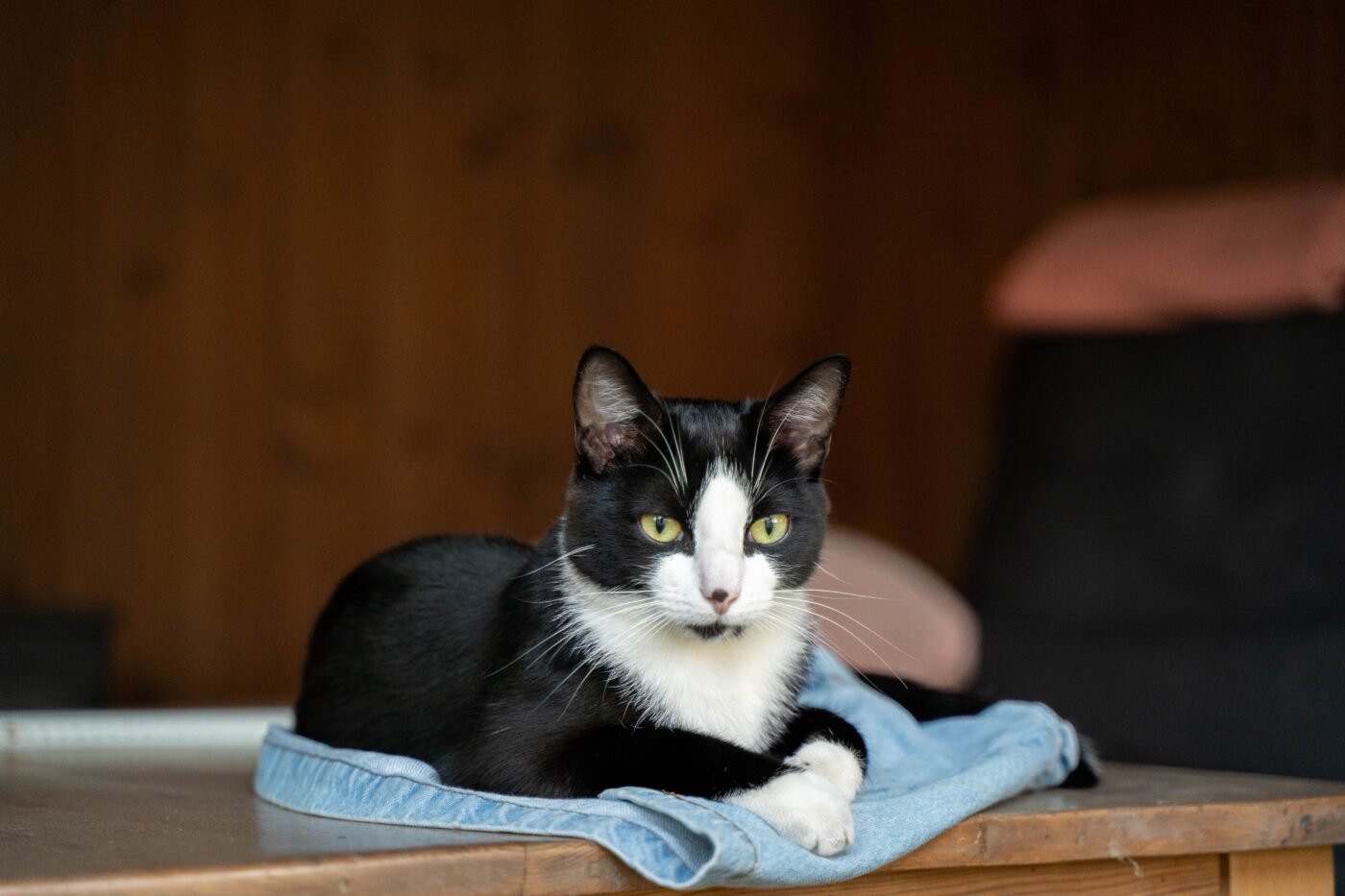
Sometimes the explanation requires no complicated feline psychology at all. A soft sweatshirt, fleece jacket, or pile of cotton clothing can simply create an excellent sleeping surface. Cats spend substantial portions of the day resting and sleeping, so comfortable textures can strongly influence where they settle. Folded clothing may provide cushioning, while loose garments can form soft dips that naturally support a curled sleeping position.
Individual preferences matter considerably because one cat may adore plush fabrics while another consistently chooses smooth cotton or something surprisingly firm. Comparing the chosen clothes with other favorite resting places can reveal a texture preference. The expensive cat bed might be carefully designed for comfort, but plenty of cats choose the sweater on the floor instead.
Does My Cat Sleep on Clothes for Warmth?
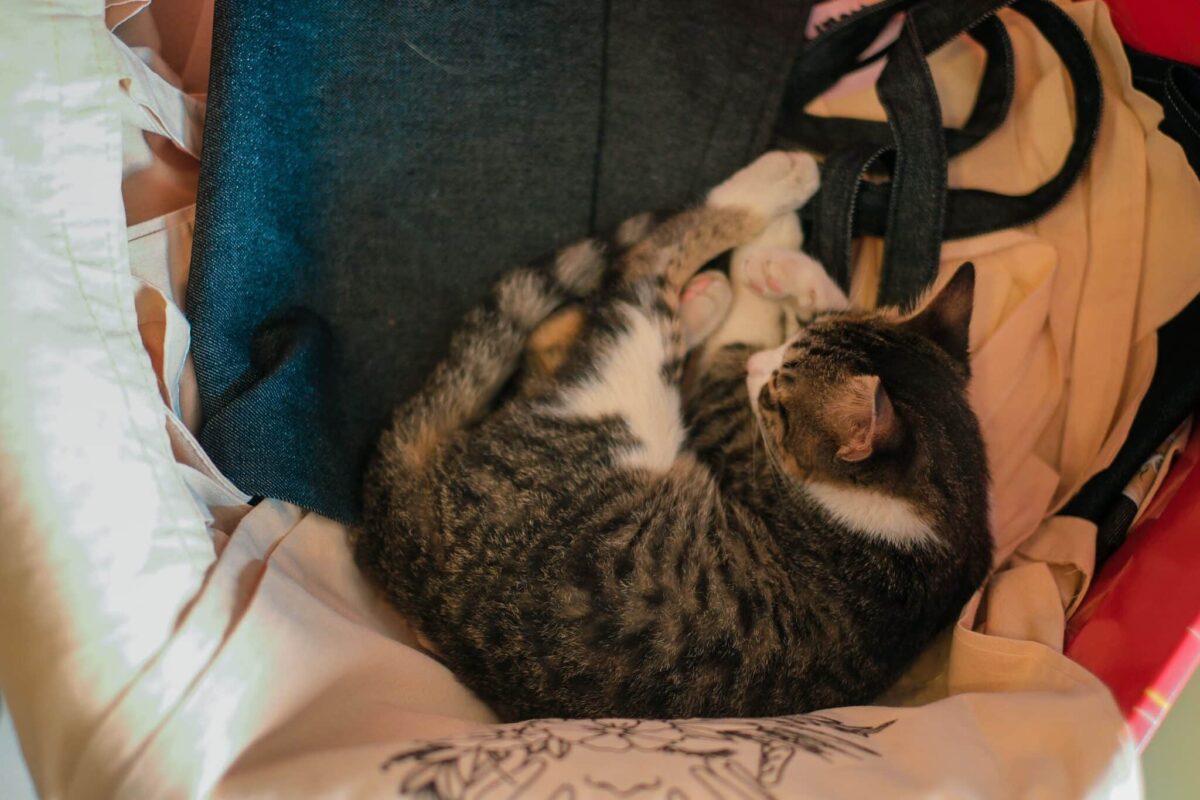
Cats generally appreciate comfortable warmth, and clothing can provide it remarkably well. Laundry recently removed from a dryer can retain heat, while clothes left on a bed or sunny chair may become pleasantly warm throughout the day. Fabric can also help conserve some of the cat’s own body heat once they curl into position. This makes a pile of clothes especially tempting in a cool room or during colder weather.
Seeking out warm resting places is normal feline behavior, according to VCA Animal Hospitals, although cats should always have the freedom to move away if they become uncomfortable. A cat repeatedly choosing laundry at certain times of day may therefore be responding more to temperature than scent or social attachment. Sometimes the attraction to freshly dried pajamas is simply leftover heat, nothing more complicated than that.
Why Does My Cat Like Sleeping in a Pile of Clothes?
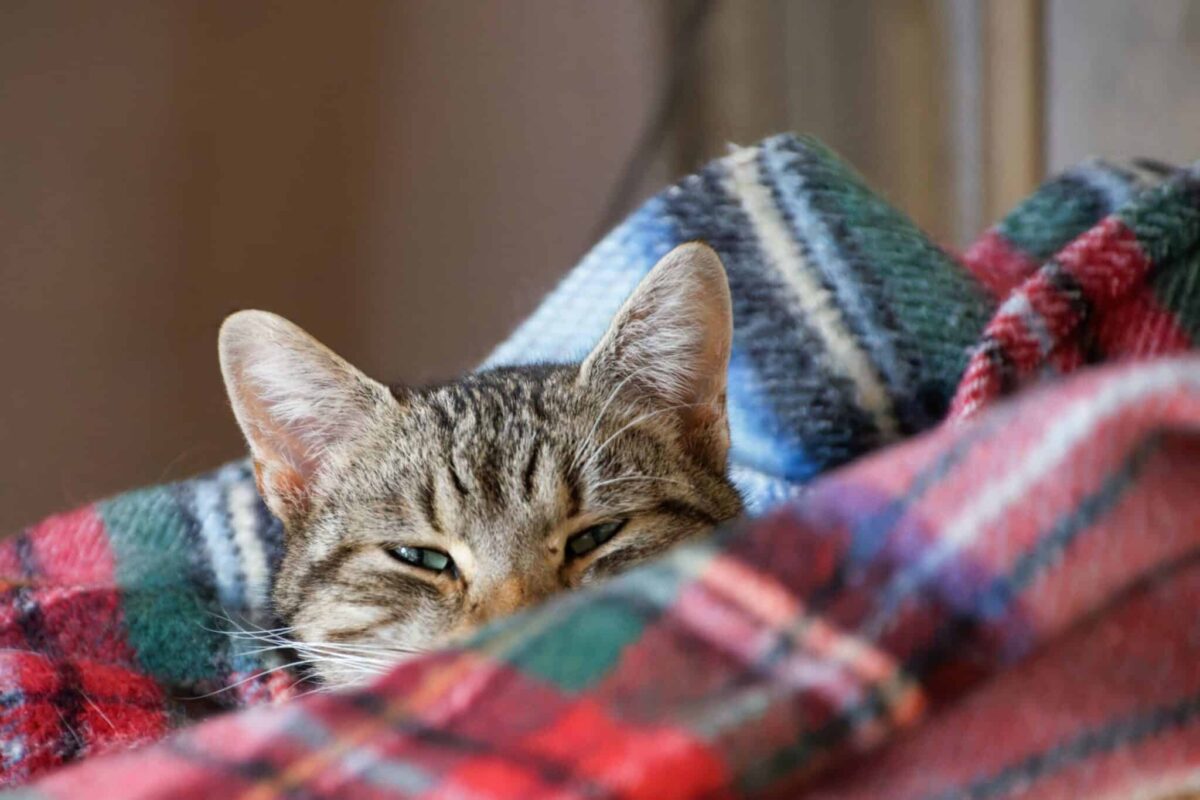
A heap of clothing offers something a flat surface cannot: shape. Shirts, towels, and sweaters naturally form folds, raised edges, and small depressions that can surround a resting cat. Those contours may create a snug sleeping position that feels physically supportive and somewhat sheltered. Cats frequently choose resting spots that allow them to curl comfortably while remaining protected from excessive disturbance, and a laundry pile can accidentally provide exactly that arrangement.
The preference will vary by individual, since some cats enjoy enclosed beds while others stretch openly across the middle of the floor. Observe the sleeping posture for clues. A cat that consistently burrows into clothing or wedges between garments may particularly appreciate the nest-like structure a loose pile creates.
Why Does My Cat Sleep on Clothes in a Specific Spot?
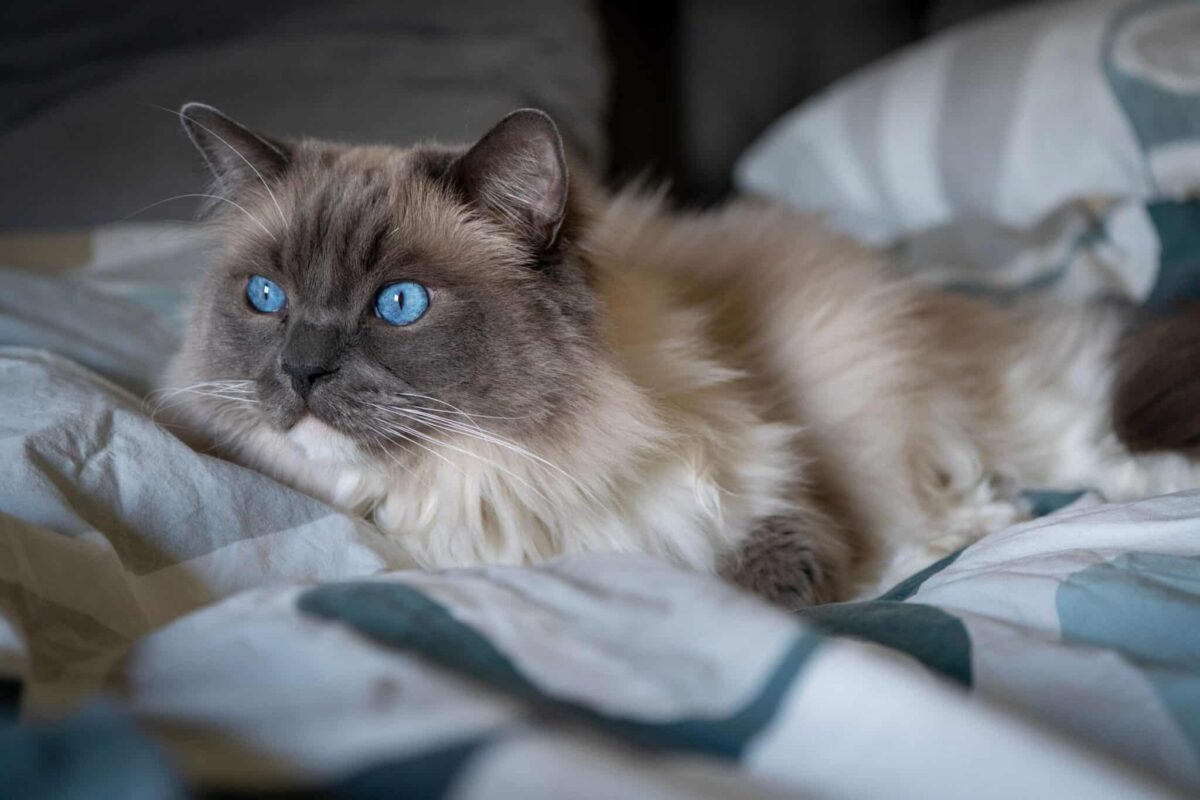
The clothes themselves may receive all the credit when the location is actually doing much of the work. A sweater left on a quiet bed, a laundry basket in a low-traffic bedroom, or pajamas resting on a familiar chair can occupy exactly the kind of peaceful territory a cat prefers for sleeping. Resting animals benefit from locations where they can relax without frequent interruption while still remaining aware of their surroundings. A cat may therefore return to the same clothing pile because it consistently appears in a secure, predictable part of the home, the same reason a cat might pick a favorite perch like a favorite chair.
Moving those clothes somewhere noisy might suddenly make them much less appealing. When investigating a favorite sleeping spot, consider the entire environment, including traffic, noise, temperature, elevation, escape routes, and nearby household activity.
Why Does My Cat Keep Sleeping on the Same Clothes?
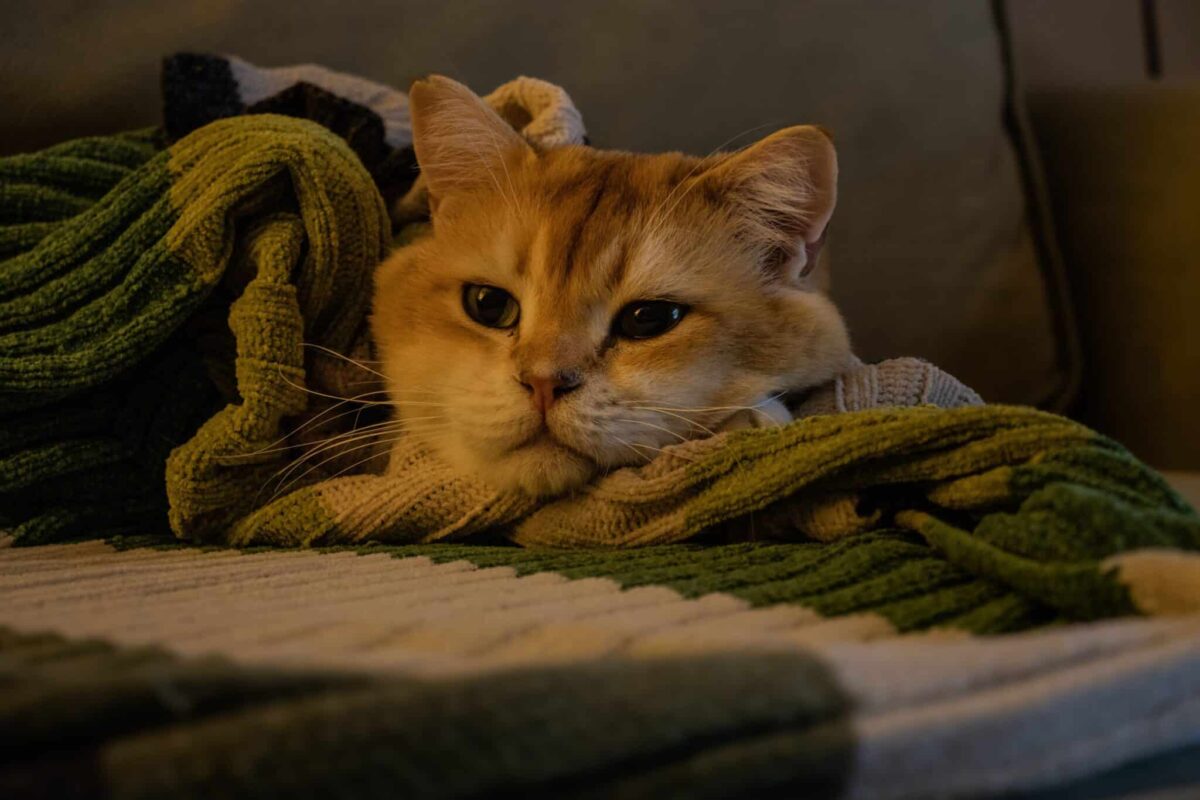
Cats can become remarkably attached to predictable daily patterns. Once a pile of clothes provides several comfortable naps, returning to it can become part of an established resting routine. The behavior may be reinforced each time the location remains warm, quiet, soft, and undisturbed. Humans can accidentally strengthen the habit as well.
Leaving clothes in the same place, greeting the cat when they settle there, or avoiding moving them once they are comfortable can make the arrangement increasingly reliable. Over time, the cat may head toward that familiar garment almost automatically when it is time to rest. Routine does not make the preference meaningless. Predictability itself can be valuable to cats, and a dependable sleeping location can become part of the familiar structure of everyday life.
Why Does My Cat Rub Its Face on Clothes Before Sleeping on Them?
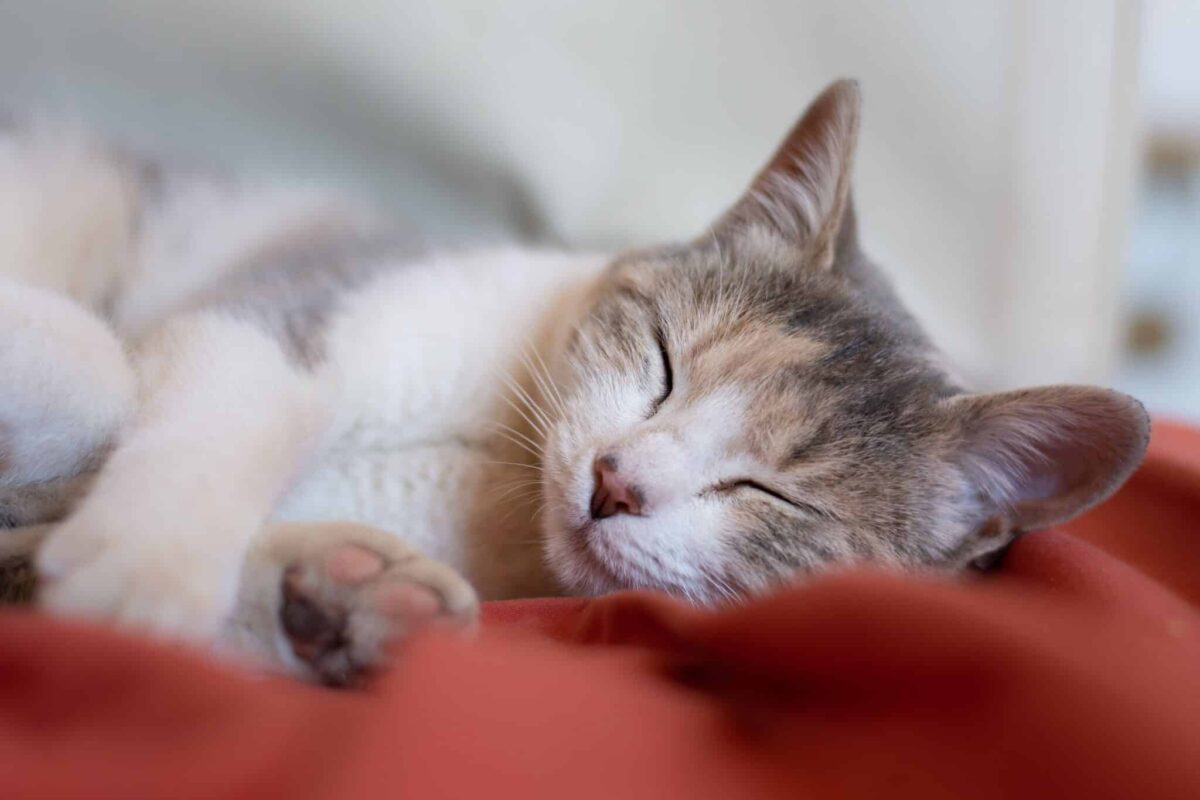
Cats live in a world rich with scent information. Their bodies carry scent glands in several areas, including around the face, and normal activities such as rubbing, known as bunting, let them leave their scent on objects within familiar territory, according to Cats Protection. Settling on clothing can therefore contribute to a shared scent environment in which the smells of the cat, household, and familiar humans overlap. This should not be interpreted as a calculated attempt to claim someone’s wardrobe.
Scent communication is far more natural and automatic than that human-style explanation suggests. A cat that rubs against a garment before lying down may be interacting with it as another familiar object within their environment. The result is a shirt that carries both scents together, which is exactly the point for the cat.
Does Sleeping on My Clothes Mean My Cat Misses Me?
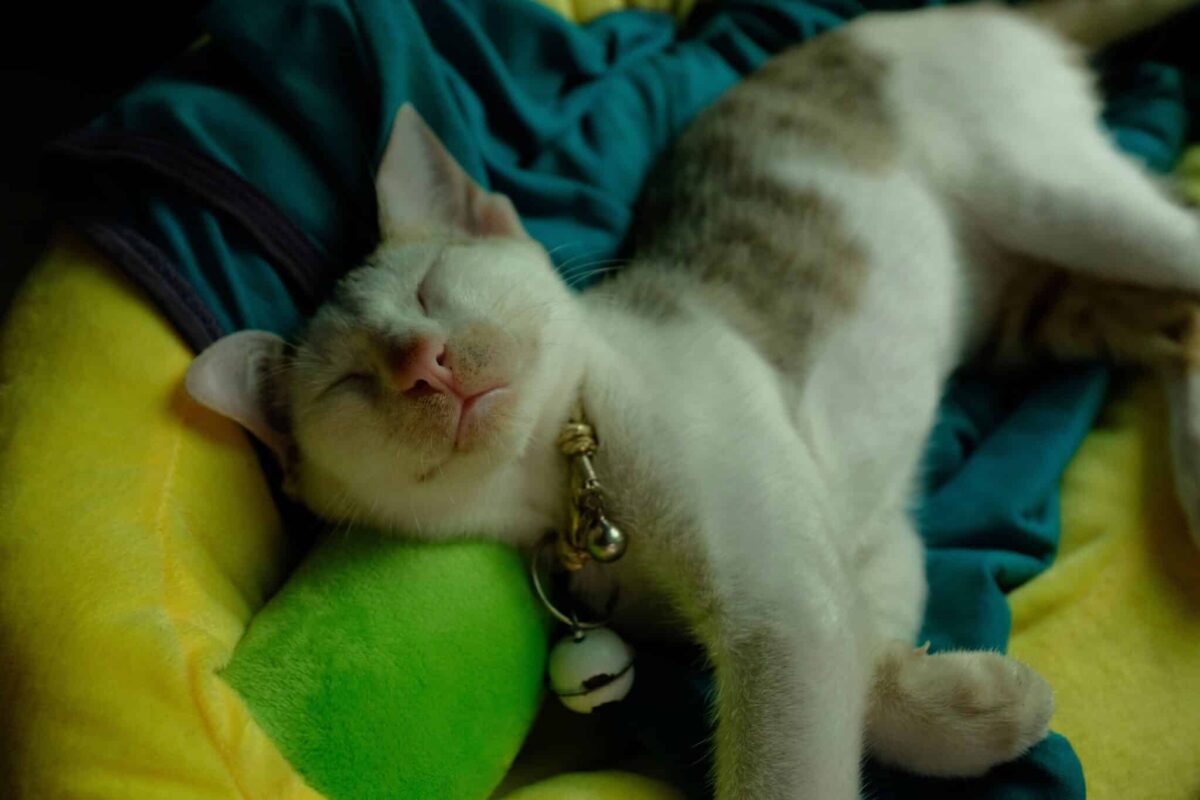
Some cats prefer staying physically close to familiar people, while others maintain a connection with considerably more personal space. Clothing can provide an interesting middle ground because it carries a recognizable scent without requiring direct contact. A cat may settle on a person’s clothes while that person works nearby, sleeps elsewhere, or has temporarily left the room. Familiarity, location, comfort, and social attachment can all contribute to the choice.
Cats do form genuine attachment bonds with their caregivers, according to a 2019 study published in Current Biology, so the behavior shouldn’t be dismissed as meaningless, even though it shouldn’t automatically be read as missing someone every time. Look at the cat’s broader social habits instead. Regularly following the same person, resting nearby, greeting them, and voluntarily seeking interaction can make a clothing preference more consistent with an established bond, the same pattern covered in why cats bond more with certain people. For an independent cat, staying close can simply look like choosing a favorite shirt over a lap.
Why Does My Cat Think My Clothes Are the Best Bed?
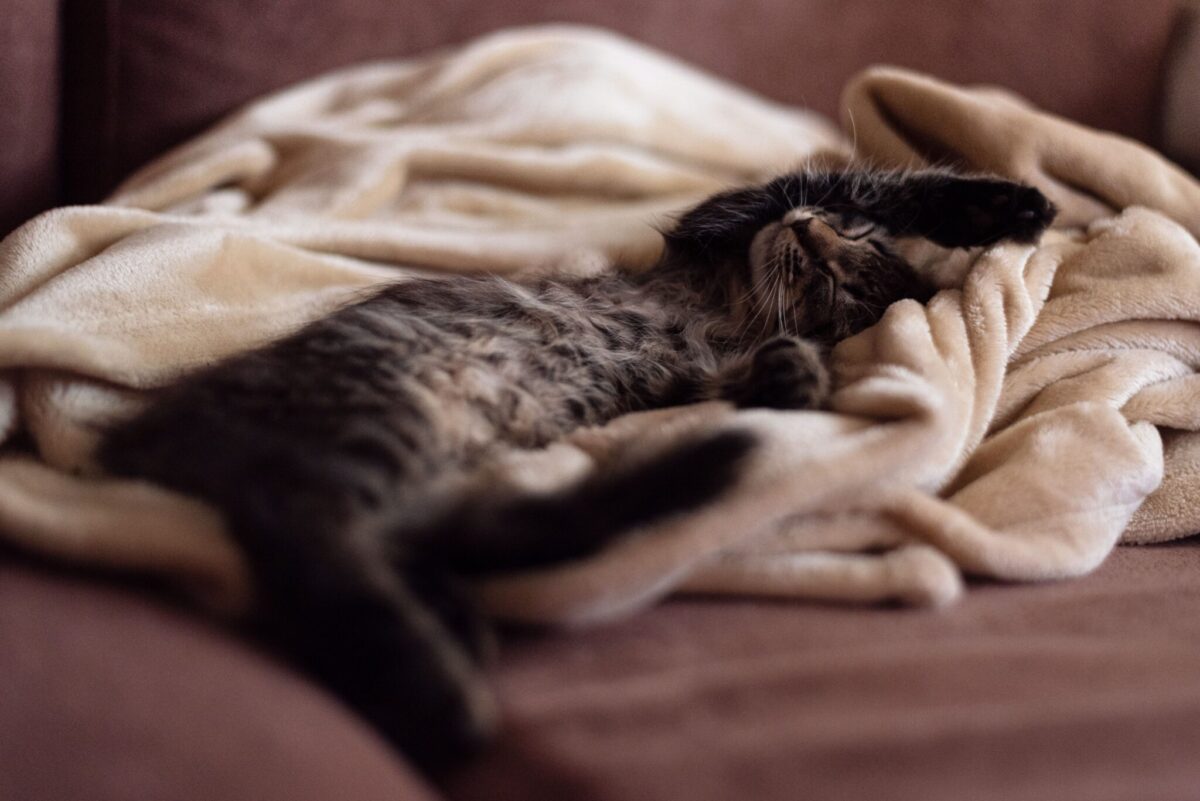
Not every feline preference hides a complicated message. Cats evaluate resting places according to combinations of warmth, softness, location, familiarity, security, and personal taste, and a particular pile of clothing may simply score well in several categories at once. Once they discover that reliable combination, there may be little reason to choose somewhere else. Humans sometimes search for emotional explanations because the behavior feels personal, but ordinary environmental preferences can be powerful motivators.
One cat might consistently select worn shirts, another prefers clean towels, and another ignores laundry completely. Those differences are normal. When a healthy cat appears relaxed and comfortable, sleeping on clothes may simply represent a successful feline decision about where today’s best nap happens to be located.
So Why Does My Cat Sleep on My Clothes?
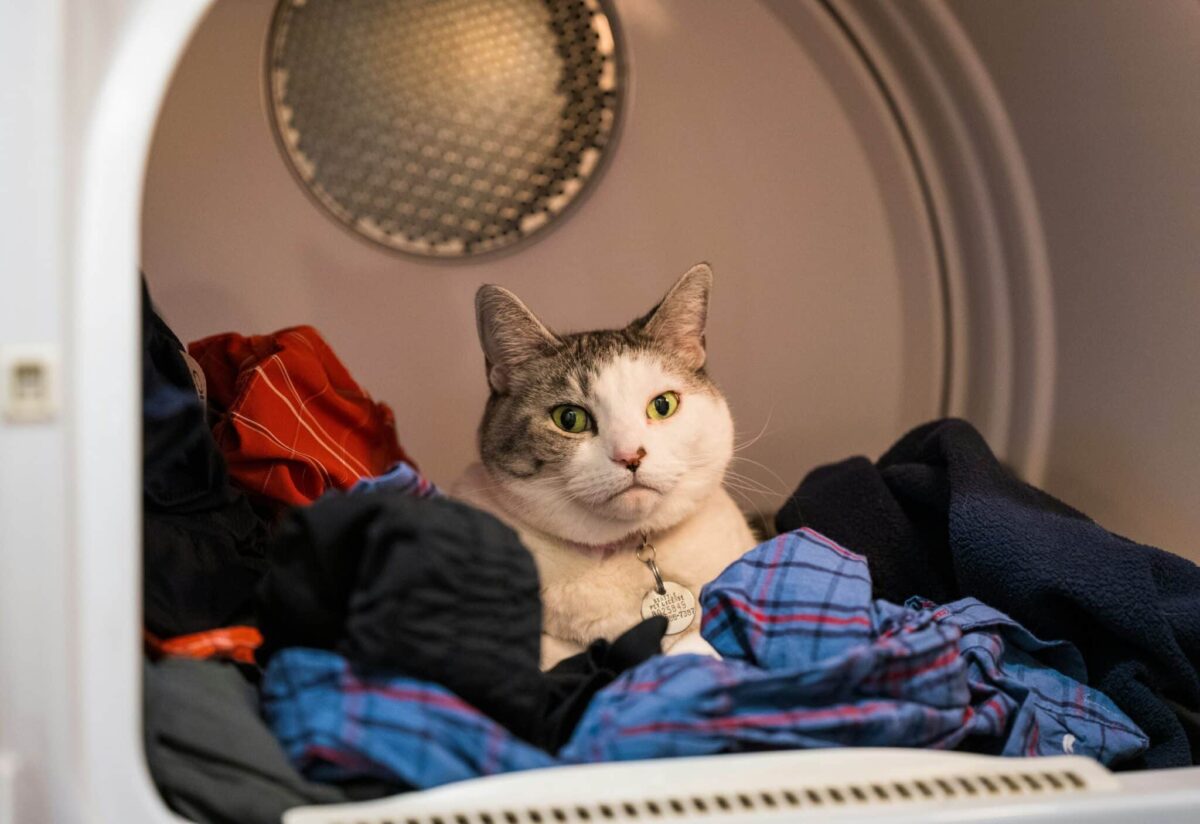
Finding a cat asleep on clothes can be inconvenient when those clothes were supposed to remain clean, folded, or wearable, but the choice makes sense from a feline perspective. Fabric combines familiar scent, comfortable texture, warmth, security, and predictable surroundings in one inviting sleeping spot. Individual cats value those features differently, so every laundry nap can have its own motivation. Watching which garments a cat chooses may reveal useful preferences.
For a closer look at the behavior straight from a veterinarian, see this vet’s take on why cats sleep on your clothes. Understanding the habit will not necessarily reclaim the sweater, but it does explain why the cat keeps choosing it.