

A cardboard box can arrive with something exciting inside, yet many cats seem far more interested in the packaging. Leave an empty box on the floor, and it may become occupied before anyone finishes unpacking. Cats squeeze into impossibly small boxes, nap inside them for hours, and sometimes guard their cardboard headquarters with surprising enthusiasm. This attraction is more than a quirky habit. Boxes appeal to natural feline preferences for security, warmth, observation, play, privacy, and comfort, turning ordinary cardboard into irresistible feline real estate.
Boxes Feel Like Safe Little Hideaways

Cats naturally appreciate places where they can retreat while keeping the surrounding environment manageable. A cardboard box provides solid walls around several sides, reducing the directions from which something unexpected can approach. That enclosed feeling can make the space especially appealing for sleeping, resting, or simply taking a break from household activity. Even confident cats may seek sheltered spots because hiding is part of normal feline behavior, not automatically a sign of fear. A cat tucked into a box can remain aware of nearby sounds and movement while enjoying a degree of separation. For an animal that values both security and control over personal space, an ordinary shipping box can function like a surprisingly effective private room.
Cardboard Helps Them Stay Cozy

Cats are famous for seeking warm resting spots, which helps explain their enthusiasm for sunny windows, blankets, and comfortable laps. Cardboard can provide some insulation and create a small enclosed space where body heat is easier to retain than in a wide, exposed area. When a cat curls tightly inside a properly sized box, the surrounding walls may add to that snug sensation. This can make cardboard particularly attractive during naps or in cooler parts of the home. Temperature preference varies among individual cats, so warmth is unlikely to explain every box obsession. Still, combine a cozy enclosure with a material that does not immediately feel cold beneath the paws, and that humble box starts looking considerably more luxurious from a cat’s perspective.
A Box Gives Them a Perfect Observation Post
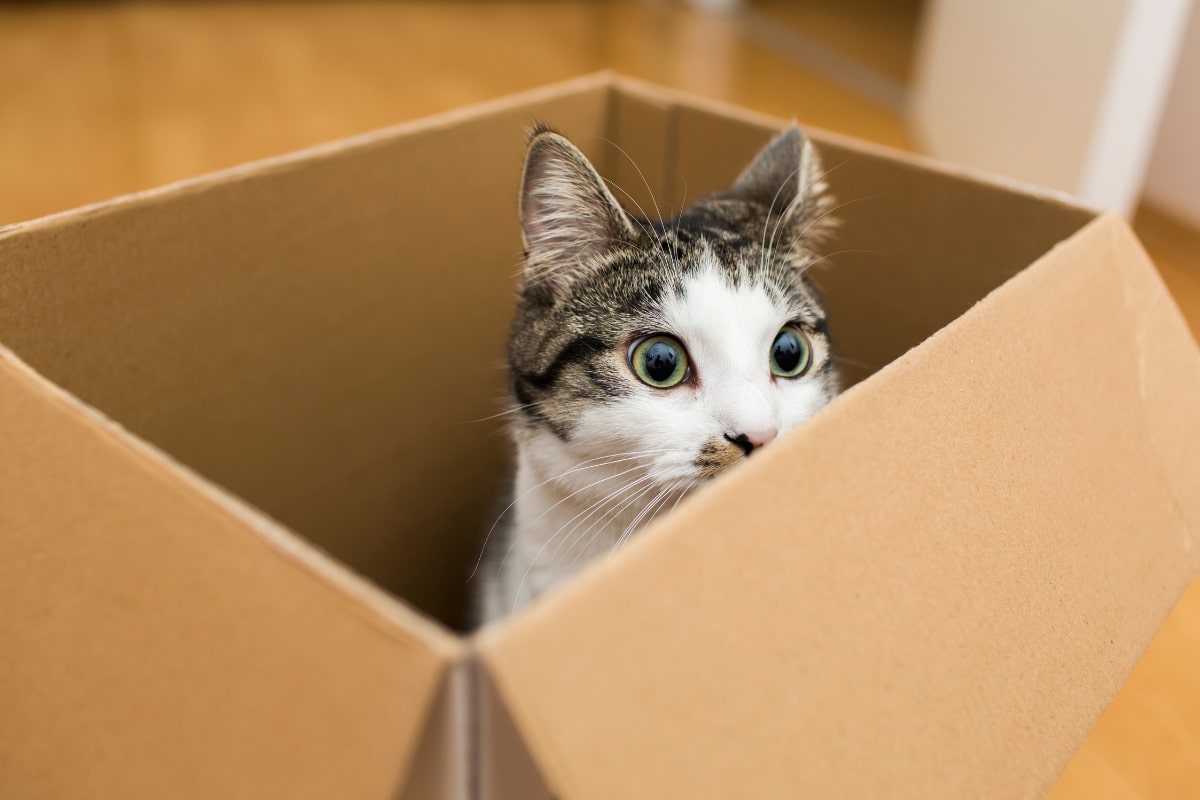
Cats frequently enjoy observing activity without placing themselves directly in the middle of it. A box can offer just enough concealment for a cat to watch household movement while feeling partially hidden. From inside, they can track footsteps, listen to sounds, and monitor anything interesting that passes nearby. This setup suits an animal whose natural behavior combines curiosity with caution. A cat does not necessarily need to be frightened to prefer watching from cover. Sometimes they simply seem more comfortable gathering information from a protected location before deciding what deserves closer investigation. The result is classic cat behavior: a pair of attentive eyes appearing above the cardboard edge while the rest of the body remains strategically concealed.
Boxes Make Excellent Ambush Spots

A quiet box can transform into a miniature hunting blind the moment something interesting passes nearby. Cats are predators, and play frequently incorporates pieces of the hunting sequence, including stalking, hiding, chasing, pouncing, and grabbing. An enclosed box creates cover that allows a playful cat to crouch out of sight before springing toward a toy or another appropriate target. Even indoor cats with reliable meals retain these deeply rooted predatory behaviors. That sudden paw reaching through a box opening is therefore more than random mischief. It can be an entertaining way to practice instinctive movements and respond to motion. Providing safe, interactive play elsewhere can give enthusiastic cardboard hunters additional opportunities to use those natural skills.
Cardboard Is Fun to Scratch and Chew

A box offers more than four walls and a floor. Its texture can also make it wonderfully interesting to paws, claws, teeth, and noses. Scratching is normal feline behavior that helps maintain the claws, stretches the body, and leaves both visual and scent-related marks. Corrugated cardboard provides satisfying resistance, which is why the same material appears in so many commercial scratching products. Some cats also enjoy biting or shredding cardboard, particularly around exposed edges. Occasional playful chewing may simply reflect exploration or enjoyment, but swallowing large amounts of cardboard is different. Persistent consumption of nonfood materials deserves attention, particularly if it represents a new behavior, because a veterinarian can help determine if something beyond ordinary cardboard enthusiasm is involved.
The New Arrival Is Worth Investigating

Cats gather enormous amounts of information through scent, and a newly delivered box brings an unfamiliar collection of smells into familiar territory. Cardboard may carry odors associated with storage, transportation, other environments, and whatever was previously packed inside. That makes a fresh box an intriguing object worthy of careful inspection. A cat may sniff the corners, rub against the sides, climb inside, and return repeatedly as they investigate the newcomer. Novel objects can be exciting for some cats and approached cautiously by others, depending on personality and past experiences. Once the box has passed inspection, sitting inside it may become part of the exploration. Apparently, quality control sometimes requires personally inspecting the merchandise packaging.
Their Scent Can Make the Box Feel Familiar

Cats rely heavily on scent to understand and interact with their environment. Scent glands around areas such as the cheeks allow them to deposit familiar chemical signals when rubbing against objects. A cat that repeatedly brushes against, sleeps inside, or lounges in the same box can gradually make that space smell more familiar to them. Familiar scent can contribute to a sense of environmental predictability and comfort, especially in a home filled with constantly changing human activity and smells. This may help explain why a previously ignored box becomes a favored resting place after several visits. The cardboard itself is not magical. The combination of enclosure, familiarity, and the cat’s own accumulated scent can turn an ordinary container into a recognizable personal spot.
A Box Can Offer Relief From Household Activity

Homes can be busy places, especially from a cat’s perspective. Footsteps, conversations, visitors, appliances, other animals, and unexpected movement can create periods when a quieter retreat becomes appealing. An accessible box gives a cat the option to withdraw without completely disappearing from their familiar environment. Choice matters because cats generally benefit from having safe places where they can rest without unwanted interaction. A cat that occasionally naps in a box may simply appreciate some uninterrupted downtime. Frequent hiding accompanied by changes in appetite, litter box habits, activity, social behavior, or other signs of distress deserves more attention, however. Normal box lounging looks much different when the cat otherwise seems comfortable, engaged, and willing to emerge on their own terms.
Sometimes the Fit Is Simply Satisfying

Cat owners regularly encounter the baffling sight of a perfectly good, spacious bed being ignored for a box that appears several sizes too small. A close-fitting enclosure provides physical boundaries around the body, which may contribute to the sheltered, cozy experience cats often seek while resting. Cats are also remarkably flexible, so spaces that look absurdly cramped to humans may not feel nearly as impractical to them. Individual preference matters greatly here. Some cats enthusiastically wedge themselves into tiny containers, while others choose roomy boxes where they can stretch. The important part is allowing them to enter and leave freely. If the chosen box happens to make the cat resemble bread packed into a very questionable shipping container, that appears to be a human concern.
The Box Has Officially Become Cat Property

A cardboard box may look disposable to humans, but it offers several things cats value, including privacy, comfort, interesting textures, playful possibilities, and a sheltered place to watch the world. Every cat has different preferences, so some may claim each new delivery while others remain completely unimpressed. For devoted box lovers, the attraction makes sense when viewed through natural feline instincts and environmental preferences. Remove staples, tape, packing materials, and other hazards before letting your curious cat officially claim the latest cardboard treasure as their own.
This content was created with AI assistance and edited by the iHeartCats team.