
Keeping your cat’s teeth clean can be challenging, especially when your feline friend wants absolutely nothing to do with a toothbrush. Fortunately, dental water additives for cats offer an easy, brush-free way to incorporate oral care into your pet’s daily routine.
You mix these products directly into drinking water, and they’re designed to support oral hygiene, freshen breath, and, depending on the formula, help manage plaque or tartar. They aren’t replacements for veterinary dental exams, professional cleanings, or regular brushing when your cat will tolerate it, but they can be a convenient addition to an at-home dental routine.
You can find plenty of cat dental water additives on Amazon and Chewy, but their formulas can vary widely. Some are specifically formulated for cats, while others are intended for both cats and dogs. They may also use completely different ingredients and approaches to oral care.
Palatability is another important consideration. Cats can be incredibly particular about their water, so even a highly rated dental additive isn’t a good choice if your cat notices it and starts drinking less, the same pickiness that shows up around food bowl habits in fussy eaters.
With ingredients, ease of use, feline suitability, and overall practicality in mind, here are five of the best dental water additives for cats to consider.
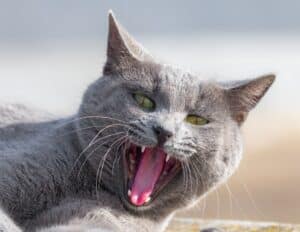
The 5 Best Dental Water Additives for Cats
TropiClean Fresh Breath Dental Water Additive for Cats
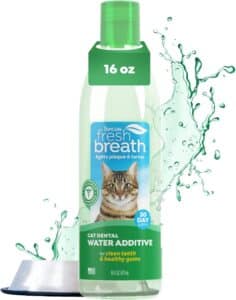
Best Overall
TropiClean Fresh Breath Dental Water Additive for Cats earns our top spot because it’s specifically formulated for cats rather than being a general-purpose product designed for multiple species.
The formula contains cetylpyridinium chloride, green tea extract, zinc gluconate, water, glycerin, citric acid, and sodium benzoate.
Cetylpyridinium chloride, commonly abbreviated CPC, is an ingredient frequently used in oral-care products as an antiplaque antimicrobial agent. Zinc compounds are also common in dental formulas, while green tea extract adds a botanical component to the formula.
TropiClean describes the additive as odorless and tasteless, which is particularly appealing for cats. Felines can be extremely sensitive to changes in the smell and flavor of their water, so an unobtrusive formula may have a better chance of being accepted by a picky drinker.
It’s also simple to use. The manufacturer directs owners to add one capful, or 15 milliliters, to three cups of fresh water once daily.
For cat parents looking for an easy-to-find, feline-specific dental water additive with a relatively straightforward ingredient list, TropiClean is our overall pick.
Keep in Mind: Even a product described as tasteless or odorless may be noticeable to an especially sensitive cat. Monitor your cat’s drinking habits after introducing any water additive.


Oxyfresh Premium Pet Dental Water Additive
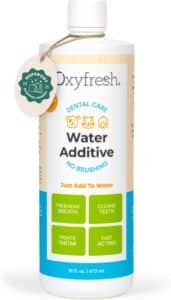
Best for Picky Cats
If your cat notices every little change you make to the water bowl, Oxyfresh Premium Pet Dental Water Additive is another option worth considering.
Unlike TropiClean’s feline formula, Oxyfresh is designed for both cats and dogs. Its formula includes ingredients such as stabilized chlorine dioxide and zinc acetate.
Stabilized chlorine dioxide makes Oxyfresh particularly interesting. Rather than relying on a strong mint or another noticeable flavor to cover unpleasant breath, the formula takes a different approach to controlling oral odors, oxidizing odor-causing compounds rather than masking them.
Oxyfresh is marketed as tasteless and odorless, making it especially appealing for finicky cats that might reject flavored dental products.
The relatively simple approach may also appeal to cat parents who don’t want to introduce an obviously flavored dental product into their pet’s water.
Because Oxyfresh can be used for both cats and dogs, it’s also a convenient choice for multi-pet households.
Keep in Mind: Oxyfresh isn’t formulated exclusively for cats. If having a feline-specific formula is important to you, TropiClean may be the better fit.
VETRADENT Dog & Cat Dental Water Additive
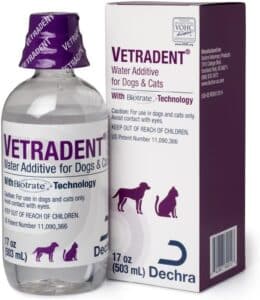
Best Flavorless Option
VETRADENT Dog & Cat Dental Water Additive is another option for cat parents who want dental support without adding an obvious flavor or smell to the water bowl.
The product is formulated for both cats and dogs and uses VETRADENT’s Biotrate Technology. It’s designed to support oral hygiene and help control tartar by influencing the environment within the mouth.
VETRADENT is particularly noteworthy because you’ll see the Veterinary Oral Health Council’s VOHC Accepted Seal associated with the product. However, there’s an important distinction cat parents should understand. Its VOHC acceptance for tartar control applies to dogs. The product itself can be used for cats according to its labeling, but shoppers shouldn’t interpret the VOHC seal as evidence of a VOHC-accepted feline tartar-control claim.
That’s a good lesson to remember when comparing any pet dental products. Don’t simply look for a VOHC logo. Check which species the acceptance applies to and whether the accepted claim involves plaque, tartar, or both.
VETRADENT remains an interesting choice for cats because of its flavorless approach and easy daily application.
Keep in Mind: VETRADENT is intended for both cats and dogs, but its VOHC tartar-control acceptance applies to dogs rather than cats.
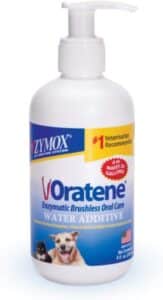
Oratene Enzymatic Brushless Oral Care Water Additive
Best Enzymatic Formula
Oratene Enzymatic Brushless Oral Care Water Additive takes a different approach from many traditional dental water additives.
Rather than relying primarily on ingredients such as zinc compounds or stabilized chlorine dioxide, Oratene uses an enzyme-based oral-care system, a different mechanism than antimicrobial-ingredient additives.
It’s formulated for both cats and dogs and includes ingredients such as glucose oxidase, glycerin, potassium sorbate, potassium thiocyanate, and purified water.
This makes Oratene an interesting option for cat parents specifically looking for an enzymatic dental product.
It’s also unflavored, which is an important advantage when you’re putting anything into a cat’s drinking water. Cats that refuse strongly scented or flavored dental products may be more accepting of an unobtrusive formula.
Oratene also doesn’t require brushing, making it particularly convenient for cats that simply won’t tolerate having their teeth handled.
The biggest consideration is price. Enzymatic dental products can be more expensive than some conventional water additives, particularly when calculated by the ounce.
Keep in Mind: Oratene’s enzymatic formula sets it apart from the other dental water additives on this list, but it may also be one of the more expensive options for everyday use.
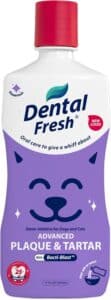
Dental Fresh Advanced Plaque & Tartar Water Additive
Best Value
Using a dental product every day can add up quickly, which makes Dental Fresh Advanced Plaque & Tartar Water Additive an appealing option for cat parents looking for better value.
It’s formulated for both cats and dogs and designed to be mixed with drinking water as part of a daily oral-care routine.
One of Dental Fresh’s biggest advantages is its bottle size. The Advanced Plaque & Tartar formula is commonly available in a 32-ounce bottle, considerably larger than many competing dental water additives.
The larger bottle may make it particularly convenient for multi-pet households or anyone planning to use a water additive consistently.
Dental Fresh offers several different dental products and formulas; however, shoppers should pay close attention to exactly which bottle they’re purchasing.
Don’t assume that every Dental Fresh product contains the same ingredients or has identical directions. Check the individual label to confirm that the formula you’re considering is appropriate for cats and follow its specific dilution instructions.
Keep in Mind: Dental Fresh makes multiple dental formulas, so always check the ingredients and directions on the exact product you’re purchasing.
What Is the Best Dental Water Additive for Cats?
Ultimately, the best dental water additive is one that’s appropriate for your individual cat, used exactly according to the manufacturer’s directions, and tolerated without affecting normal drinking habits.
Dental water additives can make caring for a cat’s teeth considerably easier, but they’re only one piece of good feline dental care. Regular veterinary examinations remain essential, and cats with medical conditions or prescription diets should get their veterinarian’s approval before adding a new product to their daily routine.