
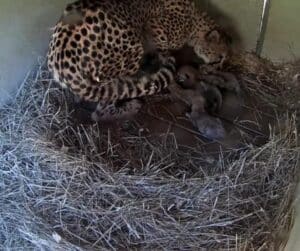
Five tiny cheetah cubs are giving animal lovers a rare chance to watch the earliest days of life inside a cheetah den. Born on October 5, 2026, at the Smithsonian Conservation Biology Institute (SCBI) in Front Royal, Virginia, the five siblings are now the stars of a special livestream that lets viewers follow their development alongside their mother, Zura.
The cubs are spending their first weeks in a private den, away from the crowds of a traditional zoo. Thanks to the Smithsonian’s Cheetah Cub Cam, people can watch the little family rest, grow, and gradually discover the world around them without interrupting the important bond forming between Zura and her babies.
Five Little Cubs Bring New Hope to a Cheetah Family
For Zura, a five-year-old cheetah who was also born at SCBI, welcoming her own cubs marks an important milestone. Her babies represent another generation of a family that has been part of the institute’s conservation breeding program for years.
The new arrivals are the program’s third litter from this family line. Even more remarkably, the institute now cares for four generations of the same cheetah family, making the births especially meaningful to the people who have watched these animals grow.
Adrienne Crosier, carnivore curator at SCBI, described the arrival as evidence of the dedication behind the institute’s work. She said having four generations of the same cheetah family reflects the high level of care provided by the animal care team.
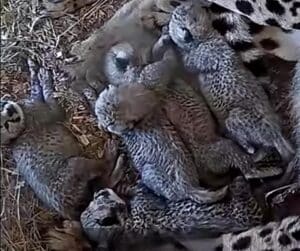
While the cubs are still small, their days are already filled with important developmental milestones. Much of their time is spent sleeping, but as they grow, they will begin exploring behaviors such as grooming, playing, and communicating with one another.
A Special Camera Lets Everyone Watch Them Grow
Unlike cheetahs living at the Smithsonian’s National Zoo in Washington, D.C., Zura and her cubs are housed at the conservation institute in Front Royal. The facility is not generally accessible to public visitors, making the livestream a special opportunity to see the family.
The camera also serves a practical purpose for the animal care team. It allows staff to monitor the cubs and their mother remotely while reducing the need for direct human contact during the babies’ earliest days.
That limited contact is intentional. It gives Zura and her cubs the space they need to bond naturally while allowing researchers to observe behaviors that might be more difficult to study in a traditional zoo setting.
For viewers, the experience offers something different from watching adult cheetahs run across open ground. Inside the den, the focus is on the quieter moments of early life, from resting together to the first signs of play and growing independence.
Why These Five Births Matter So Much
Although cheetahs are famous for being the fastest land mammals, their survival in the wild faces serious challenges. Fewer than 7,000 cheetahs are estimated to remain in their natural habitats, and the species is classified as vulnerable to extinction.
Habitat loss, declining prey populations, climate change, and conflict with humans have contributed to their shrinking numbers. According to SCBI, cheetahs now occupy only about nine percent of their historic range.
Breeding cheetahs is also challenging. The species has relatively low genetic diversity, partly because of population declines thousands of years ago, and this can contribute to reproductive difficulties.
SCBI participates in the Cheetah Breeding Coalition, a partnership of ten accredited facilities in the United States working to support healthy cheetah populations. With only about half of breeding attempts resulting in cubs, each successful litter represents meaningful progress.
Researchers are also investigating how the gut microbiome may influence fertility, sperm quality, and offspring survival. These studies could help conservation specialists better understand the reproductive challenges facing cheetahs.
A New Generation Begins Its Journey
For now, Zura’s five cubs have a much simpler job than the researchers working to protect their species. Their days revolve around growing, resting, nursing, and gradually developing the skills they will need as they get older.
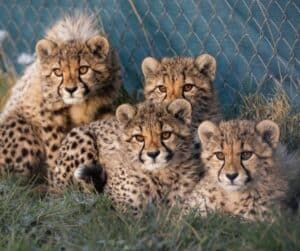
Their arrival gives the Smithsonian team another opportunity to learn about cheetah development while continuing the care of a family that now spans four generations. The camera makes it possible for people far beyond Virginia to follow that journey.
And as the five siblings begin to play, groom, and interact more with their mother, viewers will have the unusual privilege of watching those early milestones unfold. For Zura and her cubs, life inside the den is only beginning.