
Cats can see color, but not the way humans do. Feline eyes have far fewer color-sensing cone cells than human eyes, so cats see a muted, less saturated world dominated by blues and yellows, and reds and greens are very difficult for them to distinguish. According to veterinary ophthalmologist Dr. Paul Miller (via PetMD, last reviewed 2023), movement matters more to cats than color: their retinas are packed with rod cells built for detecting motion, which is why an animated show full of moving creatures, like Netflix’s Sealook, can hold a cat’s attention even more than its color palette does.
Evidence-reviewed, not hands-on tested.
Anyone who has ever turned on a bird video for their cat knows television isn’t necessarily just for humans. But one calico kitten named Fig has discovered a Netflix show that appears to have been made for her viewing pleasure.
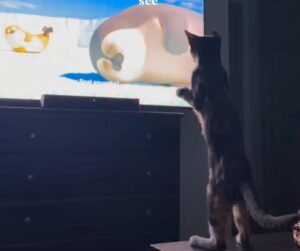
Fig, who appears on the Instagram account @fossilandfig, was introduced to the animated Netflix series Sealook. Almost immediately, the kitten was glued to the screen. A video shared by her family shows Fig sitting in front of the television and watching the colorful seals with remarkable concentration. Soon, watching from a distance isn’t enough, and she moves closer to the screen and reaches toward the animated characters with her paws.
The video suggests there’s another reason Sealook might be particularly interesting to cats: its color palette includes colors feline eyes can see. While there’s no indication Netflix intentionally created the show around cat vision, the idea isn’t as strange as it might initially sound. Cats really do see the world differently than we do. And when you combine those visual differences with a cartoon full of moving animals, Fig’s new television obsession starts to make a little more sense.
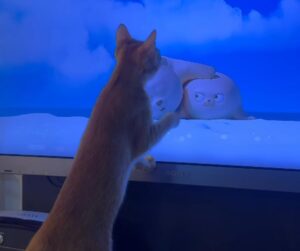
Fig Has a New Favorite Netflix Show
Sealook follows a group of playful seals living together in a wildlife sanctuary, according to Netflix’s own show description. Netflix describes the animated series as a goofy kids’ cartoon filled with seals whose different personalities lead to plenty of mischievous antics. Apparently, nobody told Fig it was intended for children.
In the video, the calico kitten sits directly in front of the television with her attention locked on the animated action. Her interest only grows as the clip continues, and eventually she gets close enough to reach toward the screen as though she’d like to get personally involved in whatever the seals are doing. Her family summed up Fig’s reaction simply: “She’s obsessed.”
Judging by the kitten’s focus, that doesn’t appear to be much of an exaggeration. Fig watches the characters move across the television with the kind of concentration many cat parents would love to see when they’re trying to get their cats interested in an expensive new toy.
Can Cats Actually See the Colors in ‘Sealook’?
The mechanism behind this table comes down to cell types, not just color perception: cats have far fewer color-sensing cone cells than humans, but many more motion-detecting rod cells, which is why movement often grabs a cat’s attention faster than color does.
Text accompanying Fig’s video claims Sealook uses colors cats can see, which has helped fuel interest in the show among cat owners. Cats absolutely can see color, but their visual world isn’t identical to ours.
Veterinary experts explain that cats perceive a narrower range of colors than humans do. Blues are among the colors cats can distinguish well, while research and expert interpretations vary somewhat on exactly how they perceive greens and yellows. Reds and similar shades are much more difficult for feline eyes to distinguish.
Cats also don’t experience colors with the same richness and intensity humans do. With far fewer color-sensitive cone cells in their eyes than humans have, according to VCA Animal Hospitals (last reviewed 2021), the world can appear less saturated to them, even though it certainly isn’t entirely black and white.
That means saying Sealook is “only in colors cats can see” oversimplifies feline vision. Netflix itself describes the series as a Korean children’s cartoon about playful seals and doesn’t indicate that it was deliberately designed around the visual abilities of cats.
Still, the show’s appearance could be part of what caught Fig’s attention. Its animation features plenty of shades that fall within a cat’s visible range, but color probably isn’t the only thing making this particular kitten reach for the remote.
Movement May Be Even More Interesting Than Color
Cats are exceptionally good at detecting movement, an ability connected to their evolution as hunters. Their eyes contain many rod cells, which help with both low-light vision and detecting motion, according to the Merck Veterinary Manual (last reviewed 2022).
That could make an animated show filled with small creatures moving around particularly compelling. To Fig, the seals swimming, bouncing, sliding, and moving across the screen may be far more interesting than a program dominated by people sitting around talking.
Veterinary ophthalmologist Dr. Paul Miller explained to PetMD (last reviewed 2023) that color is generally less important to cats than movement when it comes to grabbing their attention. Cats also tend to perceive blues and yellows particularly well, while reds and greens are more difficult for them to distinguish.
So Fig’s fascination could be the result of several things happening at once. The movement may trigger her attention, while the animation’s high contrast and cat-visible colors make it easier to follow what’s happening on the screen. Whatever she’s seeing, it’s clearly working.
Fig Isn’t the Only Cat Watching ‘Sealook’
Perhaps the funniest part of Fig’s discovery is that she apparently hasn’t stumbled onto an obscure feline preference all by herself. Other cat parents have been reporting similar reactions after showing Sealook to their own felines.
Comments on Fig’s video included people confirming that their cats were equally captivated, which tracks with how particular cats can be about what grabs their attention. One viewer even revealed that Sealook had become part of their cat’s daily Netflix routine, while others immediately announced plans to test the show on their own feline family members.
The fascination has spread beyond Fig’s account as well. Other cat owners have recently shared their own recommendations for Sealook online, reporting that their pets become particularly interested in the animated action.
Of course, cats remain cats, so there are no guarantees. At least one commenter on Fig’s post reported that their cats still preferred watching the cursor move around a computer screen.
Cat TV Might Look Different Through Feline Eyes
Fig’s reaction is a fun reminder that cats aren’t necessarily seeing the same television program we are. Their eyes prioritize different visual information, and something relatively ordinary to a person can apparently become riveting entertainment when viewed through feline eyes.
That contrast in vision is likely why fast-moving cartoons tend to hold a cat’s attention better than slower, dialogue-heavy shows, regardless of how colorful they are. It also helps explain why Fig seems locked onto the seals’ antics rather than any other detail on the screen.
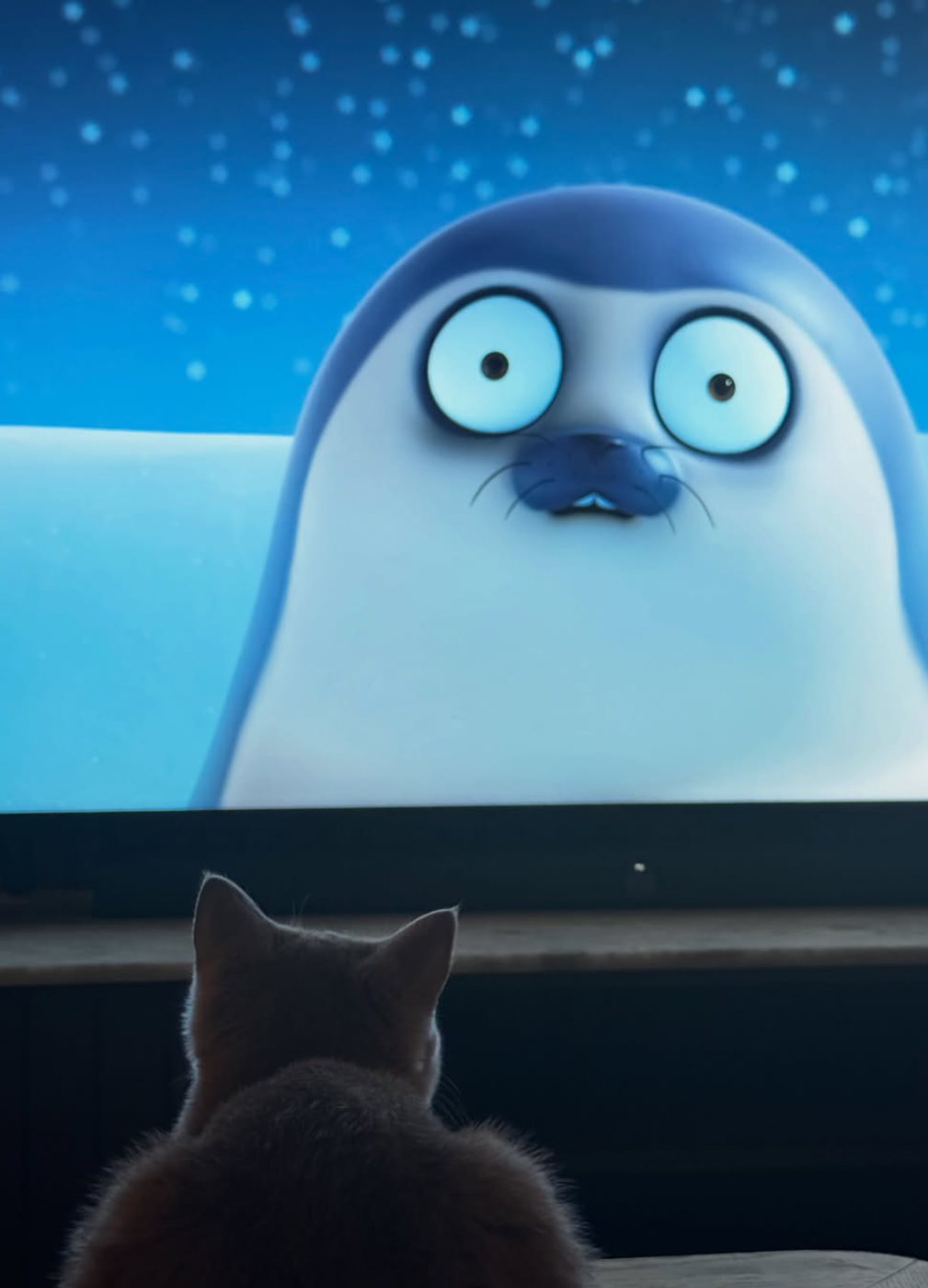
That doesn’t mean Sealook was secretly created as Netflix programming for cats. The streaming service lists it as a children’s animated comedy about playful seals living in a wildlife sanctuary, with no claim that its palette was designed for feline viewers.
Fig doesn’t seem particularly concerned about who the intended audience is. As far as she’s concerned, Netflix has seals moving around the television in colors worth watching, and that’s apparently enough to earn Sealook a place on her must-watch list. The humans can find something else to watch later. Fig is using the TV right now.
View this post on Instagram
This content was created with AI assistance and edited by the iHeartCats team.