
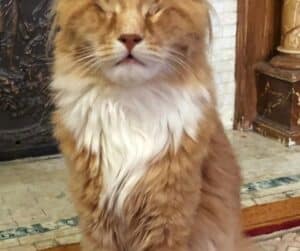
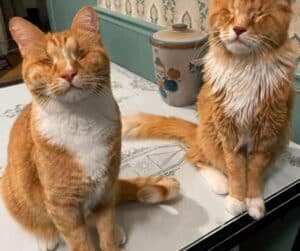
Gary and Shaggy stood out from the time they were kittens. Their unusually long legs gave the brothers a distinctive appearance, but those physical differences would eventually reveal something far more significant. Years of veterinary examinations and genetic research showed that the two cats had Marfan syndrome, making them the first known domestic pets confirmed to have the rare genetic condition. Their cases have now given veterinarians and researchers an unexpected opportunity to better understand how the disorder can appear in animals.
Marfan syndrome affects connective tissue, which provides support and structure throughout the body. Because connective tissue is found in so many places, the condition can affect several organs and body systems at the same time. The disorder is associated with changes in a gene called fibrillin 1 (FBN1). In humans, Marfan syndrome is considered rare, affecting roughly 1 in 4,000 people.
According to the Marfan Foundation, the condition can affect the cardiovascular system, bones, eyes, lungs, skin, and head. People with Marfan syndrome may experience nearsightedness, unusually long limbs, and differences in facial or skull structure.
Cardiovascular complications are particularly important because the condition can affect the heart and major blood vessels. About 90 percent of people with Marfan syndrome develop cardiovascular involvement, which can become serious without appropriate diagnosis and treatment.
Many human cases are inherited from a parent. However, changes in FBN1 can also arise spontaneously, meaning someone may develop the condition without a previous family history.
The Clues Gary and Shaggy Revealed
For Gary and Shaggy, one of the earliest visible clues appeared in their legs. As the brothers grew, their limbs became noticeably longer than expected for ordinary domestic cats. Gary’s measurements were especially striking. According to the published research, his radius and tibia were more than 42 percent longer than the average measurements seen in male domestic shorthair cats.
Their unusual proportions were only part of the picture. Veterinary examinations later identified abnormalities involving their eyes and aortas, the major arteries carrying blood away from the heart. Taken together, these findings suggested that the brothers might have a connective tissue disorder resembling Marfan syndrome in humans.
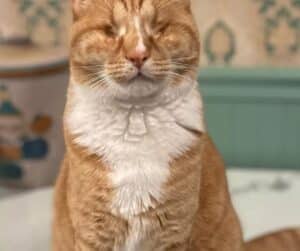
Rather than dismissing their unusual features as simply part of their appearance, their caregivers and veterinary specialists continued searching for an explanation. That persistence ultimately brought together veterinary experts and geneticists from institutions across the United States and Europe.
“This discovery is a great example of how pet parents can collaborate with veterinary and genetic experts to learn something that could help other animals in the future,” senior study author and Cornell University assistant professor Dr. Jacquelyn Evans told the Cornell Chronicle.
Genetic testing provided the crucial evidence. Researchers found mutations affecting the FBN1 gene in both Gary and Shaggy, confirming the connection between their physical abnormalities and Marfan syndrome.
The genetic findings also contained a surprise. In humans, one altered copy of FBN1 is generally enough to cause Marfan syndrome. Gary and Shaggy, however, had mutations affecting both copies of the gene.
Researchers found that the mutation did not completely prevent the gene from functioning. The cats were still able to produce some FBN1 protein, leading the researchers to describe them as genetically homozygous but “functionally heterozygous.”
That remaining gene function may help explain how the brothers survived into adulthood despite the severity of their condition. Their medical needs were significant, however, and treatment eventually included the removal of their eyes.
Shaggy lived to 7 years and 2 months old, while Gary lived to 5 years and 10 months. Although their lives were shortened by a complex genetic disorder, what veterinarians learned from them could continue helping animals long after their cases were first recognized.
Before Gary and Shaggy, Marfan syndrome had been confirmed in only one other nonhuman animal. A 2005 study documented spontaneous FBN1 mutations in cattle, suggesting those animals could potentially contribute to scientific understanding of the disorder.
The brothers now add another important piece to that research. Their cases demonstrate that veterinarians encountering cats with unusual limb proportions, eye abnormalities, and cardiovascular changes may have another rare genetic condition to consider.
Evans said the findings could provide a foundation for improved veterinary diagnostics. Greater awareness may eventually help veterinarians recognize similar cases sooner and could contribute to the development of genetic testing for affected animals.
Gary and Shaggy were remarkable cats for reasons their family could never have anticipated when they were tiny kittens with unusually long legs. Their story became something larger than a medical curiosity, showing how careful observation, dedicated veterinary care, and genetic research can turn one family’s unanswered questions into knowledge that may someday help other animals.
View this post on Instagram
This content was created with AI assistance and edited by the iHeartCats team.