
That adorable orange cat lounging on the couch might have a little secret hiding in plain sight. According to veterinarian Carlos Gutiérrez, nearly every orange cat is actually a tabby, even when their fur appears to be one solid shade of ginger. And those subtle markings are just one reason these colorful cats are so fascinating.
Orange cats have earned a reputation for being affectionate, playful, and wonderfully attached to their favorite people. Gutiérrez describes them as particularly sociable companions, but there’s more to their story than their friendly reputation. A closer look at their fur reveals patterns that many cat parents have never noticed.
The Hidden Stripes on Almost Every Orange Cat
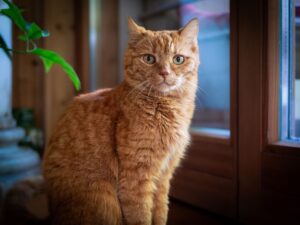
At first glance, some orange cats look as though they’re covered in one beautiful shade of golden fur. But Gutiérrez explains that nearly all of them have tabby markings, even when those patterns are difficult to see.
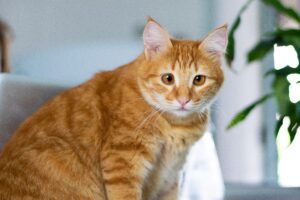
The easiest place to start looking is the forehead. Many orange cats have a distinctive M-shaped marking just above their eyes, along with delicate lines running across their cheeks. Their legs and tails may also reveal darker bands, while their sides can display stripes, spots, or swirling patterns.
Some of these markings are so faint that they become noticeable only in bright natural light. That means a cat who appears completely orange indoors might reveal a surprising amount of detail when sunlight falls across their coat.
There’s another interesting detail that often surprises cat parents. A tabby isn’t a particular breed of cat. It’s simply a coat pattern that can appear in many different breeds and mixed-breed cats.
Why Orange Cats Can’t Completely Hide Their Patterns
The reason behind those markings comes down to genetics. According to the UC Davis Veterinary Genetics Laboratory, orange fur behaves differently from many other coat colors because the tabby pattern remains visible even when certain genes would otherwise conceal it.
For example, a black cat may carry the genetic instructions for a tabby pattern without displaying obvious stripes. Orange cats, however, generally show some evidence of their underlying markings, even when the contrast is extremely subtle.
Orange cats also have another fascinating genetic characteristic. Approximately four out of five are male, and researchers have identified the genetic reason behind that familiar pattern. In 2025, Stanford Medicine researchers reported findings about the mutation responsible for orange fur. Because the mutation is associated with the X chromosome, male cats generally need only one copy to develop orange coloring, while female cats typically need two.
Are Orange Tabbies Really More Affectionate?
Beyond their striking coats, orange cats have developed quite a reputation for being lovable companions. Gutiérrez describes tabbies as friendly cats that often enjoy spending time close to the people who care for them. For cat parents whose orange companions follow them around the house or insist on joining every couch session, that description might sound familiar. However, the connection between orange fur and a particularly affectionate personality isn’t as straightforward as it seems.
A UC Berkeley survey involving 189 people who had lived with cats found that orange cats were commonly perceived as especially friendly. Those findings reflected people’s impressions rather than direct measurements of feline behavior.
Researchers also believe the genetic mutation responsible for orange coloring primarily affects coat color. There isn’t enough scientific evidence to conclude that being orange automatically makes a cat more affectionate or outgoing.
What Really Makes an Orange Cat Special
While coat color can reveal fascinating genetic details, a cat’s personality develops through several influences. Genetics, early socialization, individual experiences, and the environment in which a cat grows up can all play important roles.
That means one orange cat might love constant attention while another prefers peaceful afternoons with plenty of personal space. Both can have the same beautiful tabby markings without sharing the same personality.
Still, Gutiérrez’s observations give cat parents a fun reason to take a closer look at their ginger companions. The next time an orange cat settles nearby, those little forehead lines, cheek markings, and tail rings might be worth a second glance. The stripes may have been there all along, quietly adding another layer of charm to a cat who already has a personality all their own.
This content was created with AI assistance and edited by the iHeartCats team.