
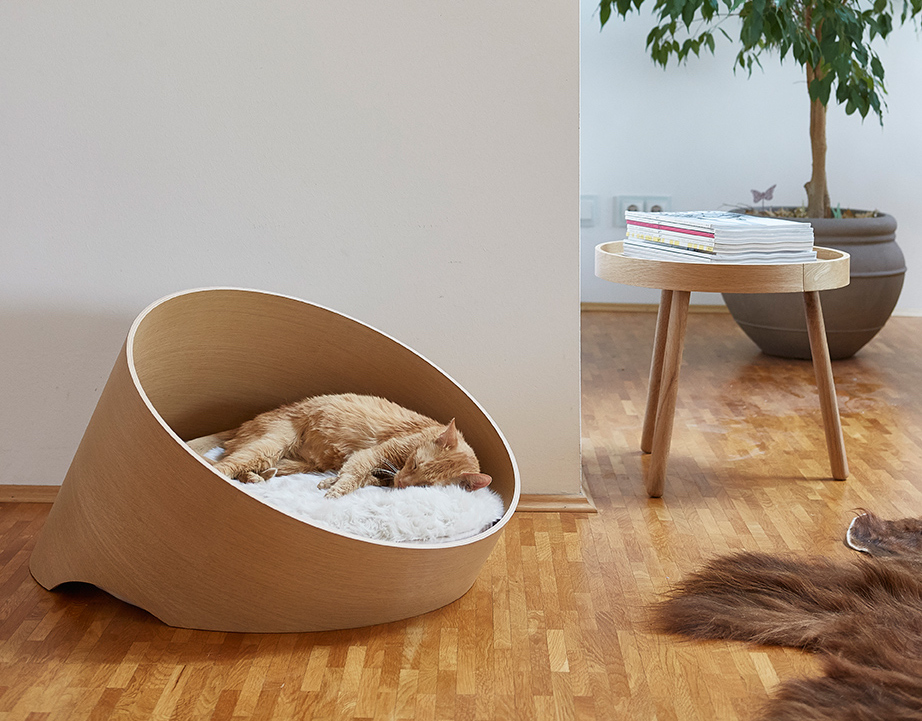
Modern cat furniture that doesn’t look like a cat tree replaces carpet-wrapped particleboard with furniture-grade materials, including solid wood, bent plywood, and dense felt, built around five needs cats actually have: a base that doesn’t wobble, a scratching surface at least 24 to 30 inches tall (a standing cat’s full stretch), a resting spot with cover overhead and a view out, washable covers, and a footprint that works as real furniture. Pieces like the MiaCara Torre ($569), Labbvenn Kikko ($429), and MiaCara Covo ($519) meet all five and are designed to stay in the room, not hidden behind a chair. Evidence-reviewed, not hands-on tested; prices verified May 2026.
There’s a corner in a lot of homes that everyone has quietly agreed not to look at. The cat tower lives there. It’s beige, or it’s gray; it matches nothing else in the room, and it’s been pushed behind an armchair so it’s visible from as few angles as possible. It cost sixty dollars. It wasn’t the piece anyone dreamed of decorating around. It arrived, and it stayed, because the cat loves it.
That’s how most of us shop for cat furniture. We buy something that keeps our cats happy, even if we’d rather our guests didn’t notice it. Then, a couple of years later, the base starts to wobble, the carpet begins to unravel, and the search starts all over again.
The funny thing is, cats don’t actually care about beige carpet. What they need is stability, height, a scratching surface long enough for a full stretch, and a place to rest where they feel sheltered but can still watch the room. None of those needs require a bulky cat tree that looks out of place in your living room.
That’s the gap modern cat furniture is trying to close. The best pieces are designed around the way cats actually live, with the stability, height, scratching surfaces, and cozy retreats they naturally seek. They just happen to be crafted from beautiful materials like solid wood, bent plywood, and durable felt, making them feel as at home in your living room as anywhere else. The result is furniture your cat loves, and you’re genuinely happy to leave on display.
The Meow Picks specializes in finding pieces like these from small European makers whose work is often difficult to find in the United States. Even better, the shop built giving back into its business from day one by setting aside a share of every order to help cats still waiting for homes. That means choosing better furniture for your own cat can also make a difference for one you’ll never meet.
What Separates Good Cat Furniture From the Rest
Good cat furniture isn’t complicated. The best pieces all have a few things in common, and once you know what to look for, they’re surprisingly easy to spot.
It Doesn’t Move
This is the one that decides everything else. When a cat tries a new piece, it puts its full weight on the edge and waits. If the structure shifts even slightly, that’s often the end of it. The cat has learned the piece isn’t stable, and no amount of catnip is likely to change its mind. Look for a base that’s genuinely weighted or built from solid materials, with no wobble when a cat stretches to full height. Cheap towers often fail here first. A base designed to save on shipping still has to support a fourteen-pound cat launching off the top platform.
The Scratching Surface Is Tall Enough
Cats don’t scratch mainly to sharpen their claws. They scratch to stretch the entire length of their bodies, from shoulders to hind legs, the same instinct that makes them go crazy for nail files and emery boards. A post that’s shorter than your cat’s standing reach can’t provide that full stretch, so your cat looks for something that can, usually a doorframe or the arm of the sofa. Stand your cat on its back legs with its front paws extended and measure. That height is the minimum, not the goal, and it’s more than most budget scratching posts offer.
There’s Cover Overhead and a View Out
Cats sleep most comfortably when something solid is above them, and they can still keep an eye on their surroundings. An open platform leaves them feeling exposed. A fully enclosed box blocks their view. The places cats naturally choose usually offer both, which is why so many prefer the space beneath a chair to the cushion on top of it, a preference vets see often in homes with cats. Cover matters just as much as height, yet it’s one of the details most often overlooked in furniture designed to look impressive rather than be comfortable to use.
It Comes Apart to Be Washed
It sounds like a small detail until you live with it. Most cat furniture doesn’t leave a home because it breaks. It leaves because it can no longer be cleaned. Cushions absorb hair, fur, and the occasional hairball, while glued-down carpet eventually reaches the point where no amount of vacuuming helps. Removable covers and washable cushions dramatically extend the life of a piece, regardless of how well it was built.
It Earns the Floor It Stands On
Floor space is valuable, especially in apartments and smaller homes. The best pieces either serve more than one purpose or look like furniture you would have chosen for the room anyway. For example, a side table with a cat hammock underneath doesn’t require any extra space at all. When a piece blends naturally into your home, it earns its place every day.
At the heart of all five is a simple rule: good cat furniture begins with the cat. The goal isn’t to hide your cat’s furniture. It’s to choose furniture that’s worthy of sharing your home.
Three Modern Cat Pieces Worth Knowing
The best cat furniture follows the same basic principles, but there isn’t a single right answer for every home. These three pieces put those ideas into practice in different ways, each solving a different need depending on your cat, your home, and the space you have available.
Side-by-Side Comparison
Designer · Origin · Materials · Price · Best Use
Prices are current US reference figures and may change. The Meow Picks sets aside a share of every order to support cats still waiting for homes.
MiaCara Torre Cat Tower
If your cat is currently redecorating a doorframe, start here.
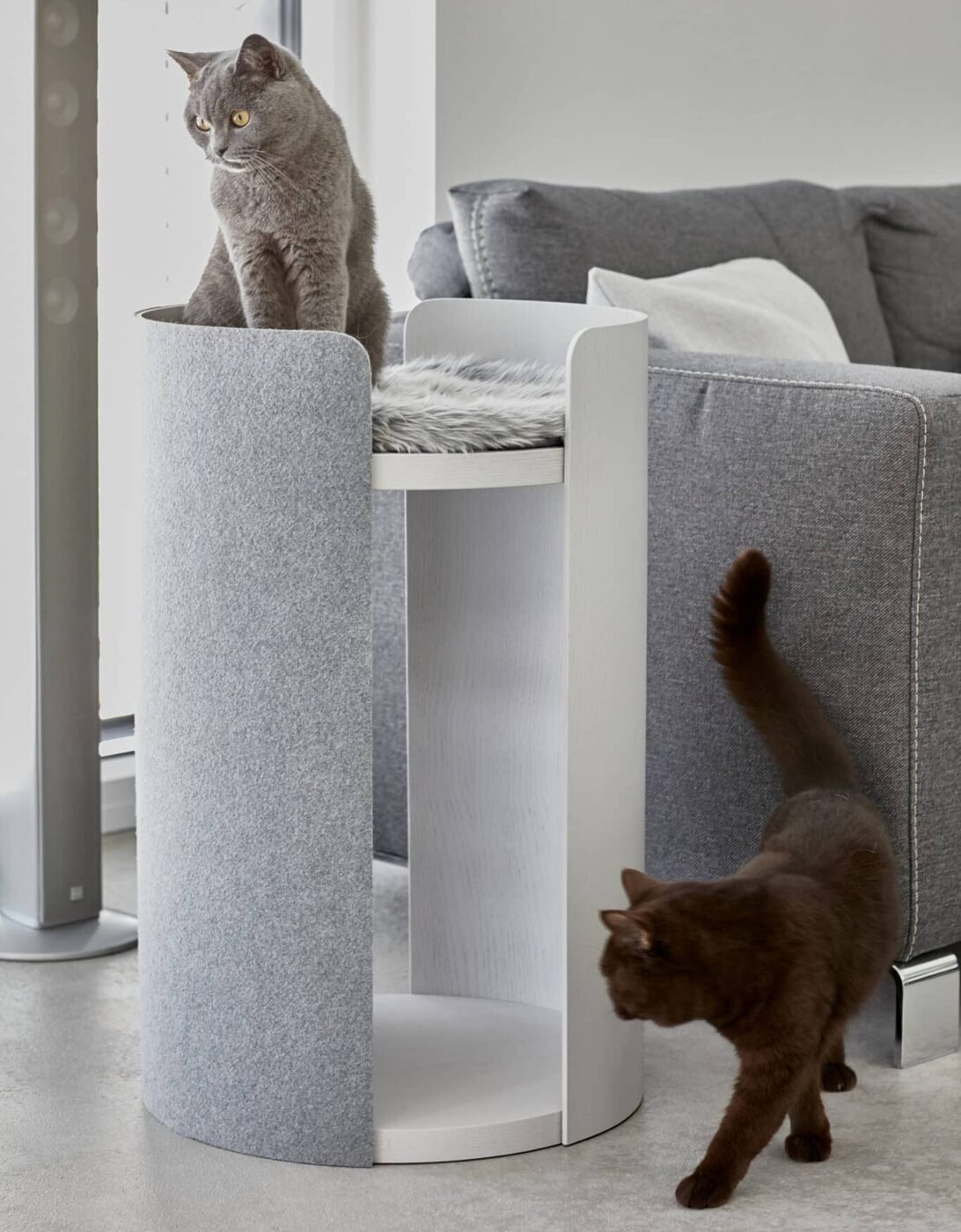
The MiaCara Torre Cat Tower was designed by Dutch designer Regina Mol for MiaCara and is made in Germany. It begins where many cat towers fall short: stability. An oversized solid wood base anchors the entire structure, so a cat can stretch to full height or leap from the top platform without the tower shifting beneath them. It sounds like a small engineering detail, but it’s the difference between a piece a cat trusts and one it quietly ignores.
A curved bent plywood panel wrapped in dense design felt runs up the center, creating a full-height scratching surface that also serves as the climbing route to the lookout above. Give a cat a surface that rewards a full stretch, and in most homes, the doorframe suddenly becomes much less interesting.
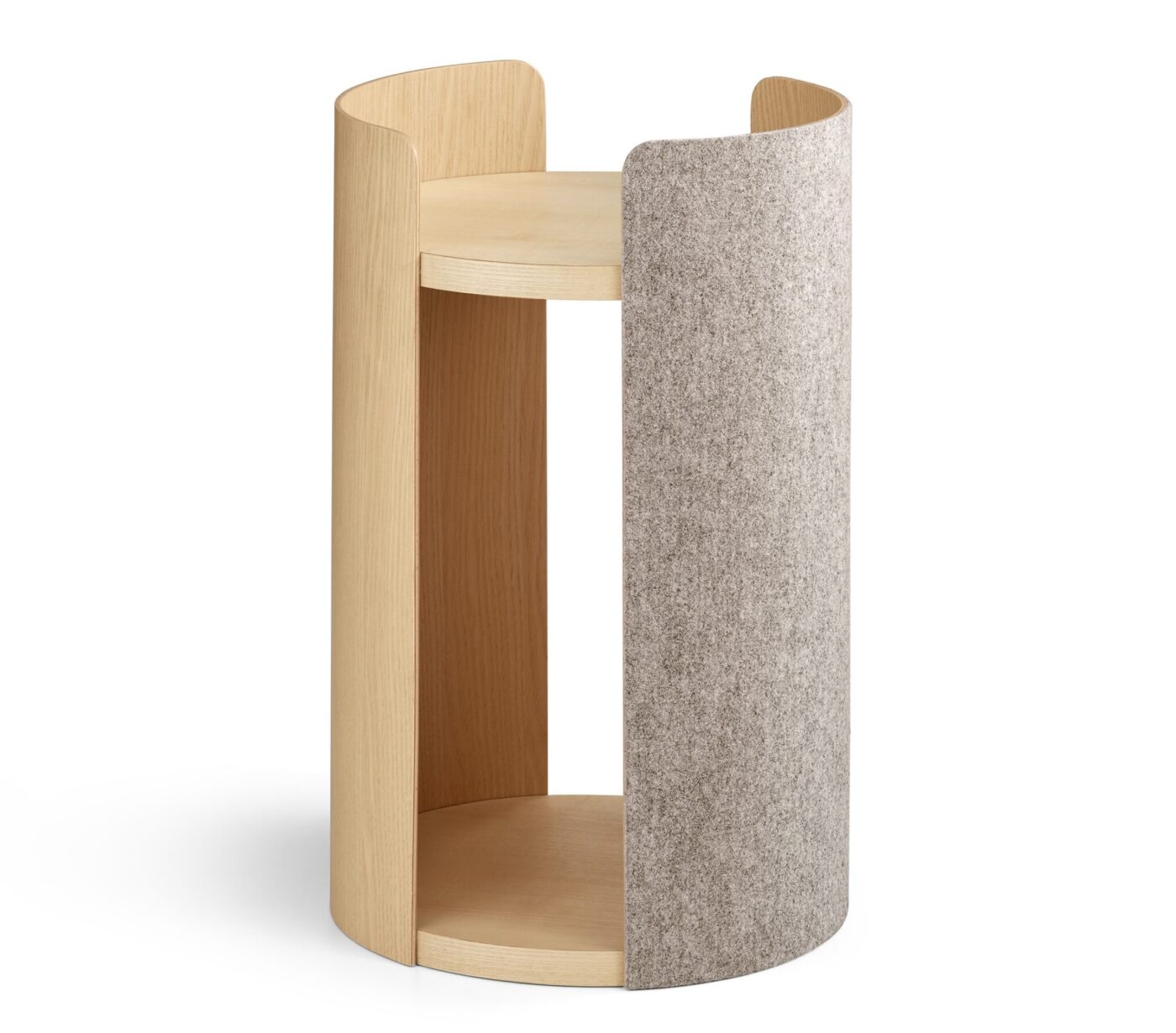
At the top is a roomy perch for surveying the room. At the base is a cozy cubby for cats who prefer a little privacy. In multi-cat homes, those two spaces often become favorite spots that get quietly traded throughout the day.
It also happens to look beautiful. The sides are bent plywood in a natural ash veneer, the platforms are veneered to match, and the scratching panel is a hardwearing polyamide design felt available in neutral tones. At roughly 28 inches tall and 18 inches across in the smaller size, the Torre feels more like a piece of modern furniture than a traditional cat tree, and it’s something you’re happy to leave on display instead of hiding behind a chair.
Two things worth knowing: The Torre is designed as a floor-level anchor rather than a ceiling-height climbing system, so adventurous climbers may still appreciate nearby wall shelves. The felt scratching panel should be vacuumed clean rather than washed.
Labbvenn Kikko Table
If you live in an apartment and every square foot matters, this is the answer, and it is worth knowing that indoor cats can thrive in small spaces when the environment is designed well.
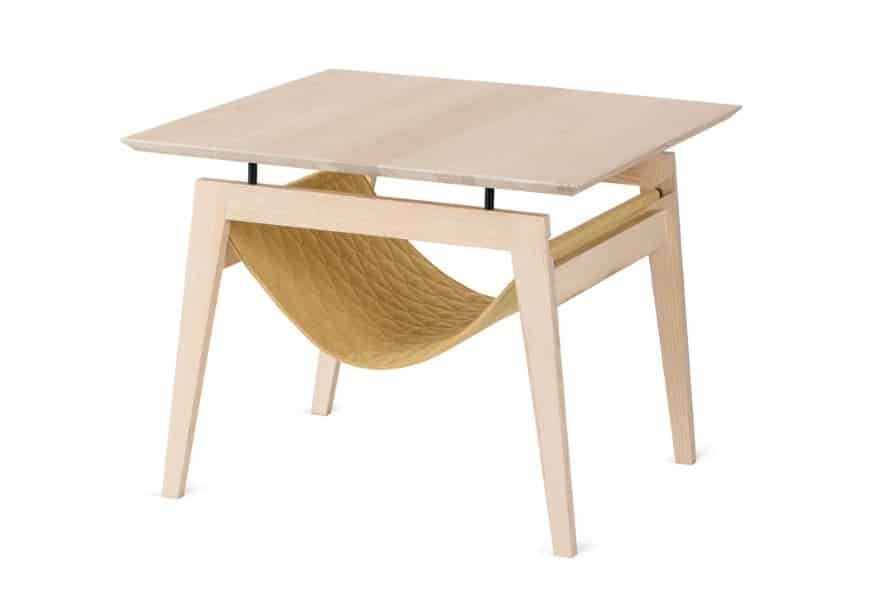
Designed by Renata Wites and Ada Brożyna, both lecturers at the Academy of Fine Arts in Wrocław, and handcrafted in Poland from locally sourced ash, the Labbvenn Kikko Table is a genuine Scandinavian-inspired side table with a quilted hammock suspended beneath the tabletop. It works as everyday furniture for you and a favorite resting place for your cat.
The hammock is the entire idea. A cat resting inside has something solid overhead while still enjoying an unobstructed view of the room, the same combination cats naturally seek when they choose the space beneath a chair over an exposed bed. It creates a sense of security without shutting them away.
Just as importantly, it keeps your cat close to the family. A bed tucked away in a spare room gets used when the house is quiet. A bed beneath your coffee table gets used while you’re reading a book or watching television just a few feet away. For many cats, being near their people matters as much as the bed itself.
The hammock lifts off its metal support tubes for washing and comes in four colors, making it one of the rare cat beds that’s genuinely simple to keep clean. Like any thoughtfully designed side table, it blends naturally into the room instead of announcing itself as pet furniture.
Two things worth knowing: The hammock is designed for cats up to approximately 15 lbs., and because the Kikko doesn’t add climbing height, it works best alongside another vertical piece if your cat enjoys being up high.
MiaCara Covo Cat Basket
If your cat is getting older or has never been much of a climber, this is the one to consider.
Designed by architect and interior designer Uta Cossmann, the MiaCara Covo Cat Basket is made in Germany from beautifully curved bent plywood, finished in walnut, oak, or black ash, with a generously padded, removable cushion. At 60 cm across, roughly 24 inches, it stays roomy even for larger breeds. Its shape is what makes it special.
High sides create the sheltered feeling cats instinctively seek, while the open front lets them keep an eye on everything happening around them. It’s the same balance of security and visibility that makes cardboard boxes, laundry baskets, and the space beneath a favorite chair so appealing, just translated into a beautifully crafted piece of furniture.
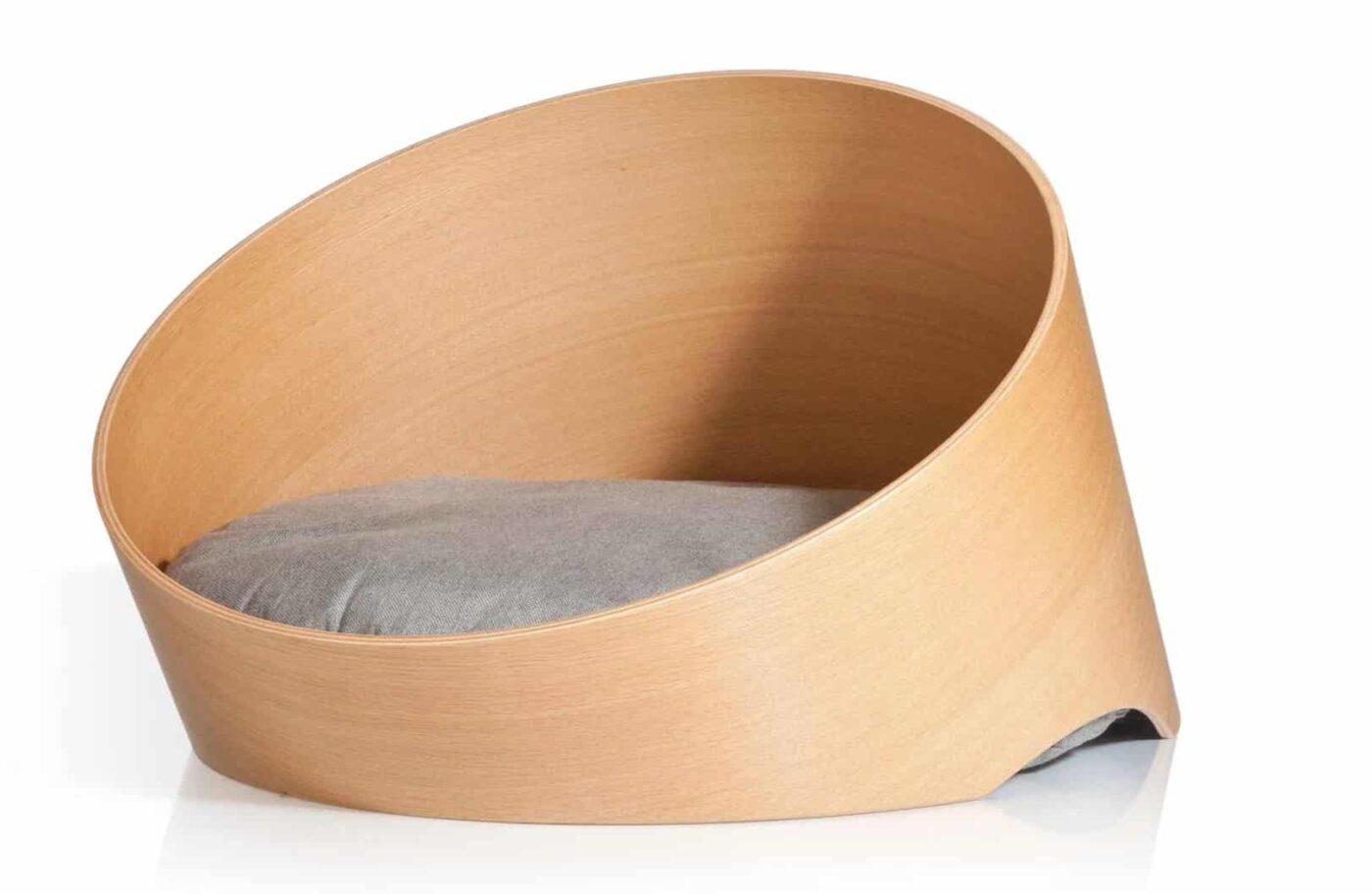
The thick foam cushion is especially welcome for senior cats. Older joints settle differently than younger ones, and a supportive bed often becomes more important with age. Because the cushion lifts out and washes at 60°C, it’s also much easier to keep fresh over the years.
With its clean curves and wood finishes, the Covo looks like a modern accent piece rather than a pet bed, allowing it to blend seamlessly into a living room or bedroom.
Two things worth knowing: The Covo is designed for resting rather than climbing or scratching. It works best paired with a scratching post or climbing piece nearby so your cat has both a place to relax and a place to exercise their natural instincts.
How Much Vertical Space Does an Indoor Cat Actually Need?
The more useful question isn’t how tall one piece should be. It’s how your cat moves through the house over the course of a day. A single tall tower in the corner is a destination. What cats really use is a route.
The American Association of Feline Practitioners (AAFP) and the International Society of Feline Medicine (ISFM) address this in their Feline Environmental Needs Guidelines, which organize a cat’s needs around five environmental pillars, per the 2024 AAFP/ISFM edition. The guidelines make it clear that meeting those needs is essential, not optional, because cats often don’t show obvious signs of stress until it appears as unwanted behavior or health problems. Several of those pillars relate directly to the furniture we bring into our homes.
As the guidelines explain, “Access to an elevated area increases the cat’s vertical space and allows it to monitor its environment.” That simple observation explains why most cats don’t just want one tall perch. They want choices.
Every cat needs a safe place to retreat to, and for many cats, that place works best off the ground. Resting spots also count as a resource, just like food and water, which means that in a multi-cat household, it’s better to have several modest perches and hiding places than one impressive tower everyone has to share. Climbing and surveying are natural feline behaviors, so a cat that can move upward simply has more of its environment available indoors, the same enrichment principle behind puzzle toys that engage a cat’s problem-solving instincts. Scratching is just as important. It’s not only about claw maintenance but also communication and territory, making a full-height scratching surface an essential resource rather than an optional accessory.
In practice, creating good vertical space is less complicated than it sounds. Offer three or four resting spots at different heights instead of just one. Make sure at least one has overhead cover. Place a full-height scratching surface where your cat already likes to scratch instead of where it’s most convenient for your furniture layout. In multi-cat homes, giving cats multiple routes up and down helps reduce tension because going up often resolves a disagreement that might otherwise happen face-to-face on the floor.
There’s a quieter benefit, too. A home designed around what cats naturally need tends to keep working year after year. The scratching stays on the scratching post instead of migrating to the sofa. The beds get used instead of being ignored. And the cycle of replacing furniture that your cat never really liked begins to disappear.
Is Expensive Cat Furniture Worth It?
The answer depends on what you’re comparing it to. If you’re replacing a $60 cat tower every year or two because it wobbles, the carpet has unraveled, or it simply looks worn out, the real comparison isn’t between one inexpensive purchase and one expensive one. It’s between repeatedly replacing the same piece and investing in something designed to stay in your home for years.
Much of that difference comes down to materials. Many budget cat towers rely on particleboard wrapped in glued-on carpet. Over time, heavy use, humidity, and repeated cleaning can loosen joints, while carpet eventually frays and becomes difficult to clean thoroughly. Once the scratching surface wears out or the tower starts to wobble, replacement often feels easier than repair.
The pieces featured here take a different approach. Solid wood, bent plywood, dense felt, and removable cushions are chosen because they hold up to daily use and are easier to maintain. Washable covers extend the life of resting areas, while stable construction gives cats the confidence to keep using them year after year.
Where they’re made also plays a role. MiaCara manufactures many of its products in Germany and elsewhere in Europe, while Labbvenn handcrafts its furniture in Poland using locally sourced ash. Smaller production runs and carefully selected materials generally cost more, but they’re also part of what gives these pieces their longevity.
There’s another kind of value that’s harder to measure. A piece you still enjoy looking at five years from now is a piece you’re less likely to replace simply because you’re tired of it. Good design isn’t just about appearance. It’s about creating something that continues to earn its place in your home.
None of this means buying an inexpensive cat tree is the wrong decision. Plenty of cats are perfectly happy with them. But if you’re already shopping for a replacement, it’s worth asking not just what the next piece costs today, but how well it will serve both you and your cat over the years ahead.
How Does Buying From a Brand Like This Help Rescue Cats?
The Meow Picks was built with a simple idea: every order should do a little good beyond the home it’s being shipped to. From the beginning, the company committed to setting aside a share of every purchase to help cats in rescue, including products shipped directly from the makers it partners with, rather than waiting until the business reached a certain size or launched a special campaign.
The program is still in its early stages, and the company is upfront about that. Rather than advertising an eye-catching percentage or making vague promises, it simply says the giving will grow alongside the business. That kind of honesty is surprisingly uncommon, and it’s one of the reasons the program feels credible.
The Meow Picks is taking a thoughtful approach to its rescue partnerships, focusing on building long-term relationships with organizations whose work aligns with its mission. As the program grows, the company plans to share more about the rescues it supports and the impact those contributions are making.
What matters most is that every purchase contributes to that mission from day one. Whether someone buys a cat tower, a bed, or another carefully selected product, part of that purchase helps fund the everyday work that keeps rescue organizations moving forward.
Those dollars may help pay for a spay or neuter surgery, vaccinations, foster care supplies, emergency veterinary treatment, or simply the food and daily care cats need while they wait for a permanent home. They’re not glamorous expenses, but they’re often the ones that make rescue possible.
That’s the idea behind The Meow Picks. The goal isn’t simply to sell well-designed cat furniture. It’s to build a business where every order also helps improve the lives of cats still waiting for a family. Your purchase creates a more beautiful home for the cat already curled up beside you while helping another one move a little closer to finding a home of their own.
Fewer Things, Better Ones
Go back to that corner for a second. The tower behind the armchair isn’t a failure of care. It’s there because somebody wanted their cat to have something good and bought the best option they could find at the time. That’s what most of us do.
The difference is simply that the next one can do more. A thoughtfully chosen piece gets used instead of ignored, lasts instead of being replaced, and becomes part of your home instead of something you try to hide behind a chair. When you buy from The Meow Picks, a company that’s committed to helping rescue cats, that same purchase reaches beyond your own living room, supporting the everyday work of giving another cat the chance to have a home of its own.
Fewer things, better ones, for the cats we live with and the ones still looking. Shop The Meow Picks for your cat now!