
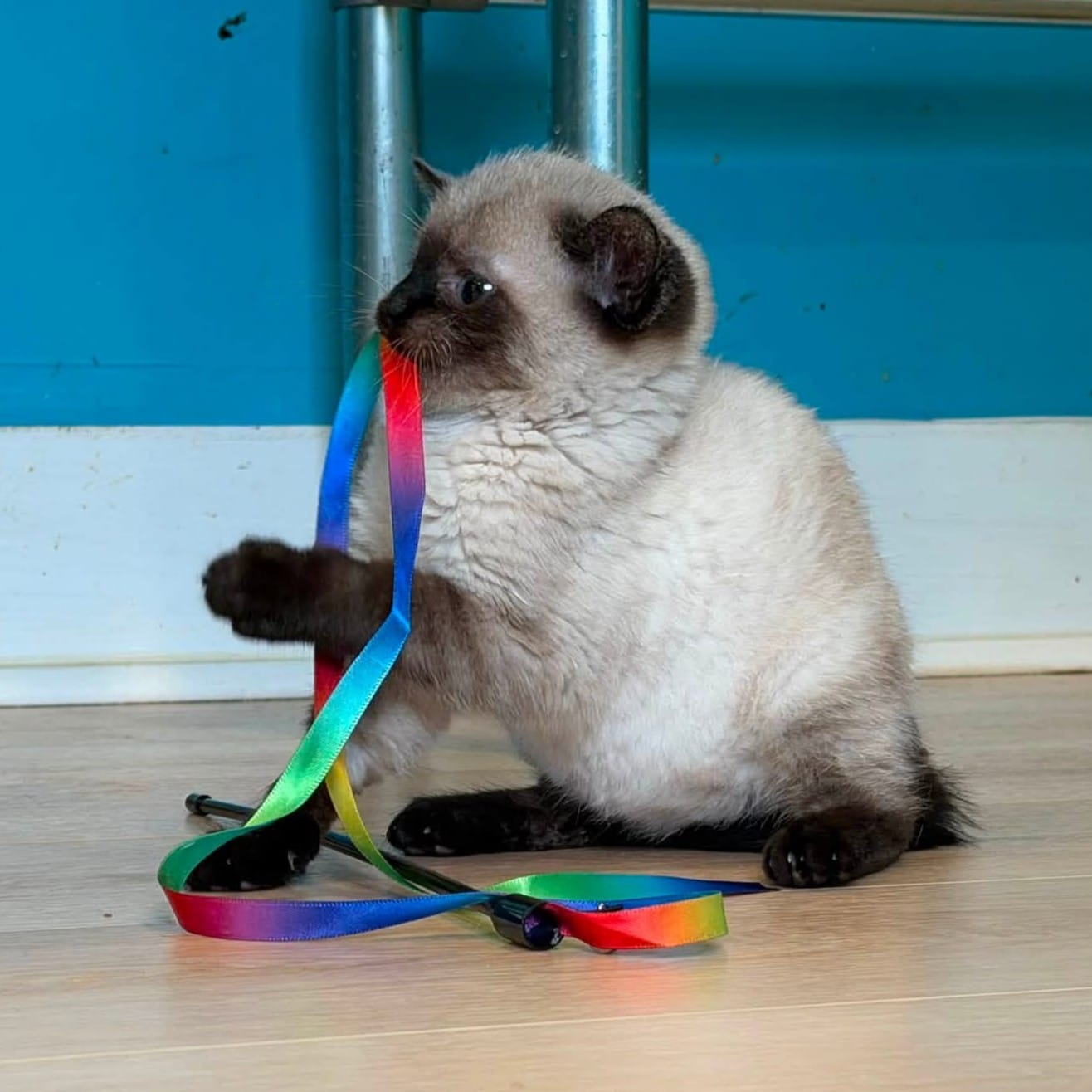
Fax has a habit that can make it look as though he is playing with something only he can see. The tiny kitten suddenly begins rapidly scooping his paws through the air, batting enthusiastically at absolutely nothing while everyone around him is left wondering what invisible opponent has captured his attention.
Is it an imaginary toy? A piece of dust? A game whose rules are known only to Fax? Whatever he believes he is doing, the rapid-fire “air scoops” have become one of the many wonderfully strange things that make him unforgettable at Kitkat Playroom.
Behind those funny little paws, however, is a kitten facing serious neurological challenges. Fax has severe hydrocephalus, and some of the quirks that make his caregivers smile are connected to a condition that requires careful monitoring and specialized veterinary care. Recently, that care became even more urgent.
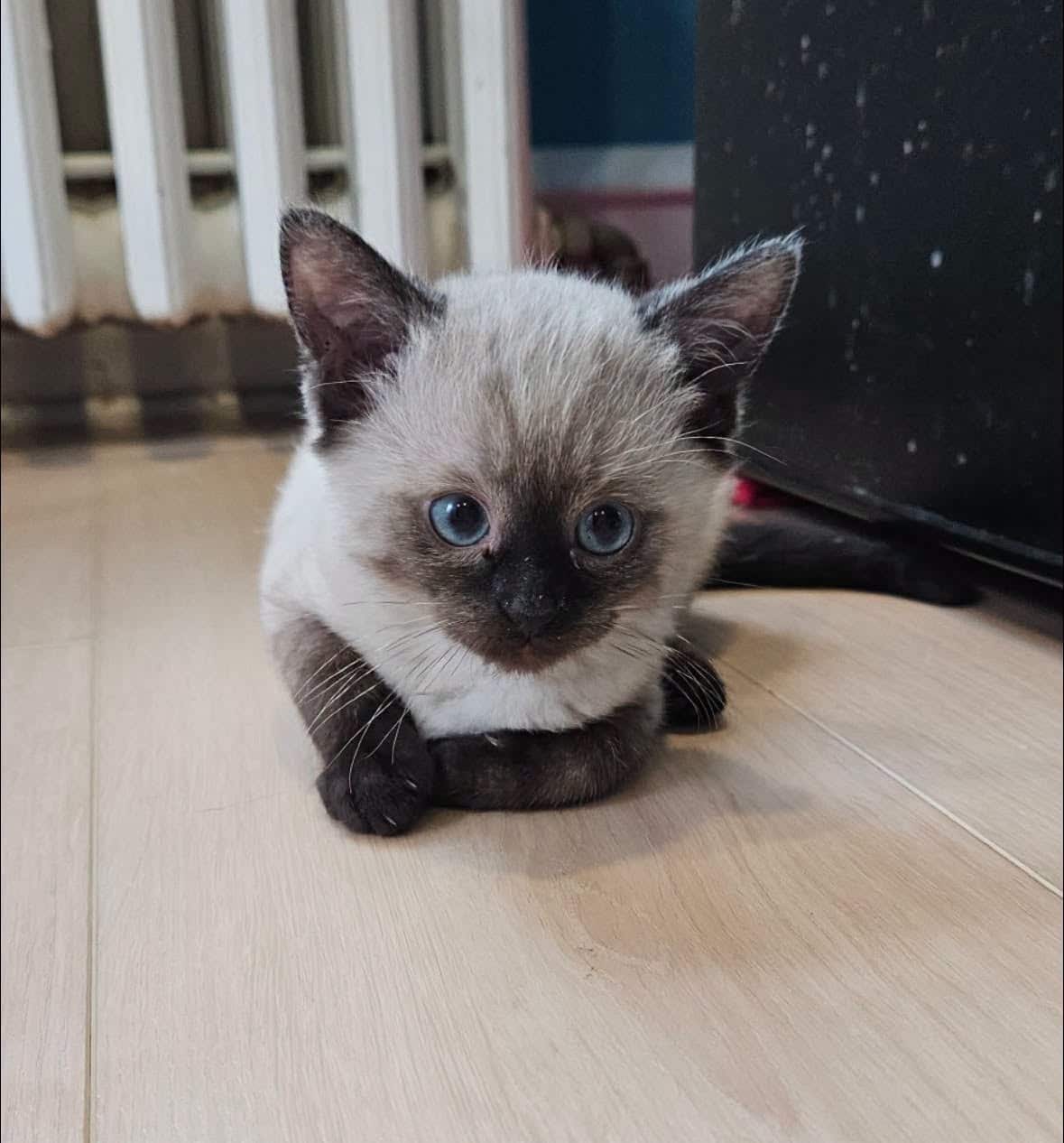
Fax Has Always Been a Quirky Little Guy
Kitkat Playroom has affectionately described Fax as one of the silliest kittens they have ever met, and his air-scooping routine is only part of his charm. Because of his hydrocephalus, he experiences neurological differences that can affect the way he moves and behaves.
For months, those quirks provided some much-needed comic relief for the people caring for him. Fax could be counted on to do something peculiar enough to make everyone laugh, even during stressful days.
His caregivers knew, however, that there could be more happening neurologically than his amusing behavior suggested. When cameras captured two concerning episodes overnight that appeared to be seizures, Fax was taken to his neurology team for observation. An MRI was scheduled to find out exactly what was happening inside the little kitten’s brain.
An MRI Revealed Severe Hydrocephalus
The imaging provided important answers. According to Kitkat Playroom, Fax has severe hydrocephalus affecting multiple ventricles in his brain. The diagnosis helped explain neurological symptoms his caregivers had already noticed, including circling and ataxia, which can cause problems with coordination and balance.
Hydrocephalus occurs when cerebrospinal fluid accumulates abnormally within spaces in the brain called ventricles. The resulting enlargement can place pressure on brain tissue and lead to neurological symptoms that vary depending on the severity of the condition.
Initially, Fax’s veterinary team hoped to manage his condition with medication and monitor whether a shunt would become necessary later. But hydrocephalus was not the only medical challenge discovered.
Fax was also diagnosed with severe megacolon, a condition in which the colon becomes enlarged and has difficulty moving stool normally. His care plan included motility medication and the possibility of a specialized diet to help manage the gastrointestinal problem. Through all of it, though, the little kitten has remained unmistakably Fax.
His Funny Quirks Became Frightening During Seizures
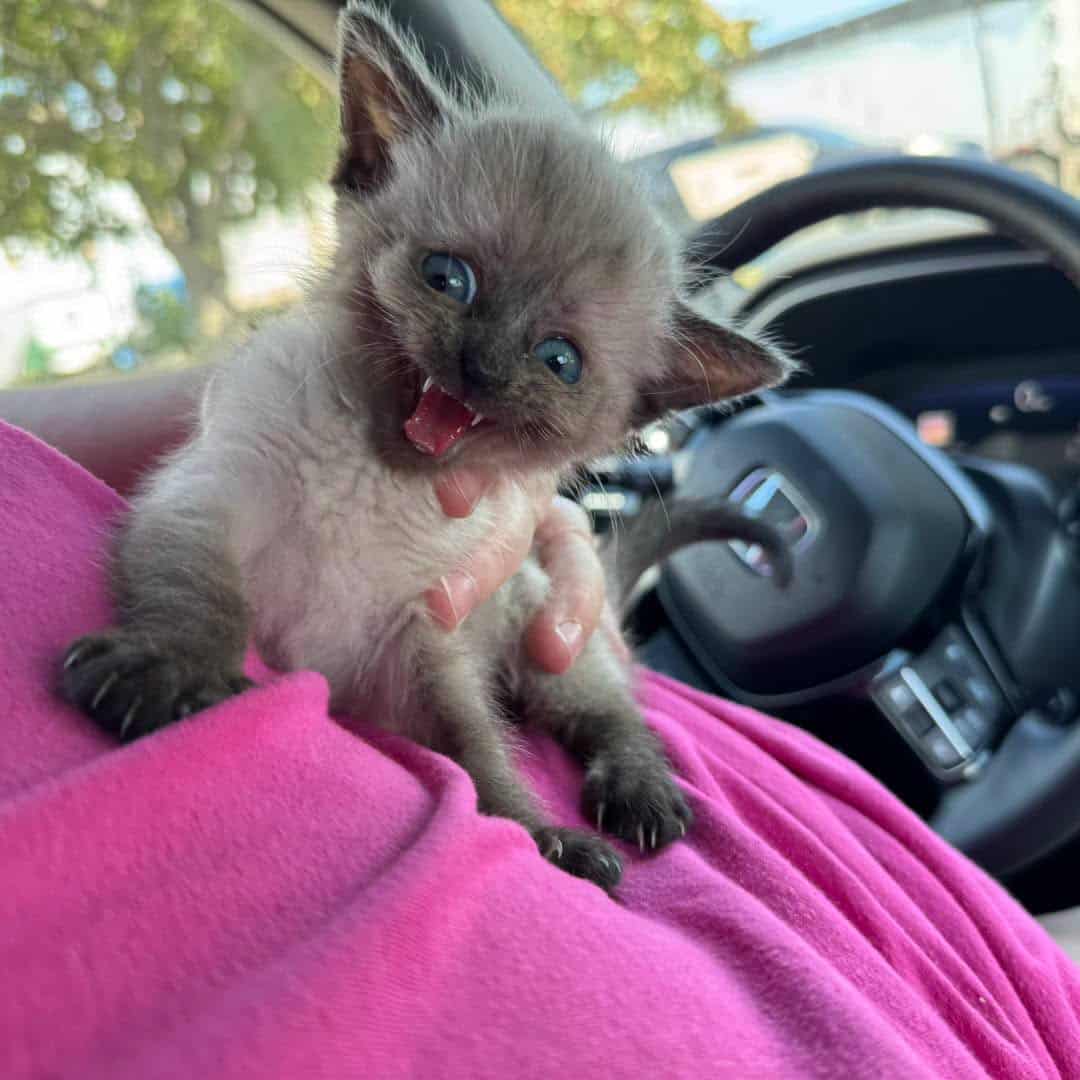
There is a major difference between Fax’s harmless neurological behaviors and the episodes that now have his caregivers worried. Kitkat Playroom says Fax has experienced focal seizures with impaired awareness. During these frightening episodes, the kitten can race around uncontrollably, crash into objects, scramble against walls, and appear completely unaware of his surroundings.
For caregivers accustomed to laughing at his harmless antics, watching those episodes is an entirely different experience. The kitten who normally brings comic relief suddenly needs protection from hurting himself while his brain and body are temporarily beyond his control.
Fax was placed on seizure medication, but another seizure occurred despite treatment. That development changed the urgency of his medical plan. His neurology team now wants to move forward with shunt surgery as soon as possible.
A Tiny Kitten Is Preparing for Brain Surgery
A shunt can help manage hydrocephalus by redirecting excess cerebrospinal fluid away from the brain to another area of the body where it can be absorbed. For Fax, the goal is to reduce the effects of the severe fluid buildup identified on his MRI.
His caregivers originally hoped they would have more time before needing to make that decision. Fax, however, has now grown beyond 2 pounds, meaning his size no longer requires them to delay the procedure.
The remaining challenge is obtaining the specialized shunt hardware his neurological team needs for surgery. Medical equipment has to be acquired through the appropriate channels, so even with everyone eager to move quickly, there is still a process involved before Fax can undergo the procedure. For a kitten whose caregivers have watched him grow from a tiny patient into their resident “quirky little weirdo,” waiting is understandably difficult.
The Same Silly Fax Is Still in There
Fax’s medical story can be frightening, but his diagnosis has never been the only thing that defines him. He is still the kitten who enthusiastically scoops at invisible objects, keeps his caregivers guessing, and somehow manages to inject silliness into days otherwise filled with medications, veterinary appointments, and worry.
Those goofy air scoops are especially endearing because they capture Fax during an ordinary moment when he is simply being himself. Not every unusual movement is an emergency, and his caregivers have learned to appreciate the harmless quirks while remaining alert to the neurological changes that require medical attention.
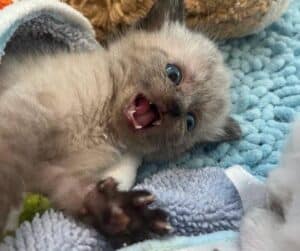
Soon, Fax may face one of the biggest steps of his young life as his veterinary team prepares for shunt surgery. There will undoubtedly be anxious moments ahead, but he will enter that next chapter with an experienced team watching over him and a community already deeply invested in the little kitten with the very busy paws.
For now, Fax continues doing what he does best: keeping everyone laughing, keeping everyone guessing, and occasionally reaching into thin air to scoop up whatever mysterious treasures apparently exist only in his world.