
iHeartCats is reader-supported. When you buy through links on our site, we may earn an affiliate commission at no extra cost to you.
Lions don’t brush their teeth. Neither do bobcats, lynxes, cougars, or feral cats. Yet these wild felines survive for years without toothbrushes, toothpaste, or professional dental cleanings.
So how do cats clean their teeth in the wild? The answer may surprise you.
Wild cats don’t actually have perfect teeth. They can develop broken teeth, infections, worn enamel, and gum disease just like our house cats. The difference is that their natural diet and daily behaviors help reduce plaque in ways most indoor cats never experience.
Your cat doesn’t spend the day chasing mice, chewing through fur and feathers, or gnawing on bones. Instead, they enjoy the comforts of indoor living, complete with bowls of kibble or canned food delivered right on schedule. That safer lifestyle is wonderful for your cat’s overall health and longevity, but it also means they miss out on many of the natural tooth-cleaning behaviors their wild relatives rely on.
In fact, according to the American Veterinary Medical Association (AVMA), most cats show signs of dental disease by the time they’re 3 years old. Plaque and tartar can build up silently beneath the gumline long before owners notice bad breath or other symptoms.
The good news? Understanding how wild cats naturally care for their teeth can help explain why indoor cats need a little extra help and which products can make keeping their mouths healthy much easier.

Do Wild Cats Really Have Better Teeth?
Not necessarily. Wild cats certainly don’t visit a veterinary dentist, but that doesn’t mean they have flawless smiles. Researchers have found that wild felines can suffer from:
- Broken teeth from hunting and fighting
- Worn canine teeth
- Tooth root infections
- Gum disease
- Tooth loss
- Painful abscesses
The difference is that severe dental disease often has much greater consequences in the wild. A cat with damaged teeth may struggle to catch prey, lose weight, or eventually starve. Indoor cats don’t face those same survival pressures, but they do face something else: plaque buildup caused by a much softer lifestyle.
How Wild Cats Naturally Help Clean Their Teeth
Nature doesn’t provide wild cats with toothbrushes. Instead, it gives them behaviors that naturally scrub and strengthen their teeth every single day.
Tearing Through Fur, Skin, and Muscle
Wild cats don’t eat neat little bites from a bowl. Every meal requires ripping through fur, feathers, skin, connective tissue, and tough muscle fibers before reaching the meat. That constant tearing creates friction across the teeth, helping remove soft plaque before it hardens into tartar. Compare that to many indoor cats, who swallow small pieces of kibble or lick soft canned food with very little chewing required.
Chewing Bones and Cartilage
Once a wild cat catches prey, the meal isn’t over after the first bite. Many felines chew cartilage, tendons, and smaller bones while eating. These tougher materials require prolonged chewing that helps scrape tooth surfaces while exercising the jaw muscles.
Important: This doesn’t mean pet owners should offer cooked bones. Cooked bones can splinter and create serious choking or digestive hazards. Even raw bones carry risks, including fractured teeth and bacterial contamination. Always talk with your veterinarian before introducing bones into your cat’s diet.
Eating Whole Prey
Wild cats consume much more than muscle meat. Depending on the prey, they may eat:
- Organs
- Connective tissue
- Skin
- Cartilage
- Tendons
- Small bones
Every part requires work. That extended chewing time naturally helps clean the teeth while strengthening the muscles used for biting and tearing.
Hunting Instead of Grazing
Most wild cats don’t snack throughout the day. They hunt. A successful hunt may provide one substantial meal, followed by many hours before eating again.
Many indoor cats, on the other hand, have constant access to food. While free-feeding works well for some households, frequent snacking can leave food particles and oral bacteria on the teeth throughout the day.
A Diet That’s Naturally Low in Carbohydrates
Wild prey contains virtually no added sugars or starches. Commercial cat foods, treats, and flavored products are formulated differently. While today’s pet foods are carefully balanced to provide complete nutrition, some ingredients can contribute to plaque formation when bacteria naturally present in the mouth feed on leftover food particles.
That doesn’t mean commercial food is unhealthy. It simply means our indoor cats don’t receive the same natural cleaning benefits that come from chewing through an entire prey animal.
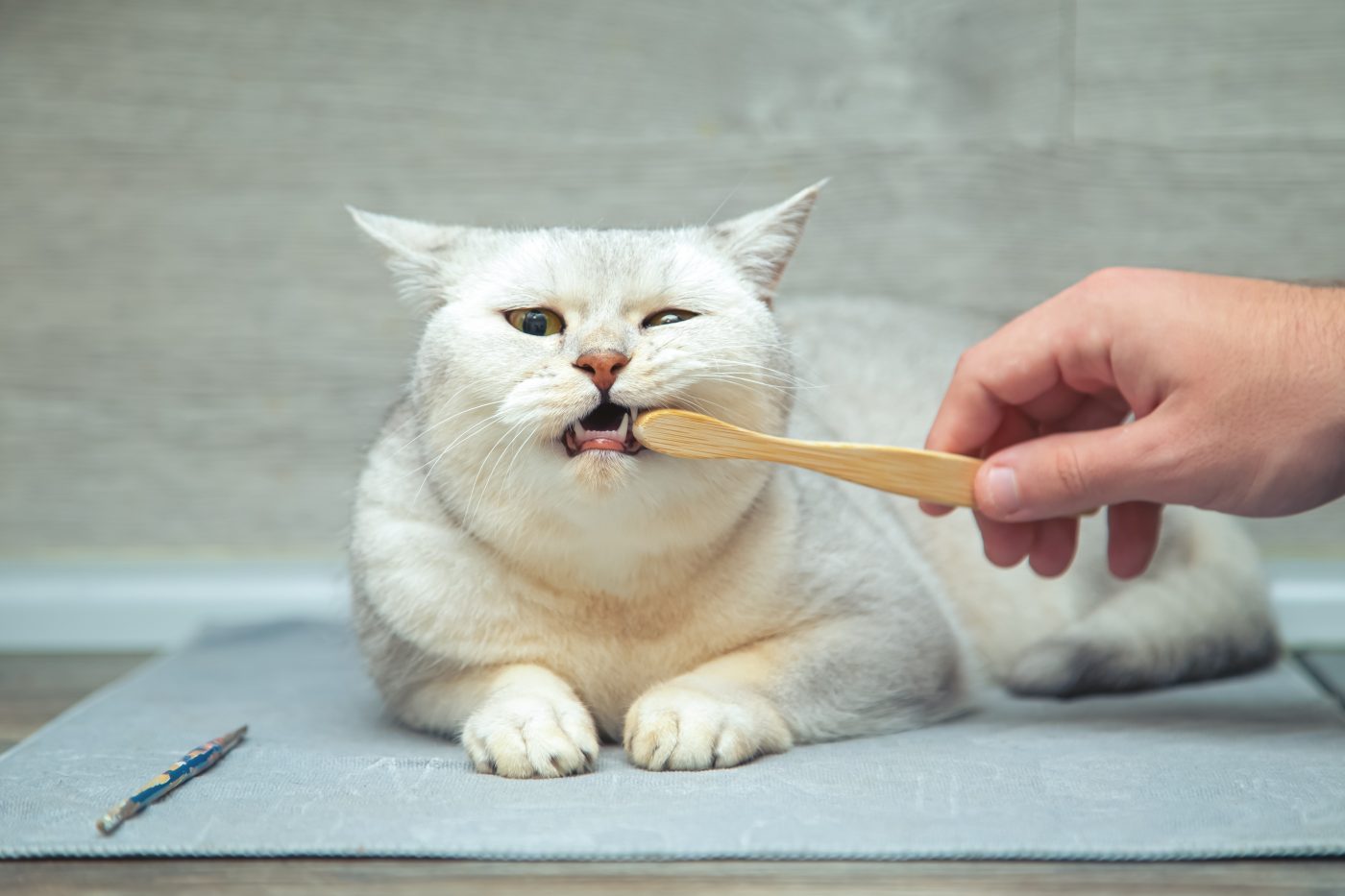
Why Indoor Cats Need Extra Dental Care
Ironically, the same lifestyle that helps indoor cats live longer also makes dental disease more common.
Your cat probably doesn’t:
- Chase mice across fields
- Tear through feathers
- Gnaw on cartilage
- Crunch tiny bones
- Spend 20 minutes working through a single meal
Instead, dinner arrives in a bowl. While that’s certainly easier and much safer, it means plaque has more opportunities to accumulate.
Over time, that soft plaque hardens into tartar. Once tartar forms, it can irritate the gums, allowing bacteria to move below the gumline where they contribute to periodontal disease. Dental disease isn’t just about bad breath, either. Left untreated, it can lead to:
- Pain
- Inflamed gums
- Loose teeth
- Tooth loss
- Difficulty eating
- Chronic infections
Because cats are masters at hiding discomfort, many continue eating normally even while experiencing significant dental pain. That’s one reason veterinarians recommend regular oral exams, even if your cat seems perfectly healthy.
🐾 Editor’s Tip
Think of dental care the same way you think about grooming. You don’t wait until your cat’s coat is badly matted before brushing it, and it’s best not to wait until severe tartar develops before thinking about oral health. Small, consistent habits can make a big difference over time.
The Best Products to Help Keep Your Cat’s Teeth Clean
While nothing replaces professional veterinary care when it’s needed, the right products can help reduce plaque buildup, freshen breath, encourage natural chewing behaviors, and make daily dental care much easier.
From veterinarian-recommended toothpaste to dental treats and enrichment toys that promote chewing, these products help recreate some of the natural behaviors that wild cats rely on to keep their mouths healthier.
1. Greenies Feline Natural Dental Cat Treats
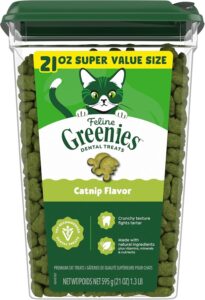
Best For: Cats that love crunchy treats.
If your cat thinks every trip to the kitchen should end with a treat, Greenies Feline Dental Treats are one of the easiest ways to support their oral health. Unlike soft treats that are swallowed almost immediately, Greenies have a crunchy texture that encourages cats to chew before swallowing. That chewing action creates gentle abrasion against the tooth surface, helping remove some plaque before it hardens into tartar.
These treats have also earned the Veterinary Oral Health Council (VOHC) Seal of Acceptance, meaning they’ve met established standards for helping reduce tartar when used as directed. While dental treats won’t replace brushing, they can become an effective part of an overall dental care routine, especially for cats that refuse toothbrushes.
Because they’re available in several flavors, they’re also easy to incorporate into a daily routine. Many owners simply offer a few treats after playtime or in the evening, creating a habit their cats look forward to while supporting healthier teeth.
How They Help Clean Teeth
- Crunchy texture encourages chewing
- Helps reduce plaque and tartar buildup
- VOHC Accepted for tartar control
- Makes daily dental care enjoyable


2. Petsmile Professional Dental Care Kit
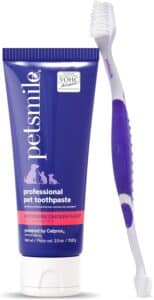
Best For: Cats willing to learn tooth brushing.
Brushing remains the gold standard for preventing plaque buildup, and the Petsmile Dental Care Kit makes it easier to get started. The kit includes a pet toothbrush and Petsmile’s toothpaste, which is formulated specifically for dogs and cats.
Unlike human toothpaste, Petsmile’s formula is safe to swallow and doesn’t require rinsing. The toothpaste works by helping loosen plaque and biofilm on the teeth while brushing physically removes food particles and bacteria along the gumline. Over time, consistent brushing can dramatically reduce tartar buildup and help keep gums healthier.
Most cats won’t enthusiastically accept brushing on the first day. However, introducing the toothbrush gradually, allowing your cat to taste the toothpaste first, and keeping sessions short can make the experience much less stressful. Even brushing a few times each week can provide meaningful benefits.
How It Helps Clean Teeth
- Physically removes plaque before it hardens
- Cleans along the gumline
- Helps freshen breath
- Supports healthier gums over time
3. Virbac C.E.T. Enzymatic Toothpaste
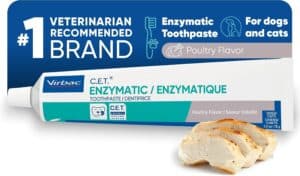
Best For: Cats already comfortable with brushing.
If your cat already tolerates brushing or you’re planning to start, Virbac C.E.T. Enzymatic Toothpaste is one of the most trusted veterinary recommendations available.
The toothpaste uses enzymes that help break down bacteria responsible for plaque formation. Instead of simply masking bad breath, it targets one of the underlying causes of dental disease. The poultry flavor is another advantage, as many cats accept it much more readily than mint-flavored products designed for people.
When paired with regular brushing, enzymatic toothpaste helps slow plaque accumulation, making it less likely that tartar will develop quickly between professional cleanings. It’s one of the closest things to giving your cat a daily “reset” for their mouth.
How It Helps Clean Teeth
- Enzymes help reduce plaque-forming bacteria
- Freshens breath
- Enhances the effectiveness of brushing
- Safe for cats to swallow
4. Oxyfresh Premium Dental Care Solution Pet Water Additive
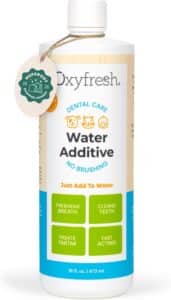
Best For: Cats that refuse tooth brushing.
Not every cat will tolerate having a toothbrush anywhere near their mouth. If that’s the case, a water additive can provide another layer of dental support.
Oxyfresh is mixed directly into your cat’s drinking water. As your cat drinks throughout the day, the solution helps reduce odor-causing bacteria that contribute to bad breath. While it won’t physically remove tartar the way brushing does, it can help create a healthier oral environment by reducing bacterial growth.
The formula is tasteless and odorless, which is important because many cats are quick to reject changes to their water. For households with multiple pets or particularly brush-shy cats, it’s an easy addition that requires virtually no extra effort.
How It Helps Clean Teeth
- Helps reduce bacteria in the mouth
- Supports fresher breath
- Easy daily maintenance
- No brushing required
5. ProDen PlaqueOff® Powder for Cats
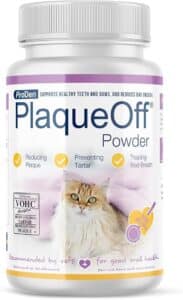
Best For: Cats that won’t tolerate brushing.
PlaqueOff takes a unique approach to oral care by working from the inside out. Rather than physically scrubbing the teeth, this powder contains a natural seaweed ingredient that may help soften plaque over time, making it easier to remove through normal chewing and brushing.
The powder is sprinkled directly onto your cat’s food, making it one of the easiest dental products to use consistently. This is especially helpful for households with multiple cats or owners who know brushing isn’t going to happen every day.
While results aren’t immediate, many owners report improvements in breath and plaque accumulation after several weeks of regular use. It works best as part of a broader dental care routine rather than as a standalone solution.
How It Helps Clean Teeth
- Helps soften plaque buildup
- Supports cleaner teeth over time
- Easy to mix into meals
- Helps freshen breath
6. Potaroma Natural Silvervine Sticks

Best For: Cats that enjoy chewing.
One of the biggest differences between wild cats and indoor cats is how much they chew. Silvervine sticks help bring a little of that natural behavior back into your cat’s daily routine.
As cats gnaw on the fibrous sticks, the rough texture gently rubs against the teeth, helping remove small amounts of soft plaque while massaging the gums. Many cats also become playful and energetic after interacting with silvervine, making these sticks a fun enrichment activity as well as a dental aid.
They’re not a replacement for brushing, but they do encourage healthy chewing behaviors that many indoor cats rarely experience.
How They Help Clean Teeth
- Encourages natural chewing
- Provides gentle abrasion against teeth
- Helps massage the gums
- Offers mental enrichment
7. Catstages Dental Fruit Wedges Catnip Chew Toys

Best For: Cats that enjoy carrying and chewing toys.
Cats don’t naturally think of chew toys the way dogs do, but the right toy can still encourage healthy chewing habits. Catstages Dental Fruit Wedges are designed with soft, textured fabric that gently rubs against your cat’s teeth and gums during play. The raised mesh material acts almost like a tiny washcloth for the teeth, helping remove bits of food and soft plaque while providing a satisfying texture to bite.
The toys are also filled with catnip, making them more enticing than standard plush toys. Many cats will grab, kick, chew, and carry them around the house, extending play sessions and increasing the amount of time their teeth come into contact with the textured fabric. While the cleaning effect is subtle compared to brushing, every little bit helps when you’re trying to slow plaque buildup.
Perhaps the biggest advantage is that these toys encourage a natural behavior. Wild cats spend much of their day biting, carrying, and manipulating prey. Interactive chew toys help mimic some of that instinct while providing both physical and mental enrichment for indoor cats.
How It Helps Clean Teeth
- Textured mesh gently wipes the tooth surface
- Encourages chewing during play
- Helps massage the gums
- Provides enrichment that mimics natural hunting behaviors
8. Veken Stainless Steel Cat Water Fountain
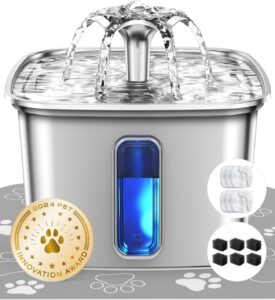
Best For: Cats that don’t drink enough water.
At first glance, a water fountain may seem like an unusual addition to a dental care article. After all, it doesn’t brush your cat’s teeth or scrape away plaque. However, hydration plays an important role in overall oral health.
Saliva is one of the body’s natural defenses against bacteria. It helps rinse away tiny food particles, dilute bacteria in the mouth, and keep oral tissues healthy. Cats that drink more water generally produce more saliva, which supports the mouth’s natural cleaning process.
Many cats instinctively prefer moving water over still water, making fountains an excellent way to encourage better hydration. The Veken Stainless Steel Cat Water Fountain also features a stainless steel drinking surface that’s easy to keep clean and resists scratches that can harbor bacteria over time.
While a fountain won’t remove tartar, it complements a complete dental care routine by supporting one of the body’s own cleaning mechanisms.
How It Helps Support Oral Health
- Encourages increased water intake
- Supports healthy saliva production
- Helps rinse away food particles naturally
- Promotes overall health alongside dental care
9. HICC PET Mouth Cleaning Finger Wipes
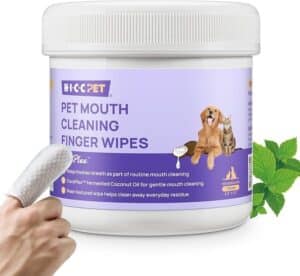
Best For: Cats that dislike traditional brushing.
If your cat runs the moment they see a toothbrush, finger wipes can be an excellent middle ground.
These textured wipes slip over your finger, allowing you to gently clean the outside surfaces of your cat’s teeth while also wiping along the gums. Because your finger is softer and easier to maneuver than a toothbrush, many cats tolerate this approach much better.
The textured material helps lift away food residue, plaque, and bacteria before they have a chance to harden into tartar. They’re also convenient for introducing young cats to oral care since the experience tends to feel less intimidating.
Finger wipes aren’t as thorough as brushing with a toothbrush and toothpaste, but they’re far better than skipping dental care altogether. For many households, they’re the realistic solution that actually gets used consistently.
How It Helps Clean Teeth
- Removes food residue and soft plaque
- Cleans along the gumline
- Easier for many cats to tolerate than a toothbrush
- Helps freshen breath
10. The Cat Ladies Organic Cat Grass Growing Kit

Best For: Curious cats that enjoy nibbling on plants.
Cat grass probably isn’t the first product that comes to mind when thinking about feline dental care, but it does encourage one behavior that many indoor cats don’t get enough of: chewing.
Many cats enjoy nibbling on fresh cat grass, and that gentle chewing provides mild mechanical stimulation for the teeth and gums. Although it won’t remove tartar or replace brushing, it can help satisfy your cat’s natural urge to chew while providing safe enrichment indoors.
Cat grass may also reduce the temptation to chew on potentially unsafe household plants. Combined with chew toys and silvervine sticks, it gives indoor cats more opportunities to engage in behaviors that resemble those of their wild relatives.
Think of cat grass as one small piece of a complete dental and enrichment routine rather than a dental treatment by itself.
How It Helps Support Oral Health
- Encourages natural chewing behaviors
- Provides gentle stimulation for the gums
- Offers safe indoor enrichment
- Complements other dental care products
Can Dry Food Really Clean Cats’ Teeth?
One of the most common beliefs among cat owners is that dry food cleans a cat’s teeth like a toothbrush. The truth is more nuanced.
For most cats, standard kibble doesn’t provide enough chewing action to significantly reduce plaque. Many cats swallow kibble after only one or two bites, which means there’s very little opportunity for the food to scrape against the teeth.
Some prescription and veterinary dental diets are specifically engineered with larger kibble sizes and specialized textures that encourage more chewing. These products can provide measurable dental benefits and, in some cases, have earned the Veterinary Oral Health Council (VOHC) Seal of Acceptance.
Regular dry food, however, shouldn’t be considered a substitute for dental care.
If your goal is keeping your cat’s teeth as healthy as possible, veterinarians generally recommend combining multiple approaches, such as:
- Regular veterinary dental exams
- Tooth brushing whenever possible
- Dental treats with the VOHC Seal of Acceptance
- Products that help reduce plaque and bacteria
- Toys and chews that encourage healthy chewing
- Routine monitoring for signs of dental disease
Using several of these strategies together offers far better protection than relying on kibble alone.
🐾 Editor’s Tip
Think of your cat’s dental care the same way you think about your own. Brushing, healthy habits, regular checkups, and the occasional extra tool all work together. No single product does everything, but a consistent routine can go a long way toward keeping your cat’s mouth healthier for years to come.
Signs Your Cat May Have Dental Disease
Cats have a remarkable ability to hide pain. In the wild, showing weakness could make a predator or competitor see them as vulnerable. Even though our indoor cats don’t face those same dangers, they still tend to mask discomfort, which means dental disease can become quite advanced before owners realize something is wrong.
Paying attention to subtle changes in your cat’s behavior can help you catch oral health problems earlier, when they’re often easier to treat.
Watch for these common signs:
- Persistent bad breath
- Yellow or brown tartar on the teeth
- Red, swollen, or bleeding gums
- Drooling more than usual
- Pawing at the mouth or rubbing the face
- Difficulty chewing or dropping food
- Preferring soft food over dry food
- Eating more slowly than normal
- Decreased appetite
- Weight loss
- Reluctance to play with chew toys
- Visible loose or broken teeth
Some cats continue eating despite significant dental pain because they’re driven by instinct. That’s why it’s important not to assume your cat’s mouth is healthy simply because they’re still finishing their meals.
If you notice any of these symptoms, schedule an appointment with your veterinarian. Dental disease rarely improves on its own, and delaying treatment can lead to pain, infections, and tooth loss.

How to Keep Your Cat’s Teeth Healthy
Wild cats benefit from a lifestyle that naturally helps keep plaque under control. Indoor cats, on the other hand, rely on us to fill in those gaps. Fortunately, protecting your cat’s teeth doesn’t have to be complicated.
The most effective approach is to combine several healthy habits into a regular routine.
Brush When You Can
Brushing remains the most effective way to remove plaque before it turns into tartar. Even brushing a few times each week can make a meaningful difference, especially when paired with an enzymatic toothpaste designed for cats.
Offer Dental Treats
Dental treats encourage chewing while helping reduce plaque through gentle abrasion. Choosing products that carry the Veterinary Oral Health Council (VOHC) Seal of Acceptance adds another level of confidence that they’ve been evaluated for effectiveness.
Encourage Healthy Chewing
Indoor cats don’t spend their days tearing through prey, but silvervine sticks, dental chew toys, and even cat grass can encourage natural chewing behaviors that help stimulate the gums and provide mild cleaning action.
Support Good Hydration
Healthy saliva is one of the mouth’s natural defenses against bacteria. Encouraging your cat to drink more water with a fountain can support overall oral health while also benefiting the kidneys and urinary tract.
Schedule Regular Veterinary Exams
Even with excellent home care, professional exams remain important. Your veterinarian can identify plaque buildup, gingivitis, broken teeth, or other problems long before they’re obvious at home. They can also recommend professional dental cleanings when needed.
🐾 Editor’s Tip
Starting early makes dental care much easier. Kittens that become familiar with brushing, finger wipes, or having their mouths gently handled often grow into adults that are far more accepting of routine dental care.
Frequently Asked Questions About Cat Dental Health
1. Do wild cats get cavities?
Cavities are relatively uncommon in cats, whether they’re wild or domestic. However, wild cats can still develop broken teeth, gum disease, infections, worn teeth, and painful abscesses that affect their ability to hunt and eat.
2. Is bad breath normal in cats?
A mild food smell after eating is perfectly normal, but persistent bad breath usually isn’t. Chronic bad breath is one of the earliest signs of plaque buildup, gingivitis, or periodontal disease and should be discussed with your veterinarian.
3. How often should I brush my cat’s teeth?
Daily brushing provides the greatest benefit, but even brushing several times each week can significantly reduce plaque buildup. The key is consistency rather than perfection.
4. Are dental treats enough to keep my cat’s teeth clean?
Dental treats can be a helpful part of an oral care routine, but they shouldn’t replace brushing or regular veterinary exams. Think of them as one tool among several that work together to support better dental health.
5. Does dry food clean cats’ teeth?
Not usually. Most cats don’t chew kibble enough for it to provide meaningful cleaning. While some specially formulated veterinary dental diets are designed to promote chewing and reduce tartar, regular dry food should not be relied upon as a primary dental care strategy.
6. At what age do cats start developing dental disease?
Many cats begin showing signs of dental disease surprisingly early in life. According to the American Veterinary Medical Association, most cats have some evidence of dental disease by about 3 years of age, making preventive care important from a young age.
7. Can I use human toothpaste on my cat?
No. Human toothpaste should never be used on cats because it often contains ingredients, such as fluoride or xylitol, that can be harmful if swallowed. Always choose a toothpaste specifically formulated for pets.
8. How often should my cat have a dental exam?
Your cat’s teeth should be evaluated during their routine veterinary wellness visits, typically once a year. Cats with existing dental disease or those prone to oral health problems may benefit from more frequent examinations based on your veterinarian’s recommendations.
9. Is brushing my cat’s teeth really worth the effort?
Absolutely. While brushing may take patience, it’s still considered the most effective way to remove plaque before it hardens into tartar. Even short brushing sessions a few times each week can help reduce the risk of periodontal disease, freshen breath, and keep your cat more comfortable as they age.
10. What’s the best way to keep my cat’s teeth healthy?
The best approach is a combination of good habits rather than relying on a single product. Regular brushing, VOHC-approved dental treats, products that reduce plaque, enrichment that encourages chewing, annual veterinary dental exams, and prompt treatment of dental problems all work together to support your cat’s long-term oral health.

Understanding Wild Cats Can Help You Care for Your House Cat
Wild cats don’t have cleaner teeth because they’re somehow immune to dental disease. Instead, their lifestyle naturally includes the kinds of chewing, tearing, and gnawing that help reduce plaque every time they eat. Even then, many wild felines still develop broken teeth, infections, and other oral health problems over the course of their lives.
Our house cats enjoy much safer, longer lives, but they also miss out on many of those natural tooth-cleaning behaviors. Soft diets, convenient meals, and less time spent chewing mean plaque has more opportunities to build up, making regular dental care an important part of keeping them healthy.
The good news is that you don’t have to brush your cat’s teeth perfectly every day to make a difference. Small, consistent habits, whether that’s offering VOHC-approved dental treats, introducing an enzymatic toothpaste, encouraging healthy chewing with silvervine sticks, or simply scheduling regular veterinary dental exams, can all work together to support a healthier mouth.
A little prevention today may help your cat avoid pain, tooth loss, and costly dental procedures in the future. And just as importantly, it helps ensure they can keep enjoying every meal, every playful bite, and every happy purr for years to come.