
When most kittens are searching for a forever home, they usually find one within weeks. Grub’s journey was different from the very beginning. The tiny cat arrived at a shelter carrying challenges no one could see at first, and as the days passed without anyone choosing him, his future became increasingly uncertain. Then one compassionate foster caregiver walked through the door, changing his life forever.
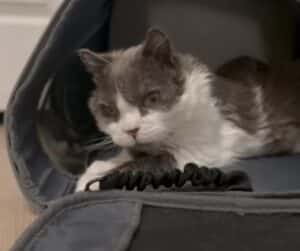
Grub was only three months old when his family surrendered him to a shelter. For about six weeks, he waited as potential adopters passed him by. Stephanie, who fostered cats through the rescue organization Good Mews, welcomed him into her home with the intention of providing temporary care. Within just 24 hours, she realized she could not imagine letting him go. What began as fostering quickly became a lifelong commitment.
As Grub settled into his new home, Stephanie noticed he was unlike any cat she had cared for before. His movements, appearance, and physical development suggested something unusual was affecting his health. Determined to find answers, she worked closely with veterinary specialists to better understand his condition.
A Diagnosis Few Cats Have Ever Received
After extensive testing, Grub was diagnosed with Mucopolysaccharidosis, commonly known as MPS. It is an extremely rare genetic disease, and veterinary experts believe only around eight to eleven documented feline cases have ever been identified. That rarity has made Grub’s case valuable not only for his own care but also for ongoing veterinary research.
The condition affects many parts of his body. Grub has dwarfism, fused vertebrae in both his neck and lower spine, and a distinctive walk that has become one of his most recognizable traits. His head appears larger than average for his body, while his flat face and unusually small airways make breathing more difficult than it is for most cats.
Although these physical differences present daily challenges, they have never diminished his cheerful personality. Stephanie describes Grub as one of the happiest and most affectionate companions she has ever known. He has an incredible ability to connect with people, often gazing into their eyes for long moments as if quietly communicating his trust and affection. Those close interactions have become one of the qualities that makes him unforgettable.
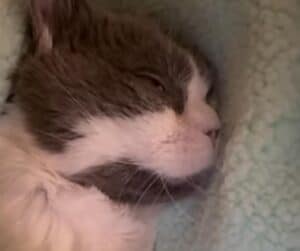
Rather than seeking independence, Grub constantly looks for comfort. He loves resting against Stephanie, often using her hand or arm as a pillow whenever he settles down for a nap. His need for closeness reflects the deep bond the two have formed since the day they met.
Because of his rare condition, Grub receives ongoing care from multiple veterinary specialists who carefully monitor his health. Regular evaluations help address new concerns as they arise and ensure he remains as comfortable as possible. MPS, unfortunately, comes with a shortened life expectancy. Many cats diagnosed with the disease are expected to live only two to four years. Even with that difficult reality, Stephanie refuses to measure Grub’s life by time alone.
Instead, she focuses on giving him joyful experiences, attentive medical care, and endless affection every single day. Her goal is simple yet meaningful: to make his life as beautiful, comfortable, and fulfilling as possible.
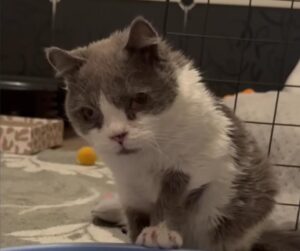
Grub’s story has also helped shine a light on rare feline diseases that many people have never heard of. His journey reminds others that animals with special needs can live rich, happy lives when they receive patience, understanding, and dedicated care.
What Is Mucopolysaccharidosis in Cats?
Mucopolysaccharidosis (MPS) is a group of inherited disorders that prevent the body from properly breaking down certain complex sugars. Over time, those substances build up inside cells and can affect the skeleton, joints, heart, eyes, and nervous system. Because the condition is so rare in cats, many veterinarians may never encounter a case during their careers.
While there is currently no cure for feline MPS, early diagnosis and supportive veterinary care can help improve an affected cat’s comfort and quality of life. Every case also helps researchers better understand the disease, making cats like Grub important ambassadors for both veterinary medicine and special-needs pet adoption.
Grub may have started life overlooked in a shelter, but today he is surrounded by the love and care every cat deserves. His journey is a reminder that a diagnosis doesn’t define an animal’s capacity for happiness, and that sometimes the pets with the greatest challenges become the ones who leave the biggest paw prints on our hearts.