
Soupy was a tiny foster kitten with a big appetite and one very unusual problem. Every time her foster mom, Hannah Shaw, offered her food, Soupy tried to nurse on it instead of taking a bite. She was hungry and eager to eat, but she couldn’t quite figure out how.
Hannah, better known as the Kitten Lady, had seen this behavior before. It’s called meat nursing, and although watching a kitten suckle on a bowl of food might look adorable, it can actually be dangerous. With Soupy struggling to gain weight and stay hydrated, Hannah knew she needed to help the little kitten learn an entirely new way to eat.
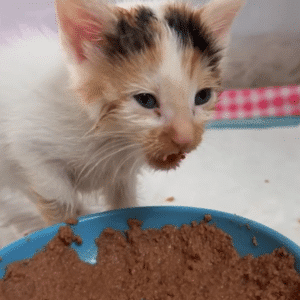
What Is Meat Nursing in Kittens?
When kittens are very young, they get their nutrition by nursing from their mothers or drinking from a bottle. As they grow, they gradually develop the teeth, coordination, and digestive abilities needed to eat solid food. But some kittens have trouble making that transition.
Meat nursing happens when a kitten tries to suckle on wet food instead of opening their mouth, taking a bite, chewing, and swallowing. They might bury their face in a bowl of pâté, move food around with their tongue, or make nursing motions without actually consuming much of their meal.
Hannah explained that this behavior can be particularly misleading for foster caregivers. A kitten might spend several minutes at a food dish, appearing to eat enthusiastically, while barely swallowing anything. And that’s where the danger begins.
Young kittens need frequent meals to support their rapid growth. If they’re spending feeding time nursing on their food instead of eating it, they can quickly fall behind on the nutrition and hydration their developing bodies require. Hannah wanted caregivers to understand that a kitten covered in food isn’t necessarily a kitten with a full belly.
Why Soupy Had Such a Hard Time Eating
Soupy arrived at an animal shelter alongside two other kittens, Dumpy and Cakey, when they were approximately four and a half weeks old. It was a particularly tricky age. The kittens had already spent several weeks nursing, making it difficult to introduce bottle feeding. But they weren’t quite ready to eat solid food successfully, either.
Around five weeks of age, kittens begin developing important skills that make weaning possible. Their premolars emerge, their digestive systems continue maturing, and their coordination improves enough to help them approach a dish and take bites.
Hannah prefers what she calls kitten-led weaning, allowing each kitten to transition gradually rather than expecting them to give up nursing overnight.
For Soupy and her siblings, that meant experimenting with different foods and giving them plenty of individual attention. Cakey was making good progress with kitten pâté, while Dumpy seemed to understand chunkier foods more easily.
Soupy, however, was another story. Hannah affectionately described her as the most challenging meat nurser she had ever fostered. Despite being interested in food, Soupy struggled to get it into her mouth. Her tongue sometimes pressed against the roof of her mouth, making even licking food difficult. It wasn’t that Soupy didn’t want to eat. She simply hadn’t mastered the movements necessary to do it.
The Hidden Dangers of Meat Nursing
While Soupy’s messy eating habits made for some entertaining moments, Hannah was closely monitoring a much more serious concern. The kitten wasn’t consistently getting enough nutrition.
During her early days in foster care, Soupy’s weight sometimes stalled or decreased instead of steadily increasing. She also struggled with dehydration, requiring supplemental fluids administered by Hannah. For such a small kitten, those problems can become serious quickly.
Hannah explained that inadequate food intake can lead to malnutrition and dehydration. Without timely intervention, severe dehydration and nutritional deficiencies can become life-threatening.
That’s why she emphasizes the importance of weighing kittens throughout the weaning process. She typically weighs kittens at least twice a day during this stage. For particularly challenging cases like Soupy, she may check their weight at every meal.
Healthy young kittens should generally be gaining weight consistently, and Hannah cited approximately 7 to 14 grams per day as a typical range. A kitten’s weight can reveal feeding problems before they become obvious through changes in appearance or behavior. For caregivers, the lesson is important: watching a kitten approach a food dish isn’t enough to confirm that they’re eating successfully.
A Little Food Buffet Finally Helped Soupy Take a Bite
Determined to help Soupy succeed, Hannah prepared what she called a kitten buffet. The menu included kitten pâté, chunkier wet food, dry kibble, softened kibble, and small pieces of plain shredded chicken. Each option offered a different texture, giving the kittens opportunities to practice biting and chewing.
Hannah generally prefers moisture-rich kitten pâté during weaning, but she explained that some kittens respond better to foods with more noticeable textures. For example, sprinkling a little kibble over pâté can encourage a kitten to open their mouth and take a bite rather than continuing to suckle. She also tried offering food from her fingers or a small spoon, bringing it closer to the kittens’ mouths to help them understand how to eat it.
Then came Soupy’s breakthrough. When Hannah offered her a little shredded chicken, something finally clicked.Instead of nursing on the food, Soupy opened her mouth and took a real bite. Hannah was delighted.
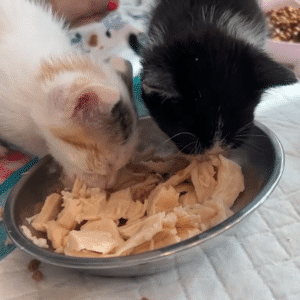
The chicken’s unusual texture seemed to encourage Soupy to use the chewing movements she had been struggling to learn. Hannah was so excited that she filmed a close-up of the little kitten taking several more bites.
Of course, shredded chicken wasn’t intended to become Soupy’s regular diet. Hannah emphasized that it wasn’t nutritionally complete for growing kittens. Instead, she used it as a temporary teaching tool while working toward getting Soupy to eat balanced kitten food. For a kitten who had struggled so much, those tiny bites represented meaningful progress.
Four Ways to Help Kittens Who Are Meat Nursing
Throughout her video, Hannah shared four important recommendations for foster caregivers who encounter this behavior.
1. Make sure the kitten is ready to wean. Kittens develop at different rates, and some may need additional time nursing or receiving appropriate kitten formula. Hannah recommends looking for developmental signs of readiness, including emerging premolars, rather than relying on age alone.
2. Provide supported feeding. Instead of leaving a bowl of food and walking away, caregivers should supervise struggling kittens during meals. Trying appropriate textures, offering food on a spoon, and observing whether the kitten actually swallows can help identify what works. More invasive assisted-feeding methods carry risks, including aspiration, and should only be attempted with appropriate veterinary guidance and training.
3. Monitor weight closely. Regular weigh-ins help caregivers determine whether a kitten is receiving enough nutrition. Stalled growth or weight loss during weaning is a warning sign that needs prompt attention.
4. Watch for dehydration. Kittens can become dehydrated quickly when they’re not eating or drinking enough. Hannah encourages caregivers to watch for signs of dehydration and seek veterinary help when a kitten isn’t getting adequate fluids. Treatments such as subcutaneous fluids should be performed only by trained caregivers under veterinary direction.
Hannah also offered one additional reminder: keep messy kittens clean. Kittens who nurse on their food often end up with pâté covering their faces, paws, and chests. Food left on their skin can contribute to irritation and infection, so gentle cleaning is an important part of their care.
And while messy eating can seem like a normal part of kittenhood, Hannah cautioned that an extremely food-covered kitten may actually need help learning to eat.
Soupy’s Small Victory Carries a Big Lesson
By the end of Hannah’s video, Soupy hadn’t completely mastered eating solid food, but she was making encouraging progress. She was finally taking bites, learning to chew, and showing that a little patience and creativity could make a difference.
Her siblings were finding their own preferred ways to eat, too. After a busy day of feeding practice, two kittens curled up together in their cozy cloud bed while the third settled on Hannah’s knee.
It was a peaceful ending to a day filled with messy faces, tiny victories, and plenty of determination. But Soupy’s experience also highlights something important about fostering young kittens.
A kitten who appears to be eating may still need help, especially during the delicate transition from nursing to solid food. Recognizing meat nursing early, monitoring growth, and providing appropriate support can make a meaningful difference in a kitten’s health.
For Soupy, that support came from a foster mom who refused to give up until her little kitten figured out how to take a bite. And sometimes, the smallest bites are the biggest victories.
This content was created with AI assistance and edited by the iHeartCats team.