
Cats have their own special ways of showing affection, and some of their sweetest gestures are easy to overlook. A cat might quietly blink at their favorite person, gently bump their head against a hand, or settle down nearby for a nap. These everyday behaviors may seem ordinary, but they can reveal just how comfortable and connected a cat feels with someone they trust.
Clinical animal behaviorist Amanda Campion has spent more than 30 years working with animals, with a particular focus on helping cats overcome anxiety and adjust to new environments. In a video shared through her KittySitty platform, she highlighted five subtle behaviors that can signal a strong bond between cats and their humans. Some are surprisingly simple, while others might make cat parents smile when they realize what their pets have been trying to tell them.

1. Slow Blinks Can Be a Quiet Sign of Trust
One of the gentlest ways a cat can communicate affection is through slow blinking. Rather than staring with wide eyes, a relaxed cat may slowly close their eyes and open them again while looking toward someone they feel comfortable around.
According to Campion, this small gesture can communicate trust and affection. She encourages cat parents to try returning the gesture by slowly blinking back at their cats.
Research published in 2020 supports the idea that slow blinking can help create positive interactions between cats and humans. Researchers found that cats were more likely to respond with narrowed eyes after people slowly blinked at them. Cats were also more willing to approach an unfamiliar person’s extended hand following a slow-blinking interaction.
That means a quiet moment of eye contact may offer a simple opportunity to connect with a cat. Instead of reaching out immediately, a person can try relaxing their expression and letting the cat decide whether to respond.
2. Head Bumps and Little Gifts Have Special Meanings
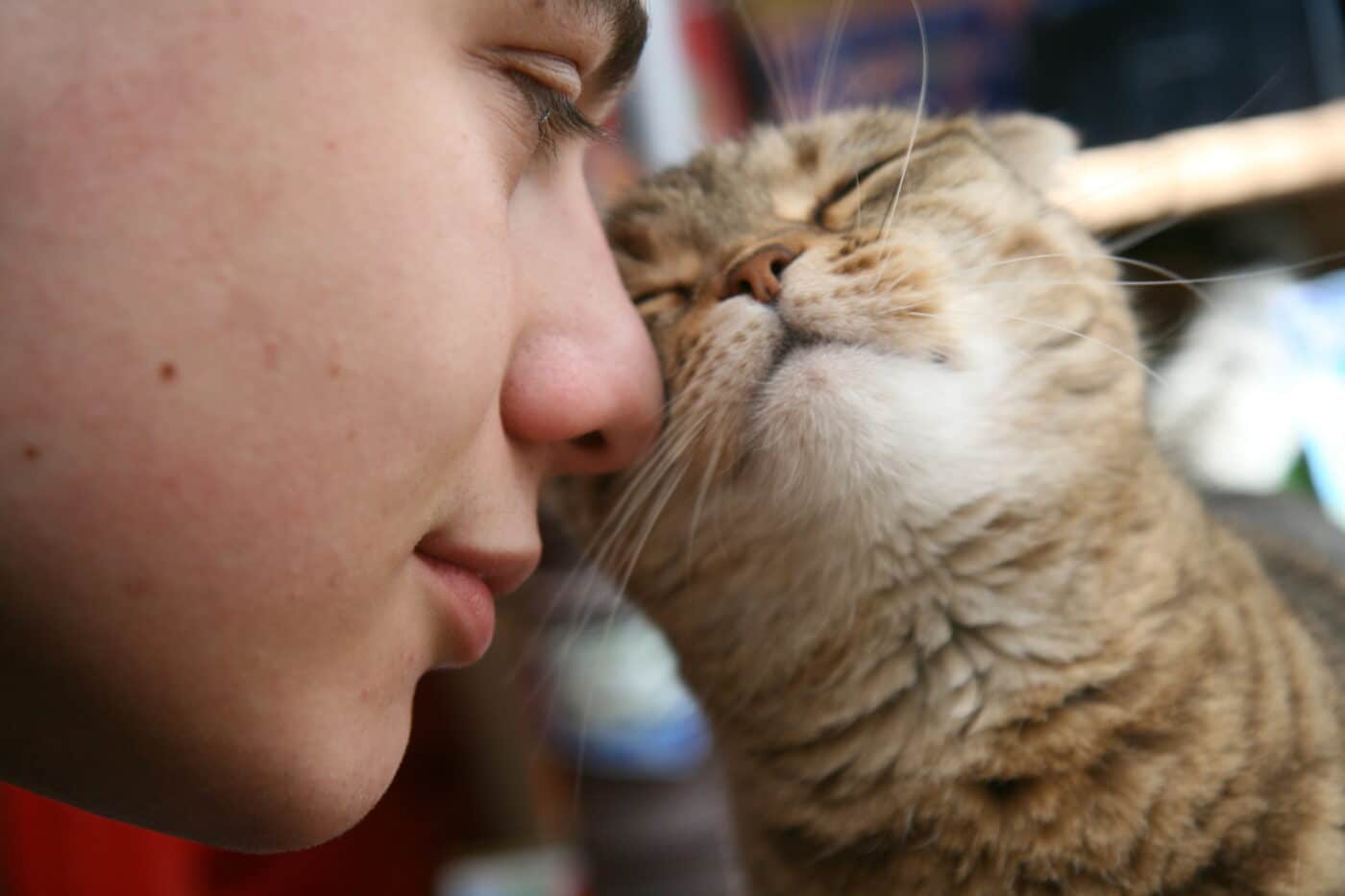
Another familiar sign of feline affection is a gentle head bump. A cat might press their forehead or cheek against a person’s hand, leg, or face, sometimes repeating the gesture several times.
Campion explains that this behavior is connected to scent communication. Cats have scent glands around their faces, and rubbing against familiar individuals helps them exchange scents. Cats also use similar gestures when interacting with other cats they know.
For cat parents, these affectionate little bumps can be especially rewarding because the cat is choosing to initiate contact. Campion describes the behavior as one way cats show affection and reinforce their social connections.
Some cats express their natural instincts by bringing objects to their humans. These unexpected offerings might include a favorite toy, a sock, an insect, or prey they have caught outdoors.
Campion interprets these deliveries as a form of sharing that can reflect a cat’s bond with their family. However, bringing objects home can also be connected to normal hunting and play behaviors, so a gift alone does not necessarily prove affection.
3. Choosing to Sleep Near You Can Reveal Comfort
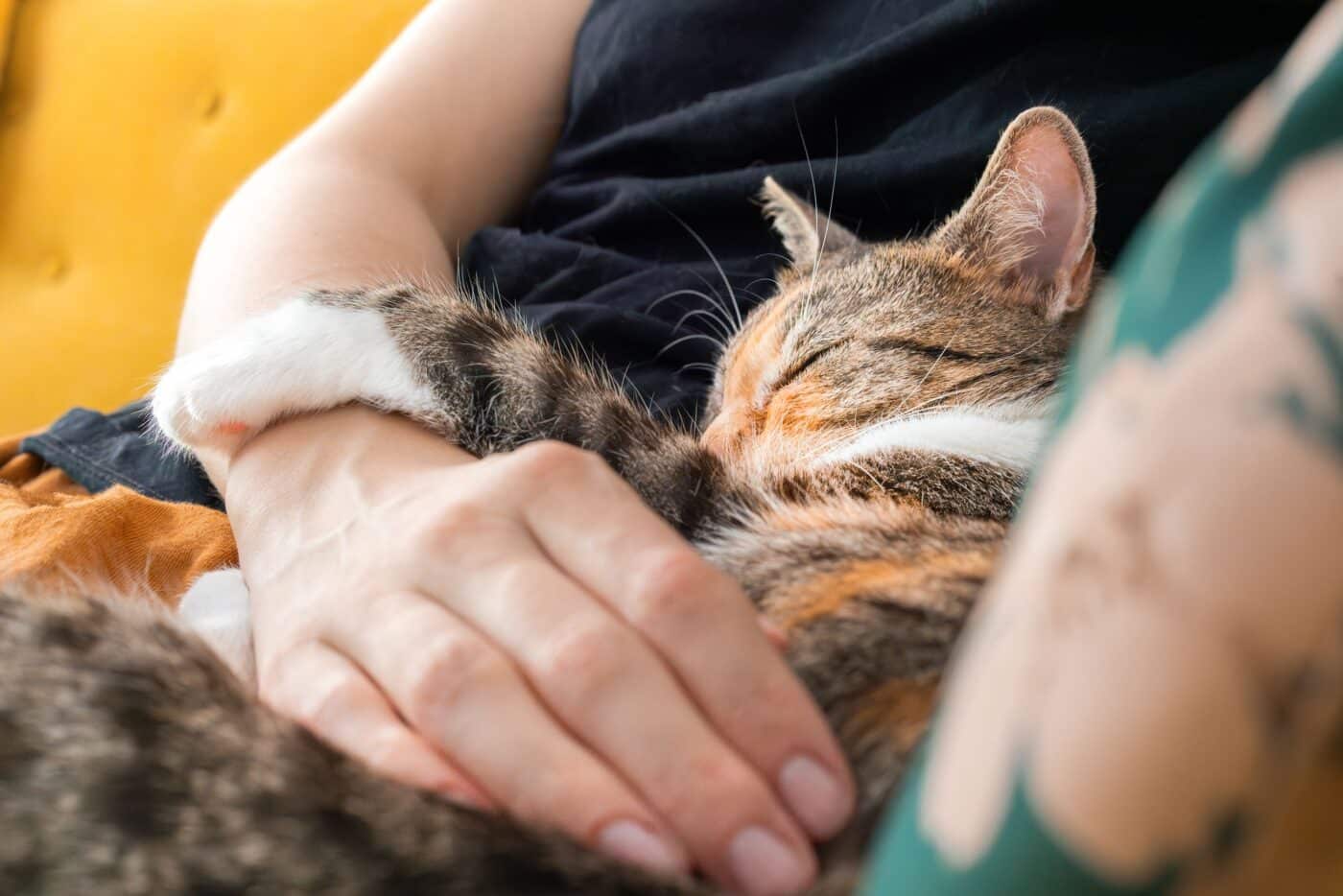
Anyone who has shared a home with a cat knows that felines can be particular about where they sleep. Some prefer quiet corners, while others choose a couch, a warm blanket, or a spot beside their favorite person.
Campion considers sleeping near a human an important sign of trust. Cats are less alert when resting, so choosing to settle beside someone can indicate that they feel comfortable and secure in that person’s presence.
Not every affectionate cat will want to sleep on a person’s lap or share their bed. Some prefer resting nearby without physical contact, and those individual preferences do not necessarily mean the bond is weaker.
When a cat repeatedly chooses to relax beside their human, that voluntary closeness can be a lovely part of their relationship. Allowing the cat to choose their resting place helps keep those shared moments comfortable.
4. A Tail Wrapped Around You May Be Feline Affection
The fifth behavior Campion highlights involves a cat’s tail. While cats use their tails to communicate a wide range of feelings, gently wrapping one around a familiar person can be a friendly social gesture.
Cats sometimes intertwine their tails with other cats during friendly interactions. Campion compares a cat wrapping their tail around a person’s arm or leg to holding hands, describing the gesture as another possible expression of affection.
Of course, tail movements need to be understood alongside the rest of a cat’s body language. A relaxed posture and a gentle approach suggest something very different from a stiff body or an agitated, rapidly swishing tail.
Campion also reminds cat parents that affection does not mean their pets want every part of their body touched. Even a cat who willingly wraps their tail around someone may dislike having that tail grabbed or restrained.
These five behaviors offer cat parents a closer look at the quiet ways their companions communicate. Whether a cat greets someone with a head bump, settles beside them for a nap, or offers a slow blink from across the room, those small moments can help reveal the trust and familiarity growing between them.
@kittysittycatbehaviour 5 Secret Ways Your Cat Shows They Love You #slowblink #catlove #trustedsigns #catbehavior #happycat #petparentlife #catbonding #catsoftiktok #understandingcats #felinecommunication #kittysitty ♬ original sound – kittysittycatbehaviour
This content was created with AI assistance and edited by the iHeartCats team.