
iHeartCats is reader-supported. When you buy via links on our site, we may earn an affiliate commission at no extra cost to you.
Their favorite spot on the couch may be empty, but the memories are still everywhere. A familiar walking route, a well-loved toy, or a photograph can bring back the little things that made your pet such an important part of your life.
For many families, October 27 offers a special opportunity to remember beloved pets as part of Día de Muertos, or Day of the Dead. A pet ofrenda, thoughtfully arranged with photographs, meaningful belongings, and traditional offerings, creates a place to honor that lasting connection.
Understanding the tradition gives each part of the display more meaning. Whether you are learning about pet ofrendas for the first time or continuing a family custom, remembrance begins with recognizing the Mexican culture and living traditions behind the observance.
What Is Day of the Dead for Pets?
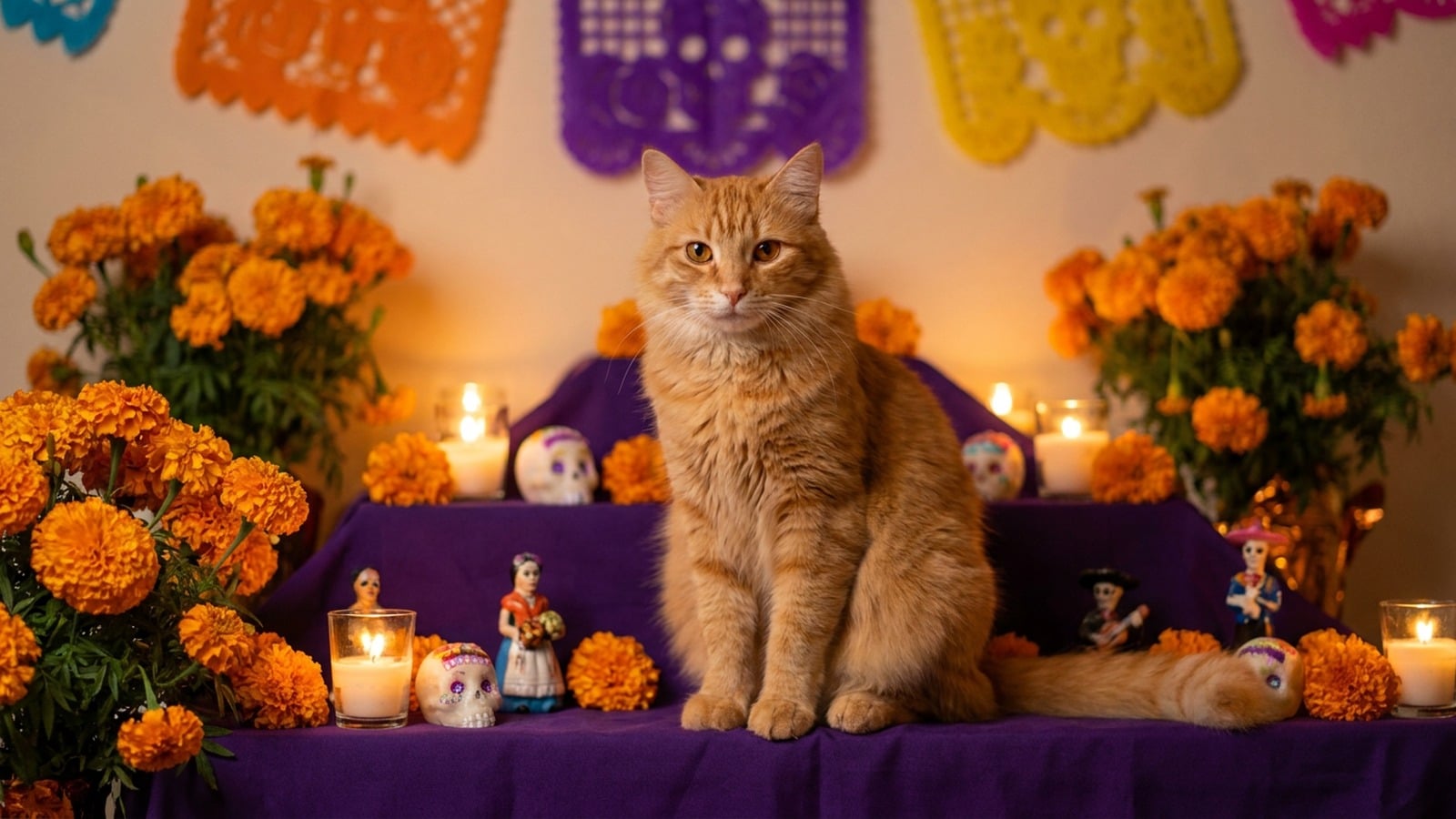
Day of the Dead for pets, often called Día de Muertos para mascotas, is an observance dedicated to remembering animal companions who have passed away. October 27 has become a popular date for families to honor cats, dogs, and other beloved pets before the main Día de Muertos celebrations on November 1 and 2.
Within this popular tradition, departed pets are believed to return to visit their families. Photographs, water, favorite foods, and familiar belongings are arranged as a welcome, connecting the remembrance to the animal being honored.
The specific October 27 observance is a newer practice that has gained popularity in recent years. It should be distinguished from the much older roots of Día de Muertos, rather than described as an ancient, universally observed date for pets.
Understanding the Mexican Tradition Behind the Ofrenda
Día de Muertos is a Mexican tradition with Indigenous roots and Catholic influences that developed over generations. UNESCO describes the Indigenous festivity as commemorating the temporary return of departed loved ones, with observances taking place from late October into early November.
An important part of the celebration is preparing an ofrenda, a Spanish word meaning “offering.” Often arranged on an altar in the home, it brings together food, water, photographs, flowers, and other elements to welcome and remember those who have died.
Día de Muertos has its own history and spiritual meaning, distinct from Halloween. Its imagery, foods, and rituals belong to a tradition centered on relationships, remembrance, and the continuing place of departed loved ones within family and community life.
Customs vary across Mexico and among families who carry the tradition elsewhere. There is no single arrangement that represents every community, and individual symbols can have different meanings depending on regional and religious practices.
A pet ofrenda brings a particular animal’s life into that act of remembrance. The collar that jingled across the kitchen floor or the toy your cat carried from room to room helps tell the story of the companion being welcomed and remembered.
When Should You Set Up a Pet Ofrenda?
If you are observing October 27, preparing your pet’s ofrenda by that date is a practical approach. Some families prepare it the evening before, while others arrange it on October 27 or include their pets within a larger family ofrenda during the surrounding days.
Follow your own family or community customs when they apply. For someone learning about the observance, it is helpful to recognize this variation rather than treat a particular hour or arrangement as a rule everyone follows.
What Goes on a Cat Ofrenda and What Does It Mean?
The objects on an ofrenda carry meaning beyond their appearance. Learning that meaning helps distinguish traditional elements from personal additions chosen especially for your pet.
What Goes on a Cat Ofrenda
Traditional Elements & Their Meaning · Día de Muertos
Meanings reflect traditional Mexican cultural practices. Interpretations vary across regions and families.
These meanings appear in descriptions from Mexico’s cultural and educational institutions, although interpretations vary. A pet’s collar, toy, or blanket is a personal addition that connects the offerings to the particular companion being remembered.
Traditional family ofrendas may also include pan de muerto, sugar skulls, religious images, and other foods or objects. These belong to the wider cultural and spiritual context of the celebration; a household with living pets should keep edible offerings and fragile decorations beyond their reach.
How to Set Up a Pet Ofrenda at Home
Preparing an ofrenda can begin with belongings you already have. The following guide offers a simple home arrangement, with practical adaptations for households where living animals may be curious about the display.
9 Steps to Build Your Cat Ofrenda
A loving home display for Día de Muertos
1. Choose a Stable, Protected Location
Start with a sturdy table, cabinet, or shelf where the arrangement can remain undisturbed. Choose somewhere you can comfortably pause to look at the photograph and spend time remembering your pet.
If other animals live in the home, consider their habits before choosing the location. A high shelf may discourage a dog, but a room with a closed door may be more practical for a cat who climbs.
The spot can also hold personal meaning, such as a quiet corner near the window your pet loved. What matters practically is that the surface is stable and the offerings can remain protected.
2. Prepare the Surface and Decide on the Arrangement
Clean the surface and cover it with a cloth if you wish. Leave enough room for the photograph, offerings, and personal belongings without balancing objects near the edges.
Some traditional altars have two, three, or seven levels, with meanings connected to spiritual beliefs. Those meanings vary, so this simple guide uses a single surface rather than assigning a universal meaning or required position to every object.
If your family follows a particular altar arrangement, let that custom guide you. Otherwise, begin with a clear space and arrange the elements so each can be seen and cared for easily.
3. Place Your Pet’s Photograph Where You Can See It
Choose an image that brings their personality to mind. It might show your cat stretched across the sunny windowsill they claimed every afternoon, or curled into the perfect loaf in their favorite spot.
Place the photograph securely toward the back or center of the display. If you are remembering several pets, arrange their pictures together with enough space to recognize each one.
A printed photograph can be placed in a frame you already have or supported securely against the back of the arrangement. You can also include their name, especially if others will spend time with the ofrenda and hear their story.
4. Set Out Water and a Favorite Food Offering
Place a small bowl of fresh water near the photograph, along with a modest portion of a food or treat your pet enjoyed. These offerings connect the traditional welcome with the everyday routines you shared.
Their own bowl can make the arrangement especially personal, but an ordinary clean dish also works. Perhaps it brings back memories of your cat announcing that breakfast was already late, or the determined way they stared you down until the food bowl appeared.
Keep the offerings inaccessible to living pets, refresh the water, and remove food before it spoils. The display should be cared for throughout the time it remains in place.
5. Add Cempasúchil Flowers or Explain Your Alternative
Cempasúchil, commonly known as Mexican marigold, is closely associated with Día de Muertos. Its flowers and petals are traditionally used to mark a welcoming path for visiting souls.
You can arrange flowers beside the photograph or along the display, keeping them beyond the reach of living animals. Paper or fabric marigolds are a practical decorative alternative, while the fragrance associated with fresh flowers remains part of the traditional symbolism.
If you create paper flowers with family members, use the time to talk about their meaning and share memories of your pet. Understanding why cempasúchil belongs in the observance gives the activity a connection to the tradition beyond its bright color.
6. Include Light With Care
Candles and veladoras have a traditional role in illuminating the visiting souls’ way. For a home display, flameless LED candles offer a practical adaptation that avoids an exposed flame.
Place them where their glow gently lights the photograph and offerings. If you use real candles as part of your own practice, supervise them continuously and keep them away from animals, paper, fabric, and flowers.
The arrangement does not need to be brightly lit to feel welcoming. A gentle light near a familiar photograph can create a quiet place to pause and remember.
7. Add Belongings That Tell Your Pet’s Story
Choose a few objects that immediately remind you of your companion. A collar, identification tag, favorite toy, or folded blanket can bring their daily life into the arrangement.
There is no need to display every keepsake at once. One familiar object can carry a whole collection of memories, from the rustle of a treat bag to the sight of a favorite toy left beside their sleeping spot.
You can also include a pet memorial item, such as an engraved keepsake, personalized portrait, or memorial stone. This personal addition offers another way to honor their name and the place they hold in your family.
If you no longer have their belongings, a drawing or handwritten memory can add a personal connection. You might describe their favorite game, the place they always slept, or the small habit that made everyone smile.
8. Add Papel Picado and Other Meaningful Details
Papel picado can be hung behind or above the ofrenda where it will not touch candles or tempt curious animals. Its delicate cut-paper designs are part of the visual language of Día de Muertos and deserve to be understood within that tradition.
Religious images, crosses, or other spiritual elements may belong in your arrangement if they reflect your family’s practice. Choose these thoughtfully, recognizing that their meaning extends beyond decoration.
Copal and incense also have traditional significance, but this suggested home arrangement does not require burning them. Learning about their role allows you to acknowledge that meaning while choosing a display without smoke.
9. Spend Time Remembering Your Companion
Once the ofrenda is arranged, leave time to be present with it. You might share a favorite story, look through photographs, or write down a memory you never want to lose.
The memory can be funny, tender, or wonderfully ordinary. The cat who supervised every grocery bag, claimed every warm laptop, and appeared in the kitchen at the exact right moment deserves to be remembered for the lives and personalities you loved.
If family members participate, invite each person to share something they remember. Different stories can bring back parts of your pet’s life that you had almost forgotten, making the remembrance something you share.
A Simple Pet Ofrenda Arrangement to Try
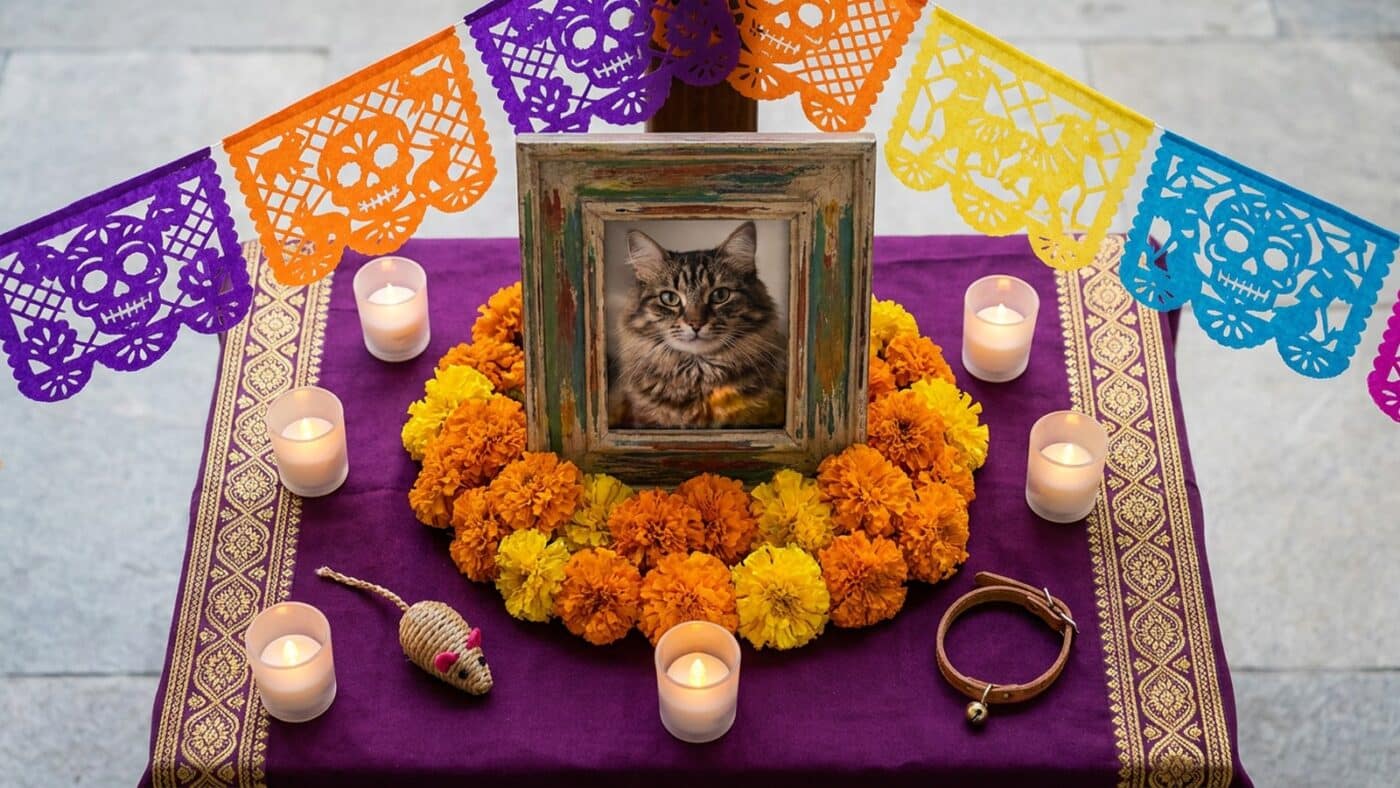
For a small display, place your pet’s photograph toward the back of a sturdy table. Arrange water and a food offering in front, with their collar or favorite toy nearby.
Flowers can sit to either side, with an LED candle positioned to illuminate the photograph. Papel picado can hang behind the arrangement, safely secured and beyond the reach of living pets.
This is a suggested home layout rather than a traditional rule about where every object belongs. If your family follows a particular arrangement, let that custom guide you.
Keeping the Ofrenda Safe Around Living Pets
A remembrance display can attract attention from the animals still sharing your home. Keep food offerings, salt, flowers, vase water, ribbons, paper decorations, and small keepsakes where pets cannot eat, drink, chew, or pull them down.
Ofrenda Safety Checklist for Cat Households
Cats are expert climbers and curious investigators, so plan your placement accordingly.
✓
✓
✓
✓
✓
✓
✓
If the ofrenda is part of a larger family altar, keep human foods and drinks inaccessible as well. Check the arrangement regularly so spilled water, aging food, and loose decorations do not become part of another pet’s exploration.
Consider access from every direction, including nearby furniture that a cat might use to reach the surface. A protected space lets you care for the remembrance while also caring for the animals currently at home.
Honoring the Tradition With Cultural Respect
For readers learning about Día de Muertos from outside the culture, a thoughtful starting point is listening to Mexican cultural institutions, educators, artists, and families who practice it. Recognizing its origins and the meaning of its elements gives the remembrance a foundation beyond its familiar colors and imagery.
Describe adaptations honestly, whether you use paper flowers, LED candles, or a simple arrangement on one surface. These can serve a personal purpose without being presented as traditional requirements or customs followed by every family.
Remember, too, that a photograph of an altar shows only part of the observance. Preparing offerings, telling stories, gathering with loved ones, and caring for memories give the objects their deeper significance.
Frequently Asked Questions About Day of the Dead for Pets
1. Is Day of the Dead for Pets Always Observed on October 27?
October 27 is a popular date for remembering departed pets, but practices vary among families and communities. Some people include animals within their family ofrenda during the broader Día de Muertos observance.
2. Can an Ofrenda Honor Cats and Other Animals?
Pet ofrendas can honor cats, dogs, and other animal companions. Photographs and familiar belongings help make the remembrance specific to the animal and the relationship you shared.
3. Do You Need Special Items to Create a Pet Ofrenda?
You can begin with a photograph, a clean bowl, and a meaningful belonging already in your home. Learning the significance of the traditional elements helps you prepare a thoughtful remembrance using what you have.
4. Can You Remember More Than One Pet Together?
A shared display can include photographs and belongings from several beloved companions. Give each pet a recognizable place through their picture, name, or a personal keepsake.
5. How Long Should You Leave a Pet Ofrenda Up?
Follow your family or community’s custom if you have one, since the timing of Día de Muertos practices varies. For a personal home arrangement, keep it cared for throughout your observance and remove perishable offerings promptly.
6. What If You No Longer Have Your Pet’s Collar or Toys?
A photograph, drawing, or written memory can help you remember their personality and the life you shared. Belongings can be meaningful, but the memories you bring to the remembrance matter even when those objects are gone.
7. What If Setting Up an Ofrenda Feels Too Emotional?
You can choose a smaller act of remembrance, such as looking at a favorite photograph or sharing a story with someone who knew your pet. Give yourself room to decide what feels manageable, including whether you want to prepare a display this year.
Remembering the Pets Who Remain Part of Your Story
A favorite toy beside a photograph can bring back the sound of paws in the hallway or the familiar weight of a companion settling nearby. Preparing that space offers a moment to remember a whole life, including its routines, mischief, comfort, and joy.
For those observing Day of the Dead for pets, understanding the culture behind the ofrenda gives those personal memories a thoughtful setting. The flowers, offerings, photographs, and familiar belongings come together around a beloved companion whose place in your story continues.
This content was created with AI assistance and edited by the iHeartCats team.