
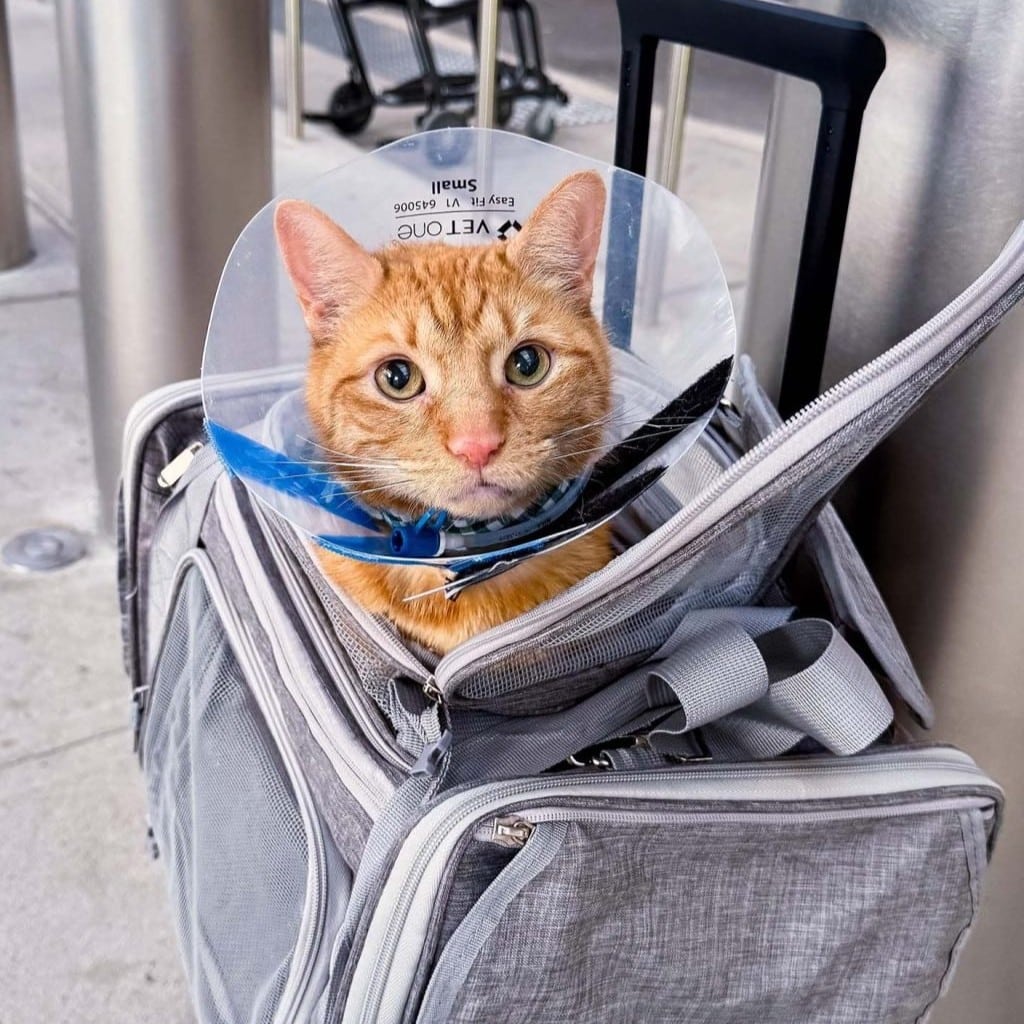
Mars, a 10-year-old orange cat from New Jersey, was struggling to walk, couldn’t jump like he used to, and had stopped doing something his person absolutely loved: giving high fives. His health was declining because of a tumor affecting his pituitary gland, and the treatments he had already received weren’t helping enough.
But his person, Yisi, wasn’t ready to give up on him. Her search for another treatment option led them thousands of miles from their home in Hoboken, New Jersey, to a veterinary hospital in Bend, Oregon, where a team of specialists was preparing to perform a rare and complicated brain surgery.
A Beloved Cat Begins Losing His Favorite Abilities
Mars had always shared a special little routine with Yisi. He could jump up onto furniture and even give her high fives, a trick that had become part of their life together. But as his health deteriorated, those familiar activities became difficult. Mars began walking on his hocks, the lower portions of his hind legs, and he could no longer jump or offer his usual high fives.
He also had diabetes that was becoming extremely difficult to manage. While many diabetic cats can be managed with relatively small insulin doses, Mars was receiving 20 units daily without adequate control of his condition.
Veterinarians discovered that a tumor on his pituitary gland was producing excess growth hormone. This was driving his unusually high insulin requirements and contributing to other health problems, including an enlarged heart and neurological symptoms. Medication and radiation had already been attempted, but neither successfully reduced the tumor enough to resolve his problems. Yisi continued searching for a way to help Mars regain his health and the abilities he had lost.
A Rare Surgery Offers Mars Another Chance
That search eventually brought Yisi to the Veterinary Referral Center of Central Oregon, known as VRCCO. The hospital offered a highly specialized procedure called a transsphenoidal hypophysectomy, which involves surgically removing the pituitary gland. The operation is performed at only a small number of veterinary hospitals in the United States. Because the gland is tiny and located deep at the base of the brain, surrounded by important blood vessels, the procedure requires exceptional precision and specialized equipment.
Dr. Annie Chen-Allen, a veterinary neurologist with extensive experience at Washington State University, led the surgical effort. She was joined by neurology intern Dr. Dani Madson, other VRCCO specialists, and a critical-care team. Two experienced colleagues from Washington State University, Dr. Tina Owen and Dr. Linda Martin, also traveled to Bend to assist. Their combined experience helped support the hospital’s first procedure of this kind.
Before Mars arrived in May, the team spent two months preparing. They practiced using specialized equipment, cadaver specimens, 3D imaging technology, and custom templates created from CT scans.
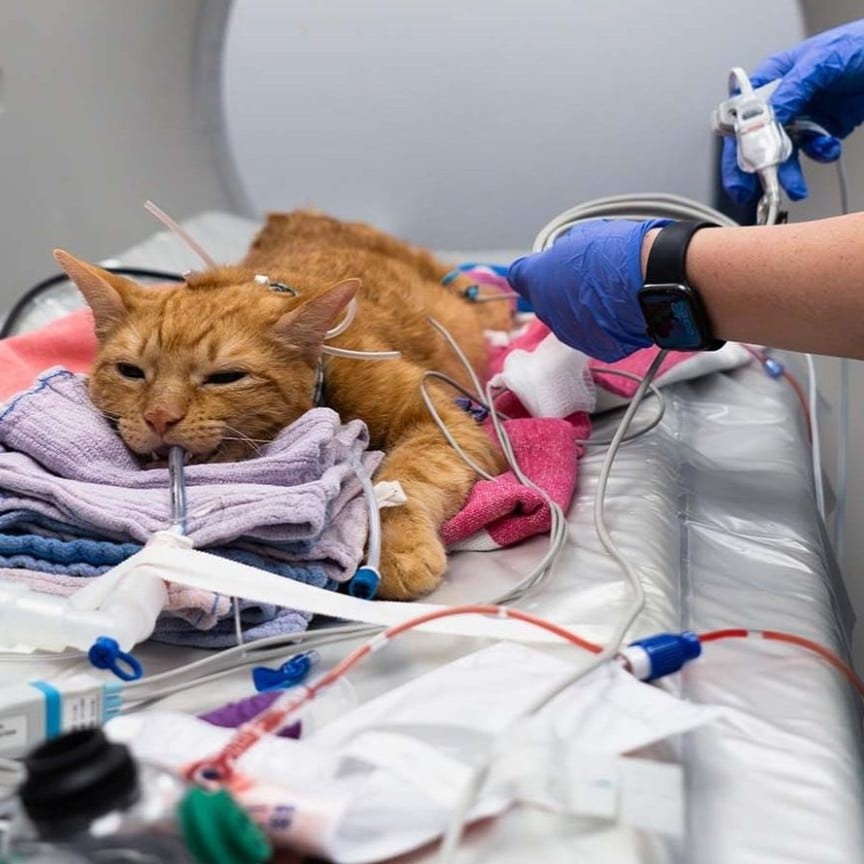
The operation required creating a tiny opening in the skull and using a specialized camera to guide the surgeons toward the pituitary gland. With such delicate structures involved, there was little room for error.
A Dedicated Veterinary Team Helps Mars Heal
The surgery was only one part of Mars’ treatment. After removing the pituitary gland, veterinarians needed to monitor him closely because the gland normally helps regulate several important functions throughout the body.
Patients undergoing this procedure can experience dangerous changes in sodium levels and typically need lifelong hormone supplementation and thyroid management. The hospital’s critical-care specialists were therefore essential to his recovery.
Yisi had traveled a long distance to give Mars this opportunity, and the hospital’s medical-travel program helped coordinate their stay. The program assists families visiting Bend for specialized veterinary treatment with accommodations, scheduling, and other practical arrangements.
Throughout Mars’ treatment, the veterinary team kept Yisi informed with frequent updates. She later praised their patience, organization, and gentle care, explaining that their support helped her feel more comfortable during such a frightening experience. Most importantly, the surgeons successfully removed Mars’ tumor.
Mars Is Back to Giving High Fives
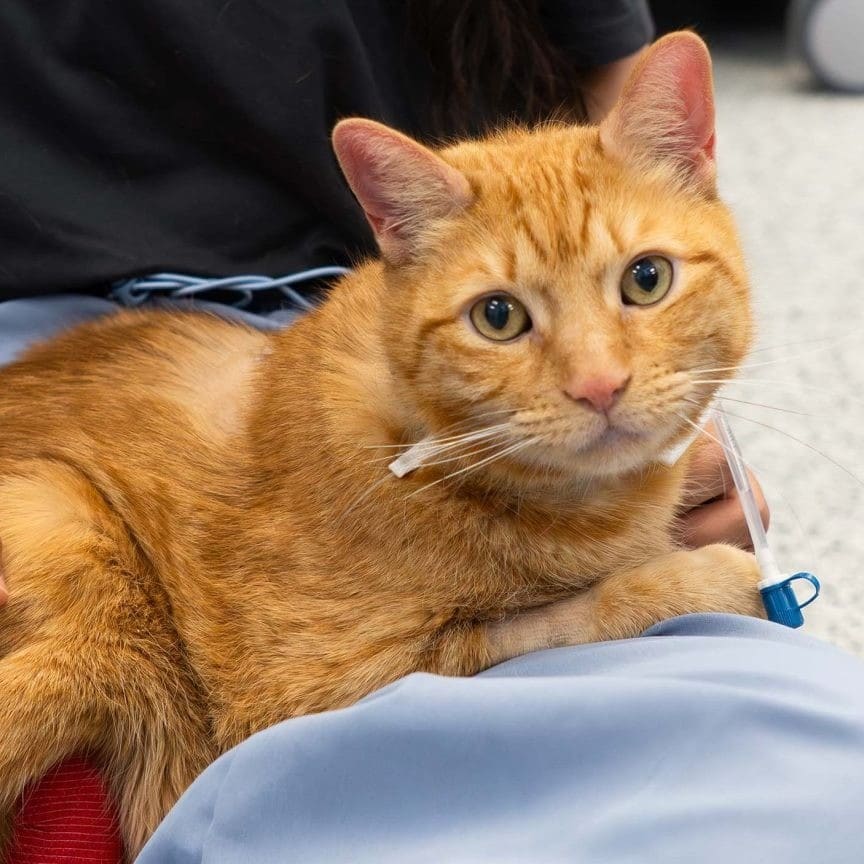
After the surgery, Mars began showing the improvements Yisi had hoped for. His insulin requirements returned to a normal range, and the orange cat regained abilities that had disappeared as his illness progressed. He was jumping onto stools again, and perhaps most delightfully, he was giving Yisi high fives once more.
For Yisi, those familiar little gestures were a wonderful sign of how far her beloved companion had come. She expressed deep gratitude to the veterinary specialists who had worked so carefully to help him.
Mars had traveled across the country for a procedure that only a handful of American veterinary hospitals could perform. He returned home with his tumor removed, his condition improved, and his favorite high-five routine back in action.
This content was created with AI assistance and edited by the iHeartCats team.