
iHeartCats is reader-supported. When you buy via links on our site, we may earn an affiliate commission at no extra cost to you.
Indoor cats have a sneaky health challenge most owners don’t think about: they don’t drink enough water. Without access to outdoor water sources and with lower activity levels, indoor cats are at higher risk for urinary issues, kidney stress, and chronic dehydration. That’s where wet cat food comes in.
The best wet cat food for indoor cats delivers moisture with every meal, packs in animal protein, and keeps calories in check for cats that spend their days napping on the couch instead of chasing squirrels. We talked to veterinarians and reviewed dozens of formulas to find 11 picks that check all the boxes.
Whether your cat is a picky pate snob or a gravy enthusiast, there’s something on this list for them.
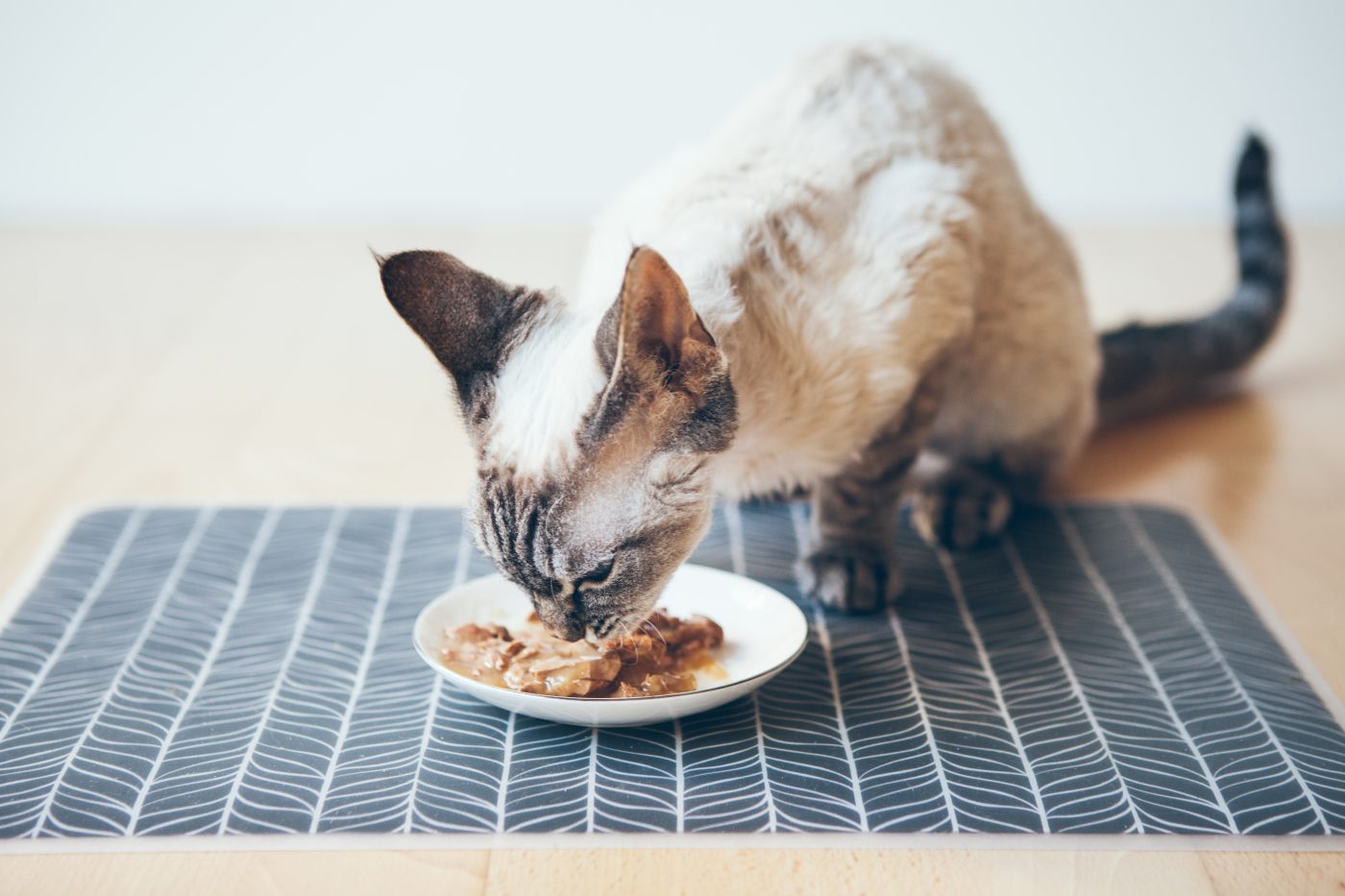
Why Indoor Cats Need Wet Food More Than Outdoor Cats
Cats evolved as desert animals. Their ancestors got most of their water from prey, not from a water bowl. Indoor cats carry that same low thirst drive, but they don’t have mice to snack on.
Dry kibble contains roughly 10% moisture. Wet food? Anywhere from 75-85%. For an indoor cat who barely touches their water fountain, that difference is significant.
Wet vs. Dry Cat Food: Moisture Comparison
- Dry kibble: ~10% moisture
- Wet cat food: 75-85% moisture
- Raw prey (mouse): ~70% moisture
- Daily water need: 3.5-4.5 oz per 5 lbs of body weight
Beyond hydration, indoor cats tend to be less active, which makes weight management a real concern. Wet food is typically lower in carbohydrates and higher in protein than dry kibble, helping indoor cats maintain lean muscle without packing on extra pounds.
Veterinarians often recommend feeding indoor cats at least one wet meal per day. Some vets suggest an all-wet diet for cats prone to urinary crystals or kidney issues.
What Makes a Great Wet Cat Food for Indoor Cats in 2026
Not every canned food deserves a spot in your cat’s bowl. Here’s what actually matters when you’re shopping for an indoor cat:
High-Quality Animal Protein
Cats are obligate carnivores. The first ingredient should be a named animal protein like chicken, turkey, or salmon. Skip anything that lists “meat by-products” or “animal digest” near the top.
Moisture Content
Look for formulas with 78% moisture or higher. This is especially important for indoor cats who may not drink enough water on their own.
Calorie Control
Indoor cats burn fewer calories than outdoor cats. Some brands offer “indoor” formulas with slightly lower calorie counts, but any wet food with moderate fat levels works well.
Texture Your Cat Actually Eats
Pate, shredded, flaked, chunks in gravy… your cat has opinions. Buy a few single cans before committing to a case. Plenty of cats refuse certain textures no matter how nutritious the formula is.
Limited Fillers
Corn, wheat, and soy don’t offer much nutritional value for cats. They’re cheap fillers that can contribute to weight gain and digestive issues, both common problems for sedentary indoor cats.
11 Best Wet Cat Foods for Indoor Cats in 2026
1. JustFoodforCats Fish & Chicken Fresh Food
Best For: Fresh, human-grade nutrition
This one’s the gold standard if your budget allows it. JustFoodforCats uses real fish, chicken, and vegetables in recipes formulated by veterinary nutritionists. The fresh preparation and high moisture content make it an excellent choice for indoor cats who need extra hydration support. Picky eaters tend to love it, and the ingredient transparency is hard to beat.
Tier Level: Premium

2. The Honest Kitchen Human Grade Minced Grain Free Wet Cat Food
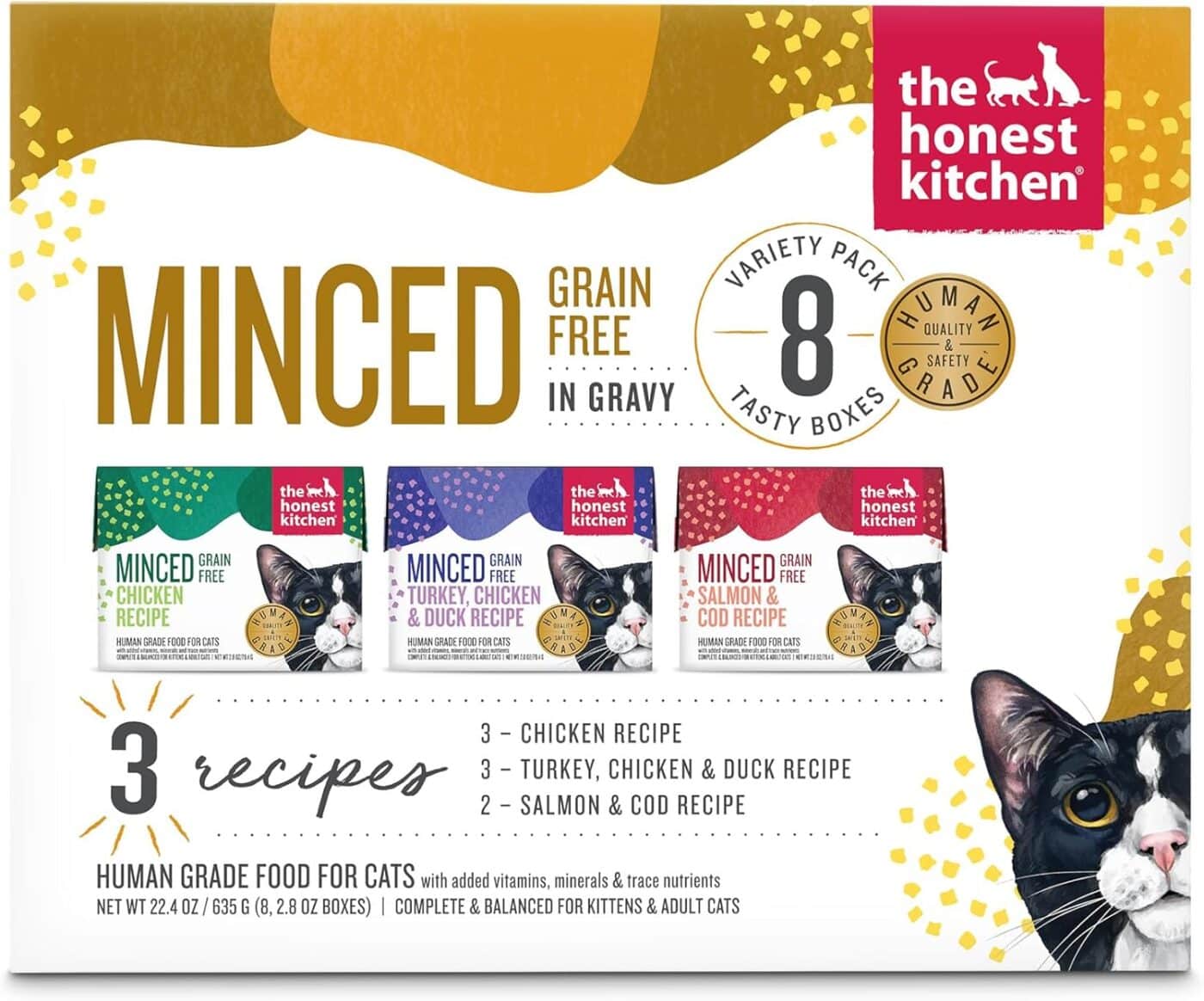
Best For: Human-grade ingredients and minimally processed nutrition
Made with cage-free chicken and savory bone broth gravy, this food brings restaurant-quality ingredients to your cat’s bowl. The grain-free recipe includes pumpkin and salmon oil for digestive and skin support. For indoor cats dealing with dry skin or hairballs (common issues when cats live exclusively indoors), those added nutrients can make a noticeable difference.
Tier Level: Premium

3. Hill’s Science Diet Adult Wet Cat Food
Best For: Balanced everyday nutrition backed by veterinary science
There’s a reason Hill’s shows up in almost every vet clinic. Their wet cat food formulas are research-backed and balanced for long-term health. The smooth texture works well for cats with sensitive digestion, and the controlled calorie content makes it a smart pick for indoor cats prone to weight gain. If your vet has recommended a specific brand before, chances are it was Hill’s.
Tier Level: Mid-to-Premium

4. Purina Pro Plan Complete Essentials Wet Cat Food
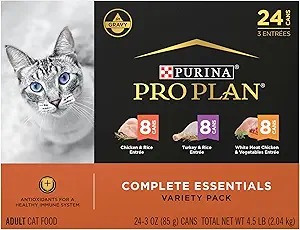
Best For: High-protein daily meals with added taurine
Pro Plan is the brand vets recommend when they want something research-backed but more affordable than prescription diets. The protein-rich recipes include added taurine for heart and eye health, plus vitamins and minerals for overall wellness. Indoor cats benefit from the higher protein content, which helps maintain muscle mass even with lower activity levels.
Tier Level: Mid-Range
5. Royal Canin Adult Wet Cat Food
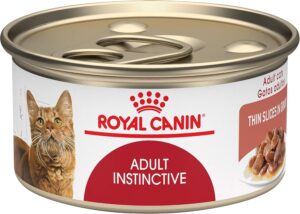
Best For: Picky eaters who refuse everything else
Got a cat who turns their nose up at every food you try? Royal Canin is the one that usually breaks through. They engineer their textures and flavor profiles based on feline preference research, and it shows. The thin slices in gravy format is a hit with picky indoor cats. Plus, Royal Canin makes an indoor-specific formula that’s worth checking out if your cat needs extra digestive support.
Tier Level: Premium
6. Tiki Cat Luau Wet Cat Food
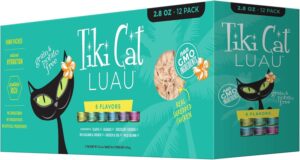
Best For: High-protein, low-carb meals for weight-conscious indoor cats
Tiki Cat has earned a cult following among cat owners who prioritize protein over everything. The shredded meat recipes sit in broth instead of starchy gravy, keeping carbs minimal. For indoor cats who need to stay lean, that low-carb approach is a big plus. The fish-based formulas also provide omega fatty acids that help with coat health and reduce shedding (your couch will thank you).
Tier Level: Premium
7. Fancy Feast Classic Pate
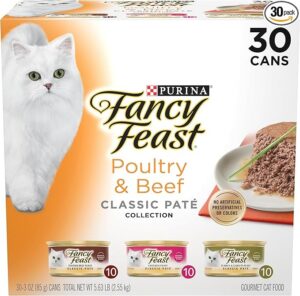
Best For: Budget-friendly feeding without sacrificing protein
Fancy Feast gets a bad rap from pet food snobs, but veterinarians quietly recommend the Classic Pate line all the time. The pate recipes are surprisingly high in protein and low in carbs compared to many pricier brands. At under $1 per can, it’s one of the most affordable ways to feed your indoor cat wet food daily. And most cats absolutely demolish it.
Tier Level: Budget-Friendly
8. Weruva Cats in the Kitchen
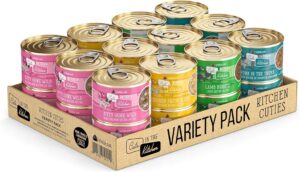
Best For: Extra hydration and broth-loving cats
Weruva’s recipes are loaded with moisture, and you can actually see the shredded meat and broth when you open the pouch. For indoor cats who barely glance at their water bowl, these broth-heavy formulas help compensate. Cats who hate pate but love “real-looking” food tend to be big Weruva fans. The subscription options for wet cat food delivery make it easy to keep stocked up.
Tier Level: Premium
9. Wellness Complete Health Wet Cat Food
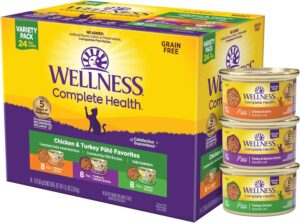
Best For: Natural ingredients without artificial additives
Wellness skips artificial flavors, colors, and preservatives. Their pate formulas combine quality protein with cranberries (for urinary support) and flaxseed (for coat health), which are exactly the kind of added benefits indoor cats need. The smooth texture works for cats of all ages, from kittens to seniors. It’s a solid middle ground between premium and budget brands.
Tier Level: Mid-to-Premium
10. Blue Buffalo Tastefuls Wet Cat Food
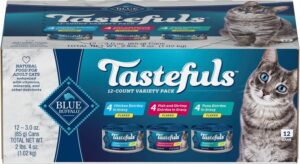
Best For: Flavor variety and natural ingredients
Blue Buffalo makes it easy to rotate flavors, which is something indoor cats genuinely benefit from. Cats stuck eating the same food every day can develop food aversions or stop eating altogether. Tastefuls uses real meat as the first ingredient and skips corn, wheat, and soy. The flaked and pate options let you figure out which texture your cat prefers without committing to a full case.
Tier Level: Mid-Range
11. Sheba Perfect Portions Wet Cat Food
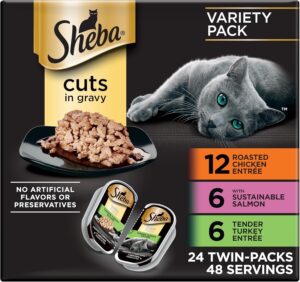
Best For: Built-in portion control and zero waste
Sheba’s twin-pack trays are genius for indoor cats. Each tray holds exactly one serving, so there’s no guesswork about portions and no leftover food drying out in the fridge. For owners trying to manage their indoor cat’s weight, that built-in portion control is a real advantage. The texture is smooth and rich, and cats tend to lick these trays clean.
Tier Level: Budget-to-Mid-Range
How Much Wet Food Should an Indoor Cat Eat Per Day?
Most adult indoor cats need about 200-250 calories per day, though that number shifts based on size, age, and activity level. A typical 5.5-ounce can of wet food contains 80-120 calories, so two to three cans per day covers most cats.
Daily Feeding Guide for Indoor Cats
- Small cats (5-8 lbs): 150-200 calories/day (2 cans)
- Average cats (8-11 lbs): 200-250 calories/day (2-3 cans)
- Large cats (12+ lbs): 250-300 calories/day (3 cans)
- Mixed feeding: 1 can wet + measured portion of dry food
Always check the calorie count on your specific brand. Ranges vary significantly.
If you’re mixing wet and dry food (which plenty of vets recommend), reduce the dry portion to account for the wet food calories. A kitchen scale helps more than eyeballing.
Talk to your vet if your indoor cat is overweight or underweight. They can calculate a more precise calorie target based on your cat’s body condition score.
Tips for Switching Your Indoor Cat to Wet Food
Cats are creatures of habit. Swapping from dry to wet food overnight usually backfires.
Start by offering a small spoonful of wet food alongside their regular dry food. Some cats dive right in. Others sniff it suspiciously and walk away. Both reactions are normal.
Over 7-10 days, gradually increase the wet food portion while decreasing the dry food. If your cat has stomach sensitivity, stretch the transition to two weeks. Rushing it can cause loose stools or vomiting.
One trick that works surprisingly well: warm the wet food slightly in the microwave (5-10 seconds, stir it, check the temperature). Warming releases the aroma, and for cats, smell is everything. A splash of goat’s milk on top can also tempt a reluctant eater.
Frequently Asked Questions About Wet Cat Food for Indoor Cats
Is wet cat food better than dry for indoor cats?
For most indoor cats, wet food offers real advantages. The higher moisture content supports urinary and kidney health, and the lower carbohydrate levels help with weight management. Many vets recommend feeding indoor cats at least one wet meal daily, though a combination of wet and dry food works well too.
How often should I feed my indoor cat wet food?
Once or twice a day is the most common recommendation. Some owners do all-wet diets with two to three meals. Others offer one wet meal and leave measured dry food for grazing. Your cat’s weight, age, and health status should guide the schedule.
Can wet cat food help prevent urinary problems in indoor cats?
It can help. Indoor cats are more prone to urinary tract issues partly because of lower water intake. Wet food adds moisture that keeps urine diluted, reducing the risk of crystal formation. It’s not a guarantee, but vets consider it a meaningful preventive step.
What ingredients should I avoid in wet cat food?
Skip formulas heavy in corn, wheat, soy, or artificial preservatives. Watch for vague labels like “meat by-products” or “animal digest” listed as primary ingredients. Named proteins (chicken, turkey, salmon) as the first ingredient is what you’re looking for.
Is grain-free wet cat food necessary for indoor cats?
Not automatically. Grain-free isn’t always better. Some cats do well with grains, and the overall nutritional balance matters more than the grain-free label. If your cat has a diagnosed grain sensitivity, grain-free makes sense. Otherwise, focus on protein quality and moisture content.
How do I store leftover wet cat food?
Cover it and refrigerate immediately. Most opened wet food stays fresh in the fridge for 3-5 days. Bring it to room temperature before serving (cold food is less appealing to cats). Toss anything that smells off or has been sitting out at room temperature for more than 2 hours.
Can I mix wet and dry cat food together?
Absolutely. Mixing is one of the most popular feeding strategies. The wet food provides moisture and protein, while the dry food offers dental benefits and convenience. Just make sure the total calories from both sources stay within your cat’s daily target.

Your Indoor Cat Deserves Better Than a Bowl of Kibble
Switching to wet food, even partially, is one of the simplest upgrades you can make for an indoor cat’s health. More hydration, more protein, fewer empty carbs. Your cat’s kidneys, waistline, and coat will all benefit.
You don’t need to spend a fortune, either. Budget picks like Fancy Feast Classic Pate and Sheba Perfect Portions deliver solid nutrition at prices that won’t make you wince. And if you want the very best, JustFoodforCats and The Honest Kitchen offer premium quality that cats (and their vets) genuinely love.
Start with a small can of something from this list. Watch your cat’s reaction. That enthusiastic lick-the-bowl-clean moment? That’s when you’ll know you picked the right one.